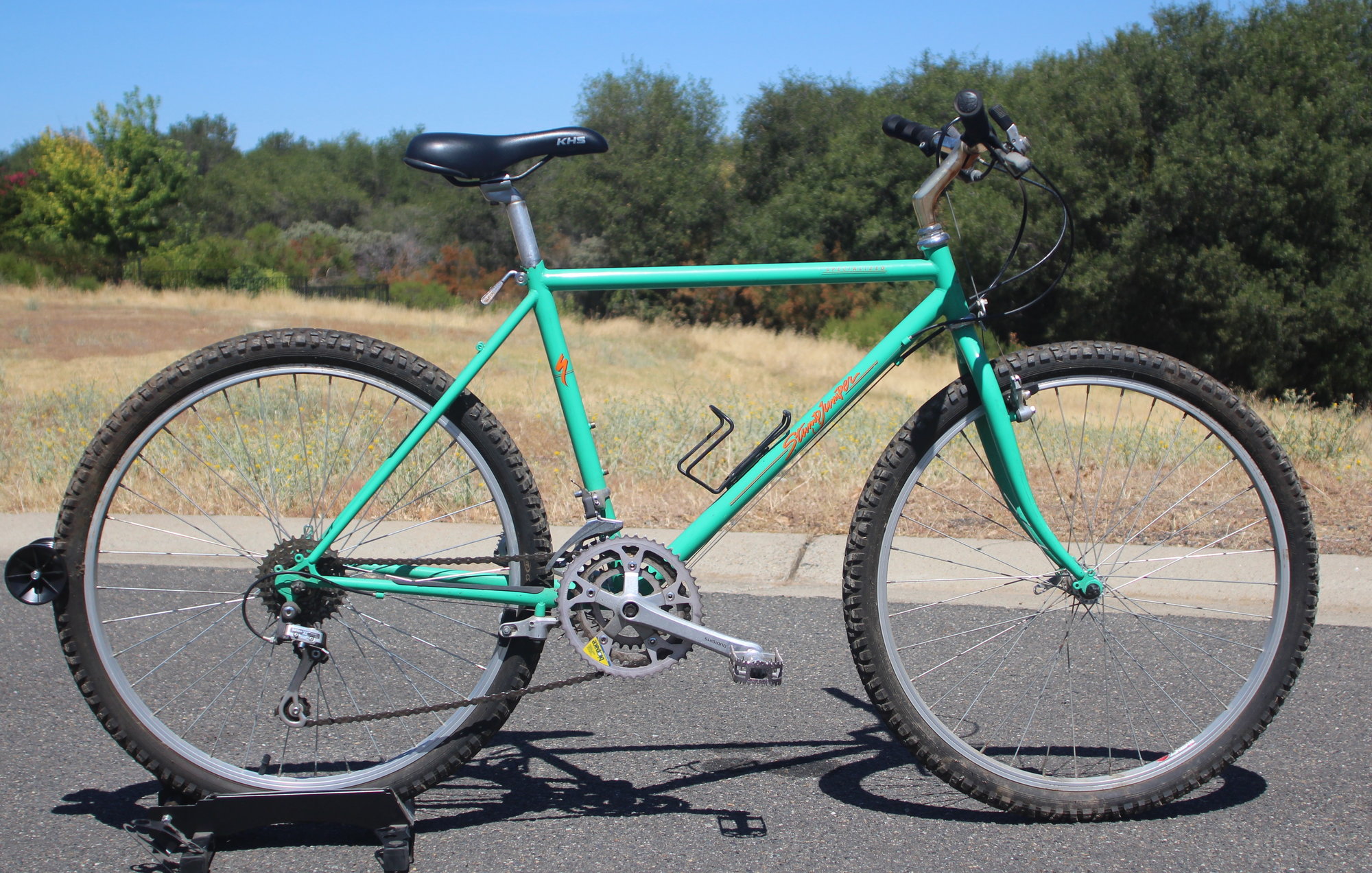
I have a vintage Specialized frame coming, which prompted me to do some historical research.
As far as I can tell, Specialized is an American company, but their early frames were all Japanese built. How did this come to be? I'm not expert, but I would guess their American competitors like Trek were making bikes stateside at that period? Did Spec have a presence in Japan, making bikes themselves, or was it contracted labor to their specifications? Certainly Japanese framebuilding as an industry was alive and well at that time, so skilled labor would have been available, but it would also have been available in the US.
When did that era of sweet lugg'd Spec bikes end and they became more of a production company?
Sorry for the rambling thoughts on a Monday morning. Put a bid on a bike before heading to bed last night and woke up to a won auction. Who hasnt been there, lol.
As far as I can tell, Specialized is an American company, but their early frames were all Japanese built. How did this come to be? I'm not expert, but I would guess their American competitors like Trek were making bikes stateside at that period? Did Spec have a presence in Japan, making bikes themselves, or was it contracted labor to their specifications? Certainly Japanese framebuilding as an industry was alive and well at that time, so skilled labor would have been available, but it would also have been available in the US.
When did that era of sweet lugg'd Spec bikes end and they became more of a production company?
Sorry for the rambling thoughts on a Monday morning. Put a bid on a bike before heading to bed last night and woke up to a won auction. Who hasnt been there, lol.
TiHabanero
Senior Member
close

05-01-26
- Join DateNov 2012
- Posts:5,175
-
iTrader Positive Feedback0
-
iTrader Feedback Score(0)
-
Likes:1
-
Liked:1,929 Times in 1,025 Posts
Specialized has never been a "production" company. They have always been an importer and marketing company. Outside of some top level frames, everything they market and sell is imported. Go to their website and you will find a brief history of the company.
Of course, along the way in their travels some components they have sold may have been made in USA, but not many. They do some engineering, design and prototyping work at the Morgan Hill location.
At this time I think Merida has an interest in Specialized operations.
Of course, along the way in their travels some components they have sold may have been made in USA, but not many. They do some engineering, design and prototyping work at the Morgan Hill location.
At this time I think Merida has an interest in Specialized operations.

Mr. 66
Senior Member
close
05-02-26
- Join DateAug 2015
- Posts:4,165
-
iTrader Positive Feedback0
-
iTrader Feedback Score(0)
-
Likes:349
-
Liked:2,894 Times in 1,415 Posts
I remember that they had the tires, Turbo and the variants. I still think those compared good with some of today's makers. The other parts I remember was stems, and hubs.

AdventureManCO
Senior Member
close

04-06-26
- Join DateJul 2008
- LocationThe Le Grande HQ
- Posts:3,288
-
iTrader Positive Feedback0
-
iTrader Feedback Score(0)
-
Likes:2,137
-
Liked:4,243 Times in 1,720 Posts
I know little of the official history, but in researching the Allez frames, I believe they made the switch from Japan production to Taiwan production in 1989. There is an ‘88 Allez in original battered livery in the window of one of the local co-ops with a ‘Made in Japan’ sticker on it.
I think Centurion also replicated this move the same year. Or was it ‘88 for them?
I think Centurion also replicated this move the same year. Or was it ‘88 for them?
AdventureManCO
Senior Member
close
04-06-26
- Join DateJul 2008
- LocationThe Le Grande HQ
- Posts:3,288
-
iTrader Positive Feedback0
-
iTrader Feedback Score(0)
-
Likes:2,137
-
Liked:4,243 Times in 1,720 Posts
Quote:
Of course, along the way in their travels some components they have sold may have been made in USA, but not many. They do some engineering, design and prototyping work at the Morgan Hill location.
At this time I think Merida has an interest in Specialized operations.
Reminds me of Craftsman as a brand. They never really ‘made’ anything per sr, but contracted with other brands (as far as stationary power tools go…Atlas, Belsaw, Parks, Emerson, etc) and put their logo on them. They may have had a hand in the design, though, just not the manufacture.Originally Posted by TiHabanero
Specialized has never been a "production" company. They have always been an importer and marketing company. Outside of some top level frames, everything they market and sell is imported. Go to their website and you will find a brief history of the company.Of course, along the way in their travels some components they have sold may have been made in USA, but not many. They do some engineering, design and prototyping work at the Morgan Hill location.
At this time I think Merida has an interest in Specialized operations.
repechage
Senior Member
close

05-02-26
- Join DateJun 2006
- Posts:21,802
-
iTrader Positive Feedback0
-
iTrader Feedback Score(0)
-
Likes:852
-
Liked:3,702 Times in 2,549 Posts
Quote:
Of course, along the way in their travels some components they have sold may have been made in USA, but not many. They do some engineering, design and prototyping work at the Morgan Hill location.
At this time I think Merida has an interest in Specialized operations.
Bicycleretailer pegs the % at 49% Merida interest.Originally Posted by TiHabanero
Specialized has never been a "production" company. They have always been an importer and marketing company. Outside of some top level frames, everything they market and sell is imported. Go to their website and you will find a brief history of the company.Of course, along the way in their travels some components they have sold may have been made in USA, but not many. They do some engineering, design and prototyping work at the Morgan Hill location.
At this time I think Merida has an interest in Specialized operations.
‘with that investment it stopped sourcing from other bike manufacturers.

juvela
Senior Member
close
03-16-25
- Join DateFeb 2013
- LocationAlta California
- Posts:15,369
-
iTrader Positive Feedback0
-
iTrader Feedback Score(0)
-
Likes:3,521
-
Liked:4,391 Times in 2,751 Posts
-----
Michael operated for several year prior to offering any framesets/cycles under the house brand.
First locus of business was a trailer park.
First warehouse was located in Campbell, California.
In the early years he was a stockist for some european products; can recall purchasing CycloPans gear blocks at the Campbell location in the late seventies.
Early house branded products were tyres/tubes, water bottles, saddles.
Actual components came a bit later such as headsets, chainsets & hubs.
-----
Michael operated for several year prior to offering any framesets/cycles under the house brand.
First locus of business was a trailer park.
First warehouse was located in Campbell, California.
In the early years he was a stockist for some european products; can recall purchasing CycloPans gear blocks at the Campbell location in the late seventies.
Early house branded products were tyres/tubes, water bottles, saddles.
Actual components came a bit later such as headsets, chainsets & hubs.
-----

rustystrings61
Senior Member
close

05-02-26
- Join DateMay 2013
- LocationGreenwood SC USA
- Posts:2,643
-
iTrader Positive Feedback0
-
iTrader Feedback Score(0)
-
Likes:2,095
-
Liked:3,330 Times in 1,005 Posts
There are extensive discussions out there online of various iterations of Specialized bikes and their history. When Mike Sinyard initially set out to sell framesets and bikes, he enlisted Tim Neenan of Lighthouse Cycles after having had a custom touring frame built for him. The story I read is that the Expedition was based on that custom frame. Neenan also designed the original Sequoia and Allez frames. The earliest of the latter model were built by Yoshi Konno of 3Rensho and are very much sought-after; allegedly a small number of Sequoias were also built by Mr. Konno. Production realities led to contracts with Miyata and other high-quality Japanese makers.
Neenan is also credited with designing the original Stumpjumper. There are some who contend he borrowed heavily from the design of Tom Ritchey, but it IS fair to say he went to Japan and worked out how to mass-produce a mountain bike. This was probably the bike that catapulted the company forward and was their highest profile item.
Neenan's designs would later be refined and modified by Jim Merz (who is around on this forum as [MENTION=566038]Portlandjim[/MENTION]) and later by Mark DiNucci. Frame production shifted to Taiwan at some point in the '80s, and in interviews it has been observed that Specialized personnel personally oversaw some of the processes to sweat the details.
In no particular order -
The 1987-1989 Sirrus uses the same Giant-built-in-Taiwan frameset as the Allez of those years, but with somewhat softer paint and Shimano 105 rather than 600 components. My '88 Sirrus was a revelation - it is absolutely one of the very best riding bikes I have ever had under me, and only the presence in my stable of a Neenan-built Lighthouse with near identical geometry but clearance for larger tires has be considering selling it.
Grant Petersen of Rivendell has in the past described the early '80s Sequoia as the finest production sports-touring bike ever sold.
Do a long trawl of the bikeforums archives searching for model names, Neenan, Merz, etc. For that matter, a series of Google searches will turn up a lot of other stuff on this subject.
Which Specialized bike did you wind up winning at auction? Pictures, pretty please!
Neenan is also credited with designing the original Stumpjumper. There are some who contend he borrowed heavily from the design of Tom Ritchey, but it IS fair to say he went to Japan and worked out how to mass-produce a mountain bike. This was probably the bike that catapulted the company forward and was their highest profile item.
Neenan's designs would later be refined and modified by Jim Merz (who is around on this forum as [MENTION=566038]Portlandjim[/MENTION]) and later by Mark DiNucci. Frame production shifted to Taiwan at some point in the '80s, and in interviews it has been observed that Specialized personnel personally oversaw some of the processes to sweat the details.
In no particular order -
The 1987-1989 Sirrus uses the same Giant-built-in-Taiwan frameset as the Allez of those years, but with somewhat softer paint and Shimano 105 rather than 600 components. My '88 Sirrus was a revelation - it is absolutely one of the very best riding bikes I have ever had under me, and only the presence in my stable of a Neenan-built Lighthouse with near identical geometry but clearance for larger tires has be considering selling it.
Grant Petersen of Rivendell has in the past described the early '80s Sequoia as the finest production sports-touring bike ever sold.
Do a long trawl of the bikeforums archives searching for model names, Neenan, Merz, etc. For that matter, a series of Google searches will turn up a lot of other stuff on this subject.
Which Specialized bike did you wind up winning at auction? Pictures, pretty please!
Quote:
Which Specialized bike did you wind up winning at auction? Pictures, pretty please!
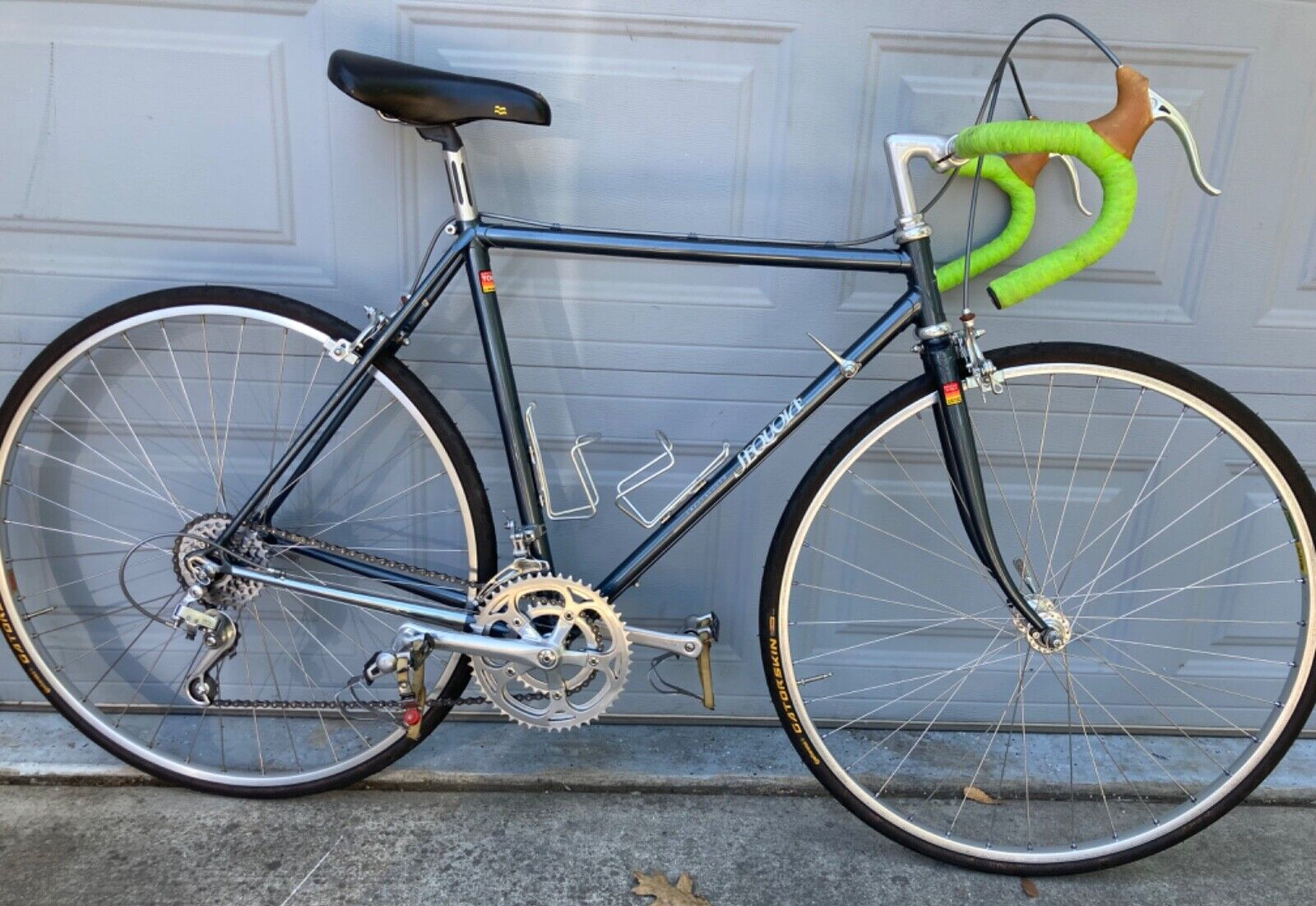
I've been on the hunt for a touring bike for a while. I'm short, so many touring bikes are simply too big for me to comfortably ride. Always said if I found a vintage Sequoia in good condition I'd but it. This one looks to be minty mint. Let's see what turns up in the mail. Originally Posted by rustystrings61
Which Specialized bike did you wind up winning at auction? Pictures, pretty please!
rustystrings61
Senior Member
close
05-02-26
- Join DateMay 2013
- LocationGreenwood SC USA
- Posts:2,643
-
iTrader Positive Feedback0
-
iTrader Feedback Score(0)
-
Likes:2,095
-
Liked:3,330 Times in 1,005 Posts
Quote:
Veeery nice! I have had my eyes open for a Sequoia in my 58-60 cm size for a while now, but no such luch so far. I purchased a well-loved Tim Neenan Lighthouse a couple of years back as a bare frame and fork, thinking it would be similar to a Sequoia. Now that I am finally building it up, I see it is far more like an Allez with room for 32s and fenders ...Originally Posted by AngryScientist
I've been on the hunt for a touring bike for a while. I'm short, so many touring bikes are simply too big for me to comfortably ride. Always said if I found a vintage Sequoia in good condition I'd but it. This one looks to be minty mint. Let's see what turns up in the mail.


Dean51
Senior Member
close
05-02-26
- Join DateFeb 2016
- LocationOlympic Peninsula, WA
- Posts:670
-
iTrader Positive Feedback0
-
iTrader Feedback Score(0)
-
Likes:287
-
Liked:344 Times in 135 Posts

I have no problem with them being a design house that out sources production as sadly that's the norm. I do have a problem with them practicing competition through litigation. Check out their history on Wikipedia, it does a good job surmising that.
Andy_K
Senior Member
close
05-02-26
- Join DateJan 2008
- LocationBeaverton, OR
- Posts:15,095
-
iTrader Positive Feedback0
-
iTrader Feedback Score(0)
-
Likes:2,598
-
Liked:4,721 Times in 1,693 Posts
Quote:
In my (not-at-all-expert) opinion, this was Specialized's most important innovation. In the 80's Specialized employed some of the best frame builders in the U.S. They were certainly more than capable of producing frames that would have been among the best in the world, but they wouldn't have been able to produce those frames in large volume. The genius of Specialized was to send their experts to Japanese factories to develop a process for scaling production of these frames. Only the few who were involved really know how much the craftsmen at these Japanese factories had to be taught, but the oral history of the company says that the Specialized people from the U.S. spent months there overseeing production.Originally Posted by AngryScientist
As far as I can tell, Specialized is an American company, but their early frames were all Japanese built. How did this come to be?
I have a couple of Specialized frames from the early 80's and I think they're fantastic. The fact that I don't know the name of the guy who brazed them together doesn't worry me at all.
The whole thing always makes me think of the scene in Back to the Future II where Doc and Marty are recovering the DeLorean from the mine shaft.
Doc: "No wonder this circuit failed, it says 'made in Japan.'"
Marty: "What do you mean, Doc? All the best stuff is made in Japan."

merziac
Senior Member
close


05-02-26
- Join DateOct 2015
- LocationPDX
- Posts:16,080
-
iTrader Positive Feedback0
-
iTrader Feedback Score(0)
-
Likes:15,321
-
Liked:9,437 Times in 5,189 Posts


FrejusFlyer
Full Member
close

05-01-26
- Join DateMar 2018
- Posts:244
-
iTrader Positive Feedback0
-
iTrader Feedback Score(0)
-
Likes:1,660
-
Liked:298 Times in 119 Posts
The thing that amazes me is how successful the company was at selling their Japanese made frames (with unknown builders in the American market) for the prices they were asking in the early days. In '81, when they started selling bikes, USA made Treks started at around $300.00. Specialized sold their built-up bikes for around $1,400.00 and frames for around $700.00. They were priced very close to famous maker Italian brands and through great marketing, they were a success.
Thanks for the responses so far. Would anyone hazard a guess as to the year the bike I posted might be? I dont have it in hand yet, but will the serial number give me any clues?

JohnDThompson
Old fart
close

05-02-26
- Join DateNov 2004
- LocationAppleton WI
- Posts:26,318
-
iTrader Positive Feedback0
-
iTrader Feedback Score(0)
-
Likes:370
-
Liked:5,231 Times in 2,865 Posts
Quote:
I would describe them more as a design outfit, with engineers designing bikes and components to be manufactured elsewhere. SunTour was similarly design-focused.Originally Posted by TiHabanero
Specialized has never been a "production" company. They have always been an importer and marketing company. Outside of some top level frames, everything they market and sell is imported. Go to their website and you will find a brief history of the company.
rgvg
Car free since 2018
close
05-02-26
- Join DateAug 2017
- LocationVancouver, BC
- Posts:775
-
iTrader Positive Feedback0
-
iTrader Feedback Score(0)
-
Likes:364
-
Liked:344 Times in 163 Posts
Quote:
Yes the serial number should give you the frame manufacture date. Based on the color I'd guess 84 or 85. I wish I had one that size...Originally Posted by AngryScientist
Thanks for the responses so far. Would anyone hazard a guess as to the year the bike I posted might be? I dont have it in hand yet, but will the serial number give me any clues?
Quote:
Thanks. Looking forward to getting my hands on it. You just never know when buying on ebay what surprises will come with a frame, including measurements. If all goes well, some credit card touring in the Northeast this fall will be in store!Originally Posted by rgvg
Yes the serial number should give you the frame manufacture date. Based on the color I'd guess 84 or 85. I wish I had one that size...
Spaghetti Legs
Senior Member
close
05-02-26
- Join DateDec 2014
- LocationCentral Virginia
- Posts:5,345
-
iTrader Positive Feedback0
-
iTrader Feedback Score(0)
-
Likes:314
-
Liked:5,139 Times in 1,317 Posts
Paging Portlandjim for straight from the source Specialized dope.
nlerner
Senior Member
close

05-02-26
- Join DateDec 2005
- Posts:18,757
-
iTrader Positive Feedback0
-
iTrader Feedback Score(0)
-
Likes:8,880
-
Liked:11,483 Times in 3,769 Posts
Quote:
In the realm of smaller tourers, this one showed up on Boston CL yesterday: https://boston.craigslist.org/gbs/bo...654091176.htmlOriginally Posted by AngryScientist
I've been on the hunt for a touring bike for a while. I'm short, so many touring bikes are simply too big for me to comfortably ride. Always said if I found a vintage Sequoia in good condition I'd but it. This one looks to be minty mint. Let's see what turns up in the mail.
Glad to facilitate if interested.

[QUOTE=rustystrings61;22983923]
My comments about these questions:
1) "There are extensive discussions out there online of various iterations of Specialized bikes and their history. When Mike Sinyard initially set out to sell framesets and bikes, he enlisted Tim Neenan of Lighthouse Cycles after having had a custom touring frame built for him."
I met Mike Sinyard when he first started selling parts out of his bicycle trailer in 1974, I was one of his first customers. I became good friends with Mike, and did testing for him, tires for instance. I would go to the Bay area from time to time and always stopped by to visit Mike. One time, Mike mentioned that he had a bike I should look and invited me down. It was one of the first batch of Tom Ritchey built "Mountainbikes", I'm not positive on the date, but around 1980. I spent the day riding it, liked it and went back to Portland and built my version of this type of bike. During this period, I was pushing Mike to hire me, he clearly needs someone to be in charge of technical details at Specialized. We talked about this for a while, and then it turned out that he hired Tim Neenan! The excuse was that Tim already lived in the San Jose area, so Mike didn't need to pay for my moving costs! Anyway, I went on building Merz bikes in Portland. Tim did design the first versions of the Sequoia and Allez frames. I don't know the exact details of how much Tim was visiting Japan, but the Stumpjumper bike was certainly closely based on the bike Tom Ritchey built. If it were me, I would have pushed to make a frame more based on my Merz MTB design. The 2nd version Stumpjumper was my design, in fact Mike had me make 3 prototype frames while I was still in Portland that became the 2nd version Stumpjumper. It turned out that Tim Neenan wanted to move to San Luis Obispo, Mike didn't want anything but total commitment from Tim. So, he called me up and asked when I could take over the job. I said I could start tomorrow. That week I left from PDX and flew to Japan. The start of a 10 year long whirlwind life in the bicycle industry at the highest level.
2) The story I read is that the Expedition was based on that custom frame.
Tim has claimed that he designed the Expedition bicycle. That bike may have been something that he started working on while he was at Specialized, but if so, I designed what became the first production version of the Expedition. It was based on my Merz touring bike frames. When I saw that Tim was claiming this bike was his design, I asked Mike if that was so. He confirmed that I designed it.
3) Neenan also designed the original Sequoia and Allez frames. The earliest of the latter model were built by Yoshi Konno of 3Rensho and are very much sought-after; allegedly a small number of Sequoias were also built by Mr. Konno.
Yoshi didn't supply the first Allez frame, it was Toei. The first Sequoia frame was built at 3Rensho, it has fast back seat stays.
4) Production realities led to contracts with Miyata and other high-quality Japanese makers.
3Rensho built the later top model Allez frames up until about 1987. The Allez SE bikes, which was a lower price point full bicycle, was built by Miyata. The Expedition bike was built by Miyata also. The 2nd version Sequoia frames and bikes were built by Miki.
5) Neenan is also credited with designing the original Stumpjumper. There are some who contend he borrowed heavily from the design of Tom Ritchey, but it IS fair to say he went to Japan and worked out how to mass-produce a mountain bike. This was probably the bike that catapulted the company forward and was their highest profile item.
The 1st Stumpjumper was a bike hit in the market. It's controversial whether Tim, or Mike "designed" very much of the 1st Stumpjumper bike. I would say that the first 2 runs of this bike were not mass produced at all. They were sold as a kit, every part needed to be assembled by the dealer including the wheels IIRC. The other detail, there were not that many of them made. They did sell like hot cakes, so it proved that there was a large market for MTB's. But Specialized was not some tiny company at that point. Mike was the largest Campagnolo distributor in the world, and the largest bicycle tire company. When I first traveled to Japan and Europe, all the bike companies treated us like gods!
6) Neenan's designs would later be refined and modified by Jim Merz (who is around on this forum as [MENTION=566038]Portlandjim[/MENTION]) and later by Mark DiNucci.
I did not refine Tim's designs. I started with new frame designs based on my ideas. I also came up with all the components that Specialized had made. We never used product that was just stamped with our logo.
7) Frame production shifted to Taiwan at some point in the '80s, and in interviews it has been observed that Specialized personnel personally oversaw some of the processes to sweat the details.
I pushed to move production for some of the lower price point MTB bikes to Taiwan around 1985. At that time, the Yen/Dollar exchange rate was becoming a problem for sourcing bicycles from Japan. I worked with Giant at first. I believe that the Hardrock was our lowest price point model, and they had never made any bike at that high of a price point! I spent a lot of time getting them up to a higher level. At the time, Schwinn was using them for a low end road bike. But Schwinn was not helping Giant learn how to make better bikes. This is when I hired Mark DiNucci to work for Specialized, we both worked with Giant to up their game. In fact, their first carbon fiber bike was made for Specialized. Mark and I had a lot to do with that bike, and it was a big success.
8) The 1987-1989 Sirrus uses the same Giant-built-in-Taiwan frameset as the Allez of those years, but with somewhat softer paint and Shimano 105 rather than 600 components. My '88 Sirrus was a revelation - it is absolutely one of the very best riding bikes I have ever had under me, and only the presence in my stable of a Neenan-built Lighthouse with near identical geometry but clearance for larger tires has me considering selling it.
I was not in charge of lower price point bike models during the later time period you mention. If Giant made an Allez, it for sure would not have used the same frame as the Sirrus. In any case, Mark DiNucci took over the frame design duty when I left Specialized around 1990 or so.
Specialized contracted with various world class suppliers throughout the years but has almost always designed the product. And did the best internal testing in the industry. This is a model similar to Nike. Some items were made in the USA, water bottles for example. It doesn't make sense to ship cargo containers filled with water bottles across the ocean. The Epic carbon MTB frames were made in Morgan Hill. Also, M2 MTB frames were made in the USA. But time seems to have confirmed that the best value to the rider comes from sourcing products from the best manufacturers.
Specialized Bicycle sells some of the best bicycles in the world. The company philosophy, which I had a large hand in developing, is still in place. I am very proud of my work there.
These comments are my personal opinion, I try to be accurate but due to old age my brain has faded somewhat!
Jim Merz
My comments about these questions:
1) "There are extensive discussions out there online of various iterations of Specialized bikes and their history. When Mike Sinyard initially set out to sell framesets and bikes, he enlisted Tim Neenan of Lighthouse Cycles after having had a custom touring frame built for him."
I met Mike Sinyard when he first started selling parts out of his bicycle trailer in 1974, I was one of his first customers. I became good friends with Mike, and did testing for him, tires for instance. I would go to the Bay area from time to time and always stopped by to visit Mike. One time, Mike mentioned that he had a bike I should look and invited me down. It was one of the first batch of Tom Ritchey built "Mountainbikes", I'm not positive on the date, but around 1980. I spent the day riding it, liked it and went back to Portland and built my version of this type of bike. During this period, I was pushing Mike to hire me, he clearly needs someone to be in charge of technical details at Specialized. We talked about this for a while, and then it turned out that he hired Tim Neenan! The excuse was that Tim already lived in the San Jose area, so Mike didn't need to pay for my moving costs! Anyway, I went on building Merz bikes in Portland. Tim did design the first versions of the Sequoia and Allez frames. I don't know the exact details of how much Tim was visiting Japan, but the Stumpjumper bike was certainly closely based on the bike Tom Ritchey built. If it were me, I would have pushed to make a frame more based on my Merz MTB design. The 2nd version Stumpjumper was my design, in fact Mike had me make 3 prototype frames while I was still in Portland that became the 2nd version Stumpjumper. It turned out that Tim Neenan wanted to move to San Luis Obispo, Mike didn't want anything but total commitment from Tim. So, he called me up and asked when I could take over the job. I said I could start tomorrow. That week I left from PDX and flew to Japan. The start of a 10 year long whirlwind life in the bicycle industry at the highest level.
2) The story I read is that the Expedition was based on that custom frame.
Tim has claimed that he designed the Expedition bicycle. That bike may have been something that he started working on while he was at Specialized, but if so, I designed what became the first production version of the Expedition. It was based on my Merz touring bike frames. When I saw that Tim was claiming this bike was his design, I asked Mike if that was so. He confirmed that I designed it.
3) Neenan also designed the original Sequoia and Allez frames. The earliest of the latter model were built by Yoshi Konno of 3Rensho and are very much sought-after; allegedly a small number of Sequoias were also built by Mr. Konno.
Yoshi didn't supply the first Allez frame, it was Toei. The first Sequoia frame was built at 3Rensho, it has fast back seat stays.
4) Production realities led to contracts with Miyata and other high-quality Japanese makers.
3Rensho built the later top model Allez frames up until about 1987. The Allez SE bikes, which was a lower price point full bicycle, was built by Miyata. The Expedition bike was built by Miyata also. The 2nd version Sequoia frames and bikes were built by Miki.
5) Neenan is also credited with designing the original Stumpjumper. There are some who contend he borrowed heavily from the design of Tom Ritchey, but it IS fair to say he went to Japan and worked out how to mass-produce a mountain bike. This was probably the bike that catapulted the company forward and was their highest profile item.
The 1st Stumpjumper was a bike hit in the market. It's controversial whether Tim, or Mike "designed" very much of the 1st Stumpjumper bike. I would say that the first 2 runs of this bike were not mass produced at all. They were sold as a kit, every part needed to be assembled by the dealer including the wheels IIRC. The other detail, there were not that many of them made. They did sell like hot cakes, so it proved that there was a large market for MTB's. But Specialized was not some tiny company at that point. Mike was the largest Campagnolo distributor in the world, and the largest bicycle tire company. When I first traveled to Japan and Europe, all the bike companies treated us like gods!
6) Neenan's designs would later be refined and modified by Jim Merz (who is around on this forum as [MENTION=566038]Portlandjim[/MENTION]) and later by Mark DiNucci.
I did not refine Tim's designs. I started with new frame designs based on my ideas. I also came up with all the components that Specialized had made. We never used product that was just stamped with our logo.
7) Frame production shifted to Taiwan at some point in the '80s, and in interviews it has been observed that Specialized personnel personally oversaw some of the processes to sweat the details.
I pushed to move production for some of the lower price point MTB bikes to Taiwan around 1985. At that time, the Yen/Dollar exchange rate was becoming a problem for sourcing bicycles from Japan. I worked with Giant at first. I believe that the Hardrock was our lowest price point model, and they had never made any bike at that high of a price point! I spent a lot of time getting them up to a higher level. At the time, Schwinn was using them for a low end road bike. But Schwinn was not helping Giant learn how to make better bikes. This is when I hired Mark DiNucci to work for Specialized, we both worked with Giant to up their game. In fact, their first carbon fiber bike was made for Specialized. Mark and I had a lot to do with that bike, and it was a big success.
8) The 1987-1989 Sirrus uses the same Giant-built-in-Taiwan frameset as the Allez of those years, but with somewhat softer paint and Shimano 105 rather than 600 components. My '88 Sirrus was a revelation - it is absolutely one of the very best riding bikes I have ever had under me, and only the presence in my stable of a Neenan-built Lighthouse with near identical geometry but clearance for larger tires has me considering selling it.
I was not in charge of lower price point bike models during the later time period you mention. If Giant made an Allez, it for sure would not have used the same frame as the Sirrus. In any case, Mark DiNucci took over the frame design duty when I left Specialized around 1990 or so.
Specialized contracted with various world class suppliers throughout the years but has almost always designed the product. And did the best internal testing in the industry. This is a model similar to Nike. Some items were made in the USA, water bottles for example. It doesn't make sense to ship cargo containers filled with water bottles across the ocean. The Epic carbon MTB frames were made in Morgan Hill. Also, M2 MTB frames were made in the USA. But time seems to have confirmed that the best value to the rider comes from sourcing products from the best manufacturers.
Specialized Bicycle sells some of the best bicycles in the world. The company philosophy, which I had a large hand in developing, is still in place. I am very proud of my work there.
These comments are my personal opinion, I try to be accurate but due to old age my brain has faded somewhat!
Jim Merz
rustystrings61
Senior Member
close
05-02-26
- Join DateMay 2013
- LocationGreenwood SC USA
- Posts:2,643
-
iTrader Positive Feedback0
-
iTrader Feedback Score(0)
-
Likes:2,095
-
Liked:3,330 Times in 1,005 Posts
Thank you [MENTION=566038]Portlandjim[/MENTION] for sharing firsthand knowledge of this history and setting the record straight!
[QUOTE=Portlandjim;22984372]
Quote:
My comments about these questions:
1) "There are extensive discussions out there online of various iterations of Specialized bikes and their history. When Mike Sinyard initially set out to sell framesets and bikes, he enlisted Tim Neenan of Lighthouse Cycles after having had a custom touring frame built for him."
I met Mike Sinyard when he first started selling parts out of his bicycle trailer in 1974, I was one of his first customers. I became good friends with Mike, and did testing for him, tires for instance. I would go to the Bay area from time to time, and always stopped by to visit Mike. One time, Mike mentioned that he had a bike I should look, and invited me down. It was one of the first batch of Tom Ritchey built "Mountainbikes", I'm not positive on the date, but around 1980. I spent the day riding it, liked it and went back to Portland and built my version of this type of bike. During this period, I was pushing Mike to hire me, he clearly needs someone to be in charge of technical details at Specialized. We talked about this for a while, and then it turned out that he hired Tim Neenan! The excuse was that Tim already lived in the San Jose area, so Mike didn't need to pay for my moving costs! Anyway, I went on building Merz bikes in Portland. Tim did design the first versions of the Sequoia and Allez frames. I don't know the exact details of how much Tim was visiting Japan, but the Stumpjumper bike was certainly closely based on the bike Tom Ritchey built. If it were me, I would have pushed to make a frame more based on my Merz MTB design. The 2nd version Stumpjumper was my design, in fact Mike had me make 3 prototype frames while I was still in Portland that became the 2nd version Stumpjumper. It turned out that Tim Neenan wanted to move to San Louis Obisbo, Mike didn't want anything but total commitment from Tim. So, he called me up and asked when I could take over the job. I said I could start tomorrow. That week I left from PDX and flew to Japan. The start of a 10 year long whirlwind life in the bicycle industry at the highest level.
2) The story I read is that the Expedition was based on that custom frame.
Tim has claimed that he designed the Expedition bicycle. That bike may have been something that he started working on while he was at Specialized, but if so, I designed what became the first production version of the Expedition. It was based on my Merz touring bike frames. When I saw that Tim was claiming this bike was his design, I asked Mike if that was so. He confirmed that I designed it.
3) Neenan also designed the original Sequoia and Allez frames.The earliest of the latter model were built by Yoshi Konno of 3Rensho and are very much sought-after; allegedly a small number of Sequoias were also built by Mr. Konno.
Yoshi didn't supply the first Allez frame, it was Toei. The first Sequoia frame was built at 3Rensho, it has fast back seat stays.
4) Production realities led to contracts with Miyata and other high-quality Japanese makers.
3Rensho built the later top model Allez frames up until about 1987. The Allez SE bikes, which was a lower price point full bicycle, was built by Miyata. The Expedition bike was built by Miyata also. The 2nd version Sequoia frames and bikes were built by Miki.
5) Neenan is also credited with designing the original Stumpjumper. There are some who contend he borrowed heavily from the design of Tom Ritchey, but it IS fair to say he went to Japan and worked out how to mass-produce a mountain bike. This was probably the bike that catapulted the company forward and was their highest profile item.
The 1st Stumpjumper was a bike hit in the market. It's controversial whether Tim, or Mike "designed" very much of the 1st Stumpjumper bike. I would say that the first 2 runs of this bike were not mass produced at all. They were sold as a kit, every part needed to be assembled by the dealer including the wheels IIRC. The other detail, there were not that many of them made. They did sell like hot cakes, so it proved that there was a large market for MTB's. But, Specialized was not some tiny company at that point. Mike was the largest Campagnolo distributor in the world, and the largest bicycle tire company. When I first traveled to Japan and Europe, all the bike companies treated us like gods!
6) Neenan's designs would later be refined and modified by Jim Merz (who is around on this forum as [MENTION=566038]Portlandjim[/MENTION]) and later by Mark DiNucci.
I did not refine Tim's designs. I started with new frame designs based on my ideas. I also came up with all the components that Specialize had made. We never used product that was just stamped with our logo.
7) Frame production shifted to Taiwan at some point in the '80s, and in interviews it has been observed that Specialized personnel personally oversaw some of the processes to sweat the details.
I pushed to move production for some of the lower price point MTB bikes to Taiwan around 1985. At that time, the Yen/Dollar exchage rate was becoming a problem for sourcing bicycles from Japan. I worked with Giant at first. I belive that the Hardrock was our lowest price point model, and they had never made any bike at that high of a price point! I spent a lot of time getting them up to a higher lever. At the time, Schwinn was using them for a low end road bike. But, Schwinn was not helping Giant learn how to make better bikes. This is when I hired Mark DiNucci to work for Specialize, we both worked with Giant to up their game. In fact, their first carbon fiber bike was made for Specialized. Mark and I had a lot to do with that bike, and it was a big success.
8) The 1987-1989 Sirrus uses the same Giant-built-in-Taiwan frameset as the Allez of those years, but with somewhat softer paint and Shimano 105 rather than 600 components. My '88 Sirrus was a revelation - it is absolutely one of the very best riding bikes I have ever had under me, and only the presence in my stable of a Neenan-built Lighthouse with near identical geometry but clearance for larger tires has be considering selling it.
I was not in charge of lower price point bike models during the later time period you mention. If Giant made an Allez, it for sure would not have used the same frame as the Sirrus. In any case, Mark DiNucci took over the frame design duty when I left Specialized aroung 1990 or so.
Specialized contracted with various world class suppliers throughout the years, but has almost always designed the product. And did the best internal testing in the industry. This is a model similar to Nike. Some items were made in the USA, water bottles for example. It doesn't make sense to ship cargo containers filled with water bottles across the ocean. The Epic carbon MTB frames were made in Morgan Hill. Also M2 MTB frames were made in the USA. But, time seems to have confirmed that the best value to the rider comes from sourcing products from the best manufacturers.
Specialized Bicycle sells some of the best bicycles in the world. The company philosophy, which I had a large hand in developing, is still in place. I am very proud of my work there.
These comments are my personal opinon, I try to be accurate but due to old age my brain has faded somewhat!
Jim Merz
Incredible history lesson here. Thanks Jim!Originally Posted by rustystrings61
My comments about these questions:
1) "There are extensive discussions out there online of various iterations of Specialized bikes and their history. When Mike Sinyard initially set out to sell framesets and bikes, he enlisted Tim Neenan of Lighthouse Cycles after having had a custom touring frame built for him."
I met Mike Sinyard when he first started selling parts out of his bicycle trailer in 1974, I was one of his first customers. I became good friends with Mike, and did testing for him, tires for instance. I would go to the Bay area from time to time, and always stopped by to visit Mike. One time, Mike mentioned that he had a bike I should look, and invited me down. It was one of the first batch of Tom Ritchey built "Mountainbikes", I'm not positive on the date, but around 1980. I spent the day riding it, liked it and went back to Portland and built my version of this type of bike. During this period, I was pushing Mike to hire me, he clearly needs someone to be in charge of technical details at Specialized. We talked about this for a while, and then it turned out that he hired Tim Neenan! The excuse was that Tim already lived in the San Jose area, so Mike didn't need to pay for my moving costs! Anyway, I went on building Merz bikes in Portland. Tim did design the first versions of the Sequoia and Allez frames. I don't know the exact details of how much Tim was visiting Japan, but the Stumpjumper bike was certainly closely based on the bike Tom Ritchey built. If it were me, I would have pushed to make a frame more based on my Merz MTB design. The 2nd version Stumpjumper was my design, in fact Mike had me make 3 prototype frames while I was still in Portland that became the 2nd version Stumpjumper. It turned out that Tim Neenan wanted to move to San Louis Obisbo, Mike didn't want anything but total commitment from Tim. So, he called me up and asked when I could take over the job. I said I could start tomorrow. That week I left from PDX and flew to Japan. The start of a 10 year long whirlwind life in the bicycle industry at the highest level.
2) The story I read is that the Expedition was based on that custom frame.
Tim has claimed that he designed the Expedition bicycle. That bike may have been something that he started working on while he was at Specialized, but if so, I designed what became the first production version of the Expedition. It was based on my Merz touring bike frames. When I saw that Tim was claiming this bike was his design, I asked Mike if that was so. He confirmed that I designed it.
3) Neenan also designed the original Sequoia and Allez frames.The earliest of the latter model were built by Yoshi Konno of 3Rensho and are very much sought-after; allegedly a small number of Sequoias were also built by Mr. Konno.
Yoshi didn't supply the first Allez frame, it was Toei. The first Sequoia frame was built at 3Rensho, it has fast back seat stays.
4) Production realities led to contracts with Miyata and other high-quality Japanese makers.
3Rensho built the later top model Allez frames up until about 1987. The Allez SE bikes, which was a lower price point full bicycle, was built by Miyata. The Expedition bike was built by Miyata also. The 2nd version Sequoia frames and bikes were built by Miki.
5) Neenan is also credited with designing the original Stumpjumper. There are some who contend he borrowed heavily from the design of Tom Ritchey, but it IS fair to say he went to Japan and worked out how to mass-produce a mountain bike. This was probably the bike that catapulted the company forward and was their highest profile item.
The 1st Stumpjumper was a bike hit in the market. It's controversial whether Tim, or Mike "designed" very much of the 1st Stumpjumper bike. I would say that the first 2 runs of this bike were not mass produced at all. They were sold as a kit, every part needed to be assembled by the dealer including the wheels IIRC. The other detail, there were not that many of them made. They did sell like hot cakes, so it proved that there was a large market for MTB's. But, Specialized was not some tiny company at that point. Mike was the largest Campagnolo distributor in the world, and the largest bicycle tire company. When I first traveled to Japan and Europe, all the bike companies treated us like gods!
6) Neenan's designs would later be refined and modified by Jim Merz (who is around on this forum as [MENTION=566038]Portlandjim[/MENTION]) and later by Mark DiNucci.
I did not refine Tim's designs. I started with new frame designs based on my ideas. I also came up with all the components that Specialize had made. We never used product that was just stamped with our logo.
7) Frame production shifted to Taiwan at some point in the '80s, and in interviews it has been observed that Specialized personnel personally oversaw some of the processes to sweat the details.
I pushed to move production for some of the lower price point MTB bikes to Taiwan around 1985. At that time, the Yen/Dollar exchage rate was becoming a problem for sourcing bicycles from Japan. I worked with Giant at first. I belive that the Hardrock was our lowest price point model, and they had never made any bike at that high of a price point! I spent a lot of time getting them up to a higher lever. At the time, Schwinn was using them for a low end road bike. But, Schwinn was not helping Giant learn how to make better bikes. This is when I hired Mark DiNucci to work for Specialize, we both worked with Giant to up their game. In fact, their first carbon fiber bike was made for Specialized. Mark and I had a lot to do with that bike, and it was a big success.
8) The 1987-1989 Sirrus uses the same Giant-built-in-Taiwan frameset as the Allez of those years, but with somewhat softer paint and Shimano 105 rather than 600 components. My '88 Sirrus was a revelation - it is absolutely one of the very best riding bikes I have ever had under me, and only the presence in my stable of a Neenan-built Lighthouse with near identical geometry but clearance for larger tires has be considering selling it.
I was not in charge of lower price point bike models during the later time period you mention. If Giant made an Allez, it for sure would not have used the same frame as the Sirrus. In any case, Mark DiNucci took over the frame design duty when I left Specialized aroung 1990 or so.
Specialized contracted with various world class suppliers throughout the years, but has almost always designed the product. And did the best internal testing in the industry. This is a model similar to Nike. Some items were made in the USA, water bottles for example. It doesn't make sense to ship cargo containers filled with water bottles across the ocean. The Epic carbon MTB frames were made in Morgan Hill. Also M2 MTB frames were made in the USA. But, time seems to have confirmed that the best value to the rider comes from sourcing products from the best manufacturers.
Specialized Bicycle sells some of the best bicycles in the world. The company philosophy, which I had a large hand in developing, is still in place. I am very proud of my work there.
These comments are my personal opinon, I try to be accurate but due to old age my brain has faded somewhat!
Jim Merz

JoeBass
Full Member
close
05-02-26
- Join DateMar 2015
- Posts:442
-
iTrader Positive Feedback0
-
iTrader Feedback Score(0)
-
Likes:1,194
-
Liked:555 Times in 174 Posts
Thanks for taking the time to share your recollections of the company history with us, Jim! I'm still enjoying my "Stumpy"!