
daverup
Senior Member
close


04-29-26
- Join DateJun 2019
- LocationMichigan USA
- Posts:1,656
-
iTrader Positive Feedback0
-
iTrader Feedback Score(0)
-
Likes:2,441
-
Liked:1,953 Times in 807 Posts
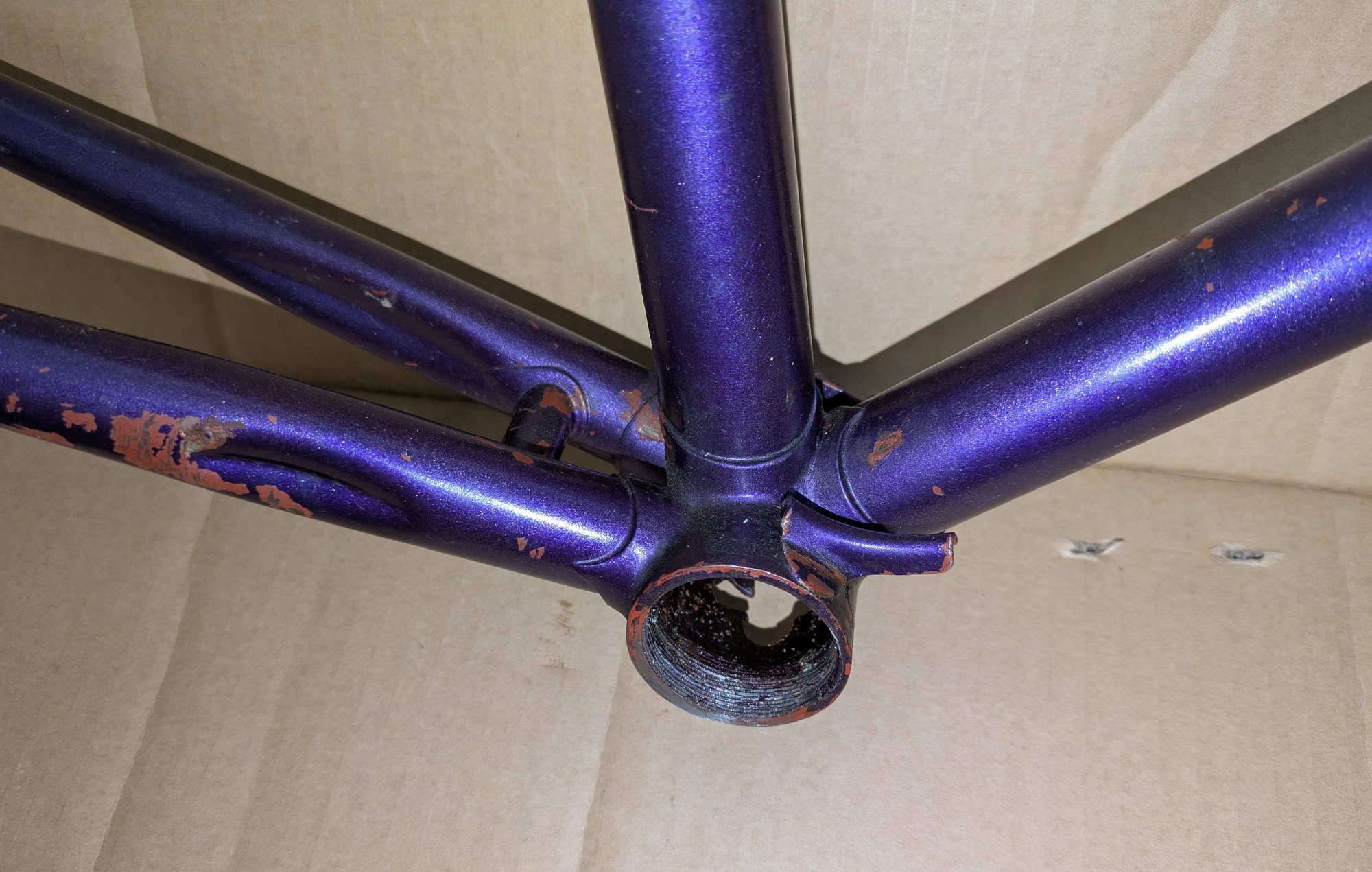
This frame came home recently, free because it had been wrecked. The Campy two bolt seatpost was 27.0, frozen in place. The Campy headset and bottom bracket were successfully saved. The Campy downtube shifters were missing parts and saved as donors.
I can see no spirals in any tubes or steerer. The frame itself seems fairly light, but I don't have an accurate scale to weight it.
The pics will be in two posts.




I can see no spirals in any tubes or steerer. The frame itself seems fairly light, but I don't have an accurate scale to weight it.
The pics will be in two posts.
daverup
Senior Member
close
04-29-26
- Join DateJun 2019
- LocationMichigan USA
- Posts:1,656
-
iTrader Positive Feedback0
-
iTrader Feedback Score(0)
-
Likes:2,441
-
Liked:1,953 Times in 807 Posts
More,


The reason it was scrap. Top tube dented and bowed to the side.
The reason it was scrap. Top tube dented and bowed to the side.

Mr. 66
Senior Member
close

04-28-26
- Join DateAug 2015
- Posts:4,162
-
iTrader Positive Feedback0
-
iTrader Feedback Score(0)
-
Likes:349
-
Liked:2,890 Times in 1,414 Posts
The dent doesn’t look real bad, press or rolling out will help the high spots down and will lessen the bow.
Thats not as bad as the damaged Frejus I was playing with last year.

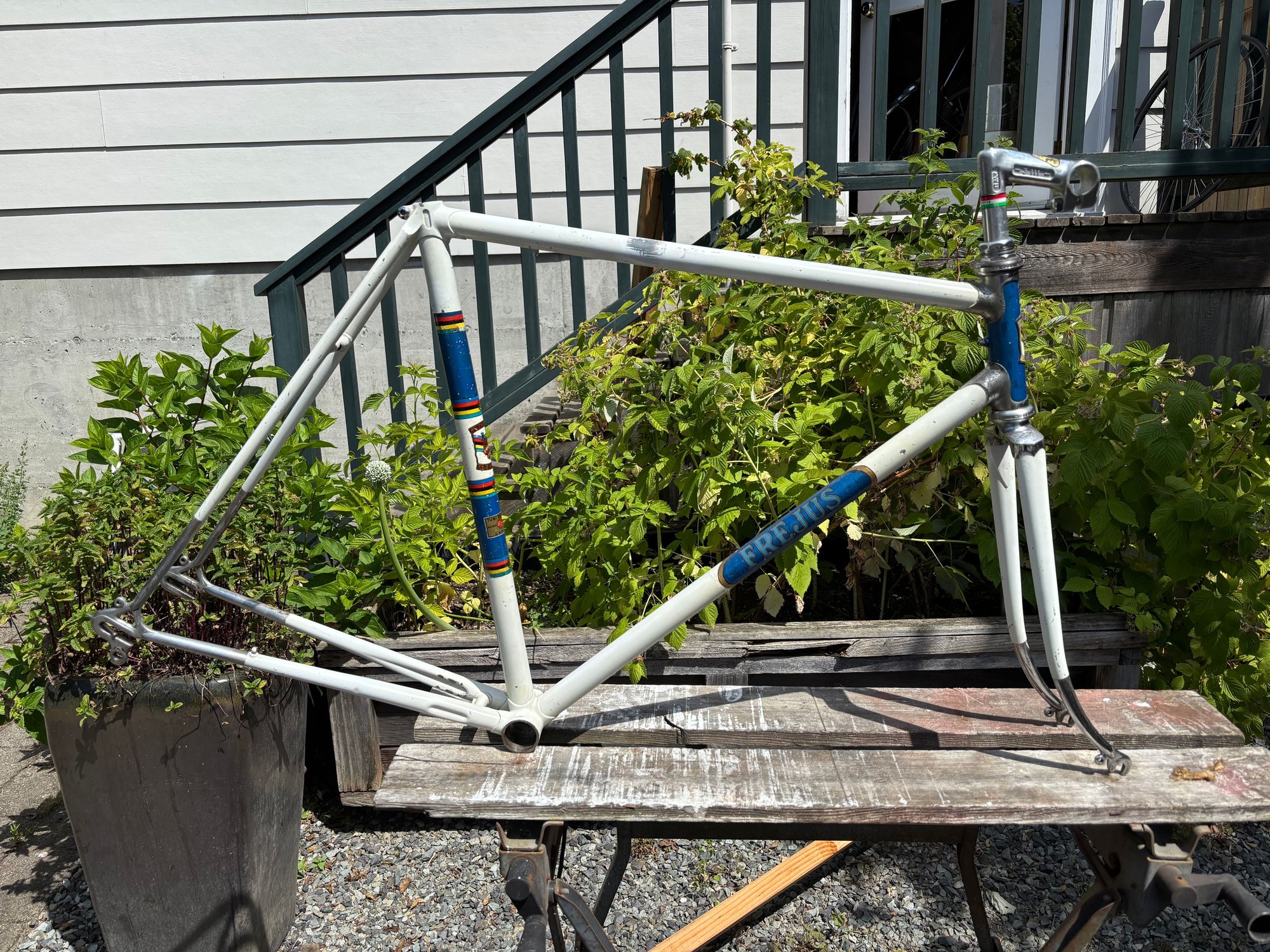
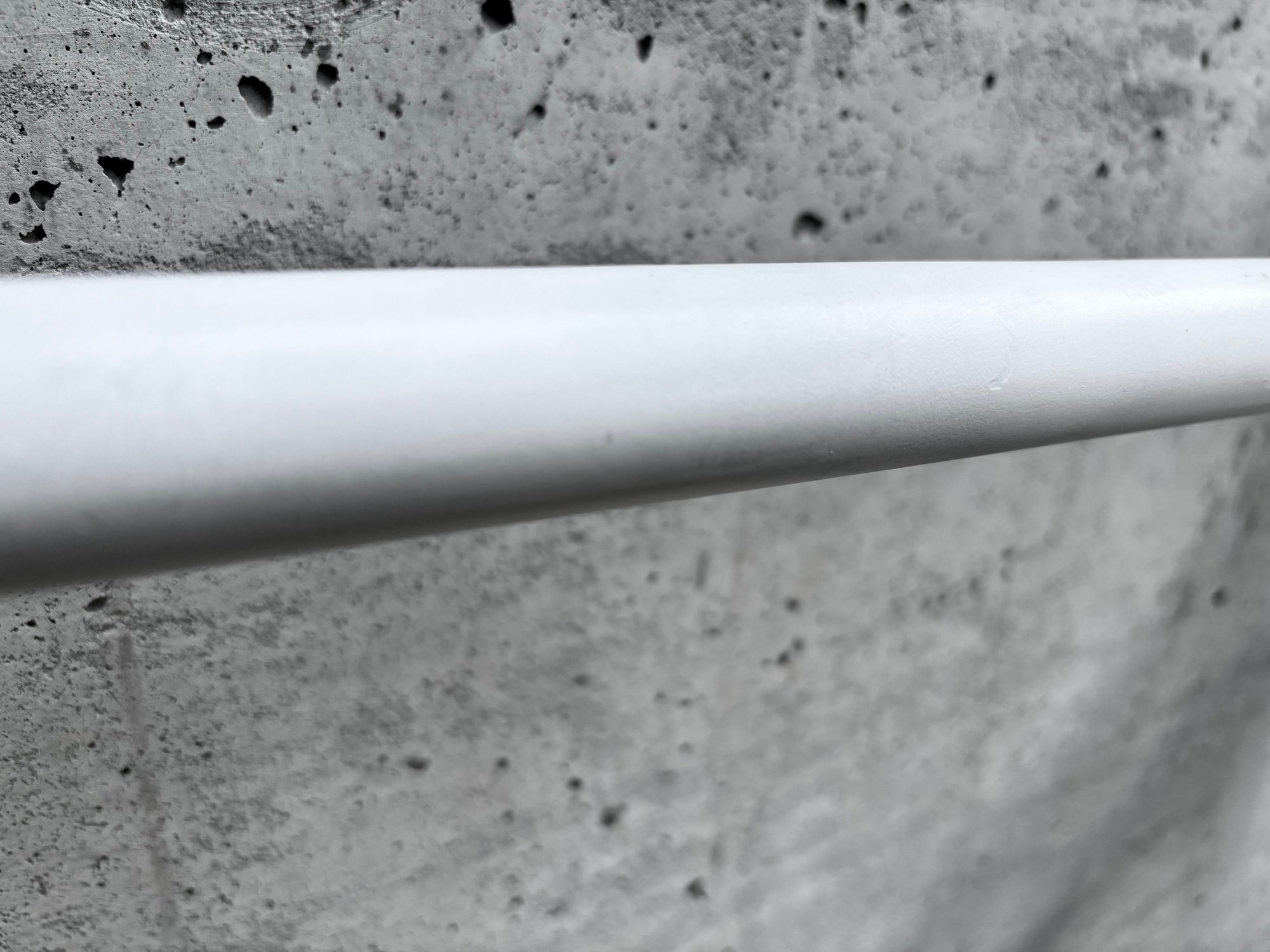
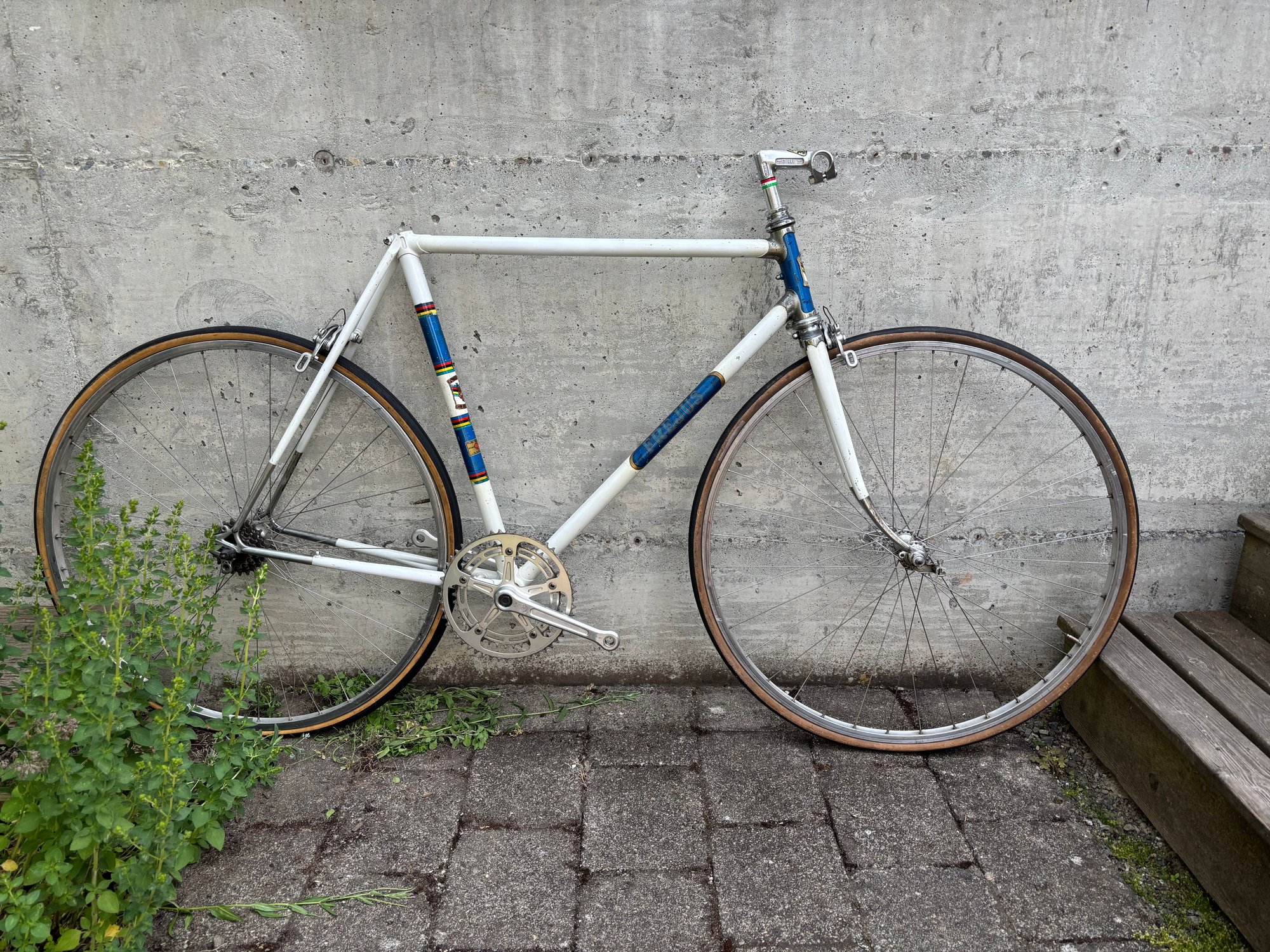
The dent on the Frejus was close to being a crease.
Thats not as bad as the damaged Frejus I was playing with last year.
The dent on the Frejus was close to being a crease.
seagrade
Senior Member
close
04-29-26
- Join DateJun 2022
- Posts:988
-
iTrader Positive Feedback0
-
iTrader Feedback Score(0)
-
Likes:4,024
-
Liked:2,405 Times in 570 Posts
Looks to me like the steerer tube has helical reinforcements at the crown. Look for five short reinforcements from the crown upwards. Confirms the steerer at least is Columbus…
Robvolz
Senior Member
close


04-28-26
- Join DateJul 2022
- LocationPac NW
- Posts:3,831
-
iTrader Positive Feedback0
-
iTrader Feedback Score(0)
-
Likes:3,321
-
Liked:3,865 Times in 1,466 Posts
looks like a 1972-77 Colnago super. There is no doubt in my mind its the real deal.
That number on the drop-out should match the number stamped on the fork steering tube.
Not sure where you are, but if you are near portland, happy to help you roll out that dent.
That number on the drop-out should match the number stamped on the fork steering tube.
Not sure where you are, but if you are near portland, happy to help you roll out that dent.

unworthy1
Stop reading my posts!
close

04-28-26
- Join DateSep 2004
- Posts:13,985
-
iTrader Positive Feedback0
-
iTrader Feedback Score(0)
-
Likes:1,787
-
Liked:2,174 Times in 1,428 Posts
given the portacatena DO it would be much more likely a '77 or possibly even a tick later.
Ernesto may have been a very early adopter but the "official" date that it was in the Campy catalog was (so they say) '78
also: if the 27.0 seatpost is correct size then it may be built with SP tubing, and given the apparent size of the frame that would not be any surprise
Ernesto may have been a very early adopter but the "official" date that it was in the Campy catalog was (so they say) '78
also: if the 27.0 seatpost is correct size then it may be built with SP tubing, and given the apparent size of the frame that would not be any surprise
daverup
Senior Member
close
04-29-26
- Join DateJun 2019
- LocationMichigan USA
- Posts:1,656
-
iTrader Positive Feedback0
-
iTrader Feedback Score(0)
-
Likes:2,441
-
Liked:1,953 Times in 807 Posts
I'm just guessing, but does the lack of shifter mount braze ons indicate an earlier date?
daverup
Senior Member
close
04-29-26
- Join DateJun 2019
- LocationMichigan USA
- Posts:1,656
-
iTrader Positive Feedback0
-
iTrader Feedback Score(0)
-
Likes:2,441
-
Liked:1,953 Times in 807 Posts
Quote:
That number on the drop-out should match the number stamped on the fork steering tube.
Not sure where you are, but if you are near portland, happy to help you roll out that dent.
The number "41" on the dropout is the same as on the steering tube.Originally Posted by Robvolz
looks like a 1972-77 Colnago super. There is no doubt in my mind its the real deal.That number on the drop-out should match the number stamped on the fork steering tube.
Not sure where you are, but if you are near portland, happy to help you roll out that dent.
I appreciate the offer to roll it out, but Michigan is too far from Portland for this. I really don't know if I will do anything with this frame. Seems like a worse than average money pit.
Doug Fattic
framebuilder
close

04-29-26
- Join DateDec 2009
- LocationNiles, Michigan
- Posts:1,781
-
iTrader Positive Feedback0
-
iTrader Feedback Score(0)
-
Likes:163
-
Liked:2,691 Times in 896 Posts
I know there are Colnago experts here that know more than me. I have belonged to the Masi brand club after Faliero made me one in Milan in 1972. The down tube lug only cutout and also the bottom bracket cutout make me think this was an early 70's frame. The top tube cable guides indicates a later date. I've painted a lot of Colnagos over the years but I've been guided by prior decals as to what replacements were needed. Back in the 70's and 80's, repainting frames every 3 to 5 years was a common practice. This one looks like it has had an Imron redo sometime. That is when the top tube guides could have been added. I did a lot of that back then.
Where in Michigan are you located? I'm in Niles in the SW corner just above South Bend, IN. I've got all the tools to roll it out (starting with wood blocks then going to aluminum) but I don't think the results would be great. Typically it also takes filling with brass and maybe body putty after priming. If the frame has sentimental value a new section of top tube could be spliced in. One of my former framebuildimg class students wants to do this with a Weigle. Yours would be good practice to refine skills so he doesn't mess up the Weigle.
Where in Michigan are you located? I'm in Niles in the SW corner just above South Bend, IN. I've got all the tools to roll it out (starting with wood blocks then going to aluminum) but I don't think the results would be great. Typically it also takes filling with brass and maybe body putty after priming. If the frame has sentimental value a new section of top tube could be spliced in. One of my former framebuildimg class students wants to do this with a Weigle. Yours would be good practice to refine skills so he doesn't mess up the Weigle.
Robvolz
Senior Member
close
04-28-26
- Join DateJul 2022
- LocationPac NW
- Posts:3,831
-
iTrader Positive Feedback0
-
iTrader Feedback Score(0)
-
Likes:3,321
-
Liked:3,865 Times in 1,466 Posts
Good call on the drilled drop-outs.
I don't think the cable guides were put on after it left the factory because Colnago weirdly only used 2 when everyone else used 3.
I have a 1975 frame that is spot on with this except for the drilled drop outs. No shifter bosses either.
I only know its a 1975 because my dad bought it from Colnago and had the paperwork.
That portacatena was issued in 1977, the year before Colnago started panto onto the spear-tips.
The lack of shifter bosses is odd, but still an option back then. Campy had their shifters on clamps available up until the late 80s.
I think you have a 1977 frame.
I don't think the cable guides were put on after it left the factory because Colnago weirdly only used 2 when everyone else used 3.
I have a 1975 frame that is spot on with this except for the drilled drop outs. No shifter bosses either.
I only know its a 1975 because my dad bought it from Colnago and had the paperwork.
That portacatena was issued in 1977, the year before Colnago started panto onto the spear-tips.
The lack of shifter bosses is odd, but still an option back then. Campy had their shifters on clamps available up until the late 80s.
I think you have a 1977 frame.
Doug Fattic
framebuilder
close
04-29-26
- Join DateDec 2009
- LocationNiles, Michigan
- Posts:1,781
-
iTrader Positive Feedback0
-
iTrader Feedback Score(0)
-
Likes:163
-
Liked:2,691 Times in 896 Posts
This subject thread was an invitation for me to google Colnago's time line. One feature of this frame I missed at first was that the BB shell looks like it is investment cast. The first ones I saw were made by Roto in 1975 the year I went to England to learn how to build frames. Investment cast frame materials became popular a year or 2 later. Looking to see if a frame has any IC parts is one way to know if it was made before or after 1976.
This bike is a good illustration of how any repair costs will exceed its market value quickly. The primary reason to make it whole again would be for sentimental reasons. Either it was a loved frame in its youth or reminded one of a loved frame that somehow got away. And repairing the top tube will just add to the cost/value disparity. The easiest way to roll it out and add filler will still be an obvious repair when inspected. Replacing the top tube or splicing a new section is a time consuming process. Even a simple one color paint job without decals can't be done all that fast and if putting on decals under clears can double or triple the cost. I estimate my paint costs - not including overhead or time involved - to be at least $150. A detail generally not considered to be much of an extra cost by the general public is the chrome that has to be masked and unmasked. To do that right begins with paint removal (it can't be just sandblasted).
This frame is a candidate for a hobbyist where time spent is enjoyable and not a money drain and the end result can make a famous brand ridable again. The OP and I both live in Michigan but we are a LONG way from each other. .
This bike is a good illustration of how any repair costs will exceed its market value quickly. The primary reason to make it whole again would be for sentimental reasons. Either it was a loved frame in its youth or reminded one of a loved frame that somehow got away. And repairing the top tube will just add to the cost/value disparity. The easiest way to roll it out and add filler will still be an obvious repair when inspected. Replacing the top tube or splicing a new section is a time consuming process. Even a simple one color paint job without decals can't be done all that fast and if putting on decals under clears can double or triple the cost. I estimate my paint costs - not including overhead or time involved - to be at least $150. A detail generally not considered to be much of an extra cost by the general public is the chrome that has to be masked and unmasked. To do that right begins with paint removal (it can't be just sandblasted).
This frame is a candidate for a hobbyist where time spent is enjoyable and not a money drain and the end result can make a famous brand ridable again. The OP and I both live in Michigan but we are a LONG way from each other. .