
nlerner
Senior Member
close


04-28-26
- Join DateDec 2005
- Posts:18,752
-
iTrader Positive Feedback0
-
iTrader Feedback Score(0)
-
Likes:8,855
-
Liked:11,475 Times in 3,768 Posts
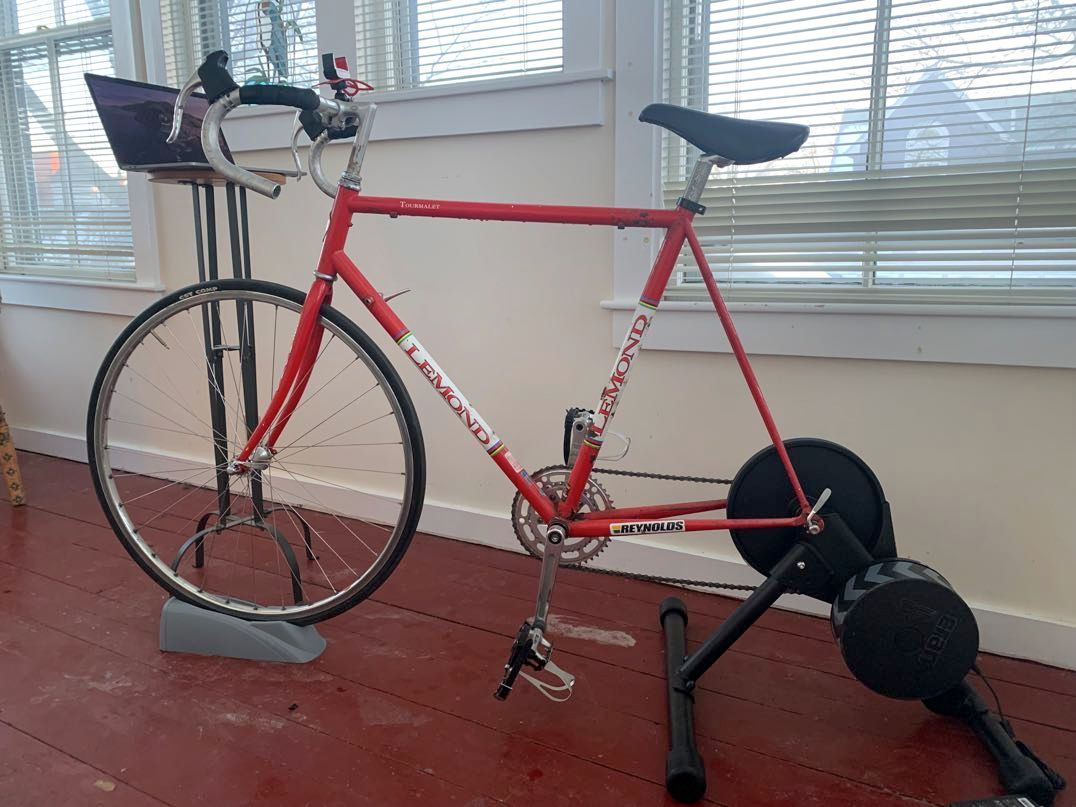
Oh, I can report that I'm running a 23mm tire on my trainer bike. I'm ripping it in Watopia!
Classtime
Senior Member
close


04-28-26
- Join DateJan 2015
- LocationLos Angeles
- Posts:5,766
-
iTrader Positive Feedback0
-
iTrader Feedback Score(0)
-
Likes:4,854
-
Liked:3,314 Times in 1,640 Posts
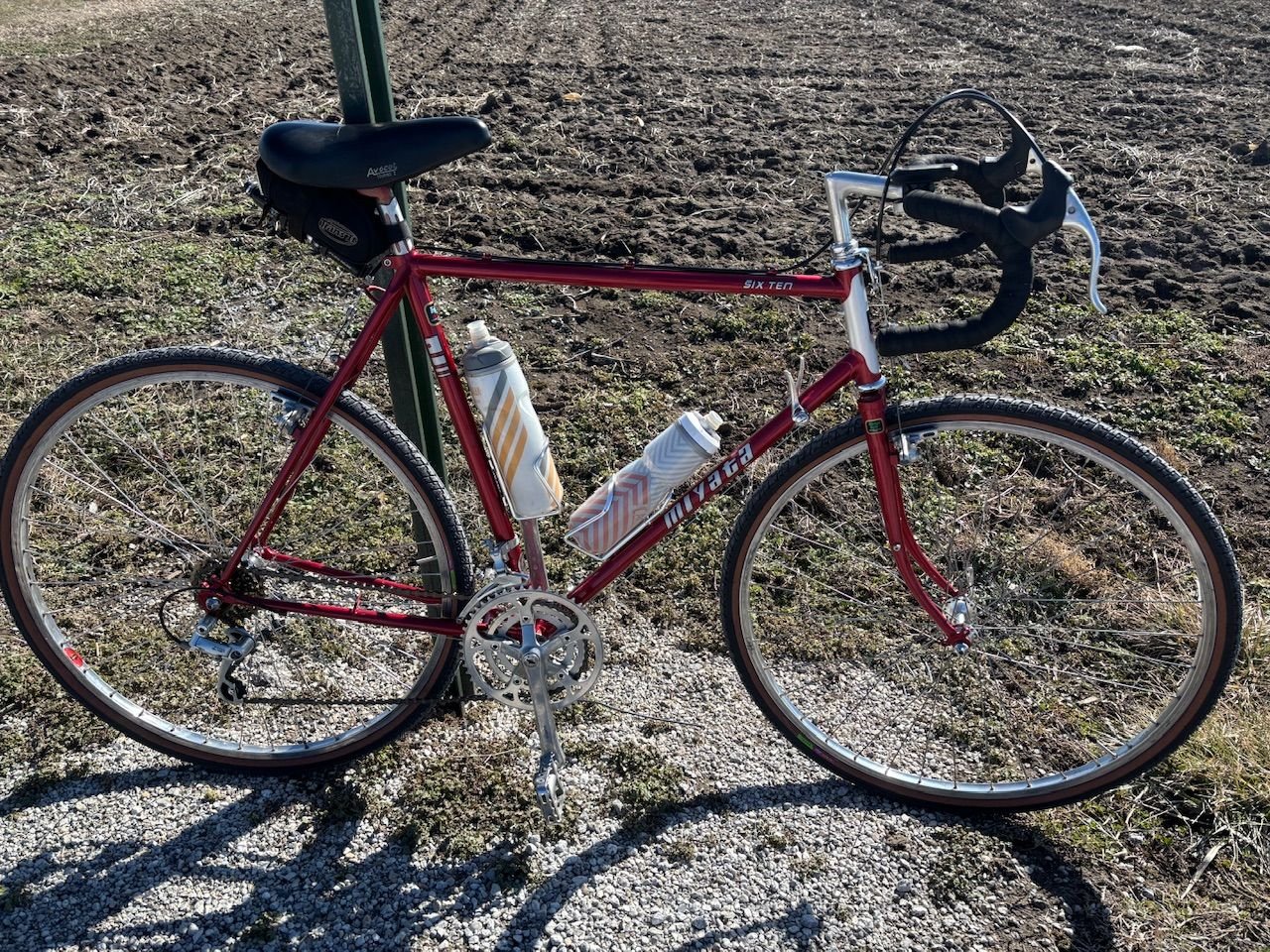
What I gather from this thread is that most 70’s & 80s 700c bikes with tires wider than 25mm are resto-mods. Many bike boom bikes came with 27x1/4” tires and are legit C&V.
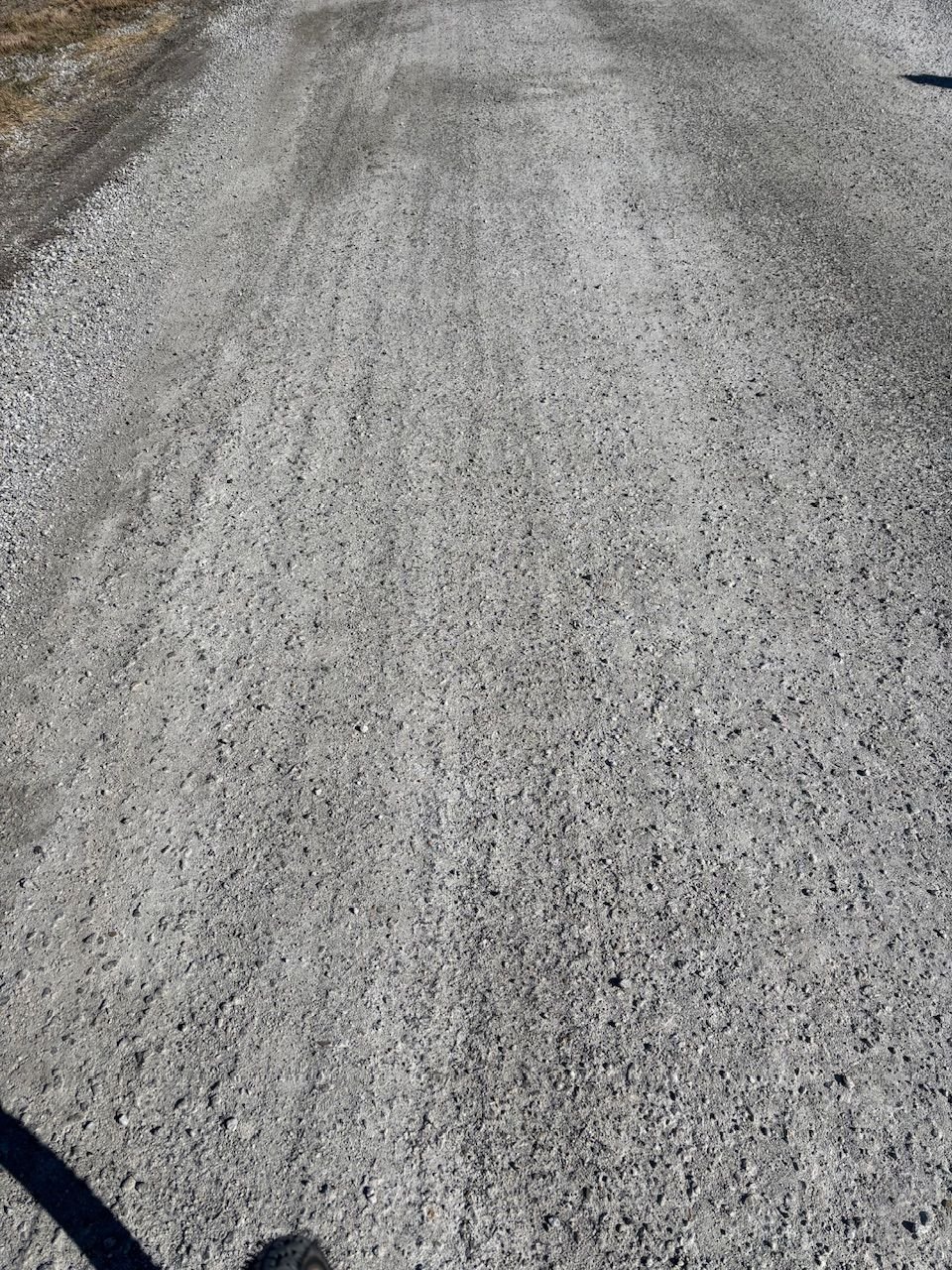
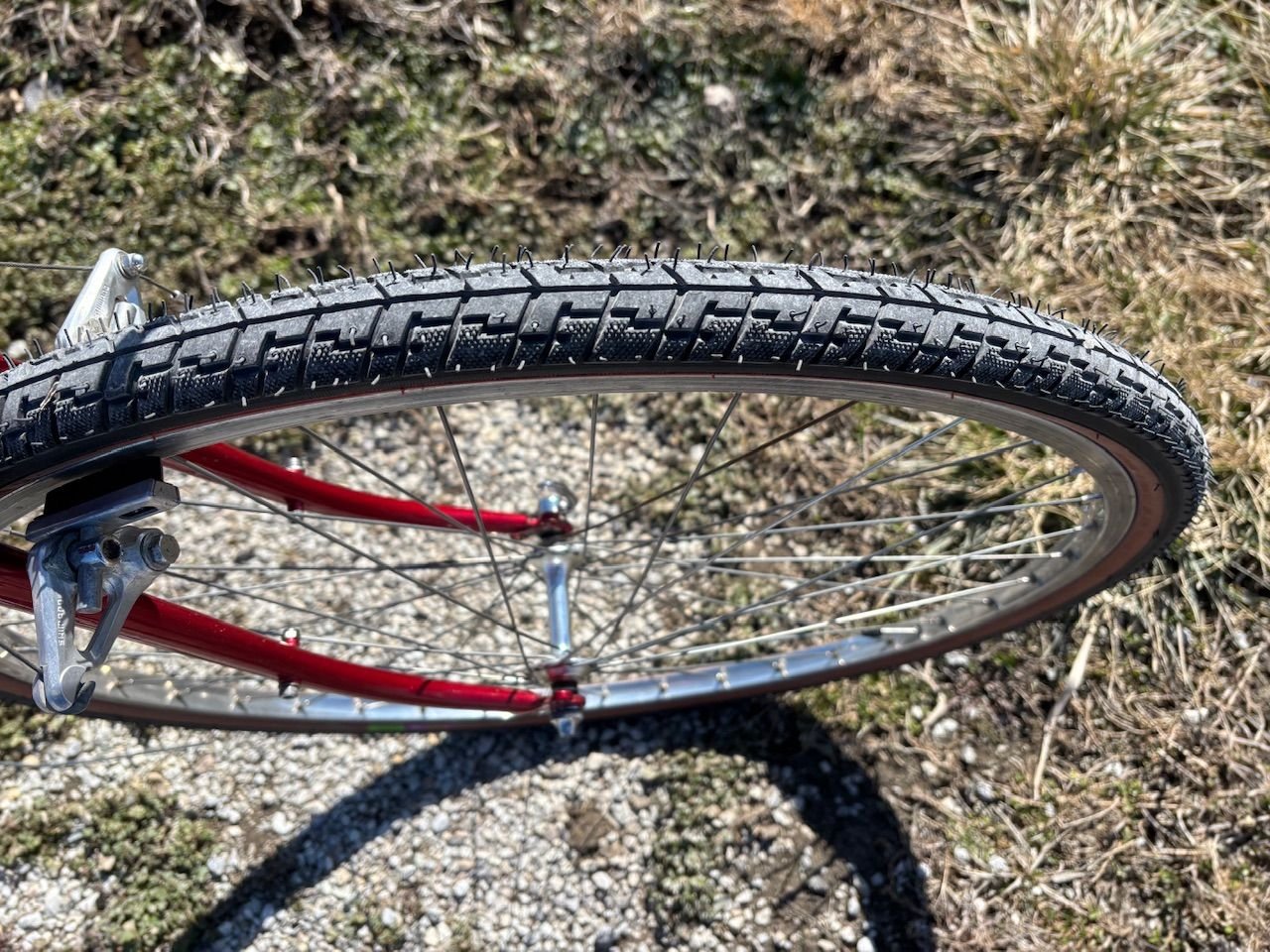
Took a trip to my LBS for tires today. They didn’t have anything that I really wanted there so I’m going to have to order a set. I went ahead and bought some cheap 700x38 Kenda tires for $40 so I can at least ride the bike until they come in. So Kendas 38’s measure to 33. They don’t look bad but at 60psi they’re a little harsh. But at $19.99 a tire I wasn’t expecting much. I do like the width of the 33 for my roads though.
Classtime
Senior Member
close
04-28-26
- Join DateJan 2015
- LocationLos Angeles
- Posts:5,766
-
iTrader Positive Feedback0
-
iTrader Feedback Score(0)
-
Likes:4,854
-
Liked:3,314 Times in 1,640 Posts
I bought those Kendas once. Lucky for me covid was right around the corner and I had a bike to sell.

iab
Senior Member
close

04-28-26
- Join DateJun 2006
- LocationNW Burbs, Chicago
- Posts:12,848
-
iTrader Positive Feedback0
-
iTrader Feedback Score(0)
-
Likes:1
-
Liked:5,360 Times in 1,888 Posts
Quote:
I was thinking of my first car, a 1964 Ford Galaxy 500. At 70mph it felt like I was really flying. Fast forward to our 2014 Toyota Highlander. On long distance trips I sometimes look down and see I'm pushing 85, slow down to 60, and it doesn't even feel like I'm moving.
My brother and I bought the first car , 1965 GT350, in 1982. Glass pack mufflers. Piece of fiberglass instead of rear seats. When you pulled the ton, every sense was overwhelmed. The noise, the smell, and since it rode like a truck, your vision was affected by the extreme road feel. Originally Posted by gugie
Excellent points.I was thinking of my first car, a 1964 Ford Galaxy 500. At 70mph it felt like I was really flying. Fast forward to our 2014 Toyota Highlander. On long distance trips I sometimes look down and see I'm pushing 85, slow down to 60, and it doesn't even feel like I'm moving.
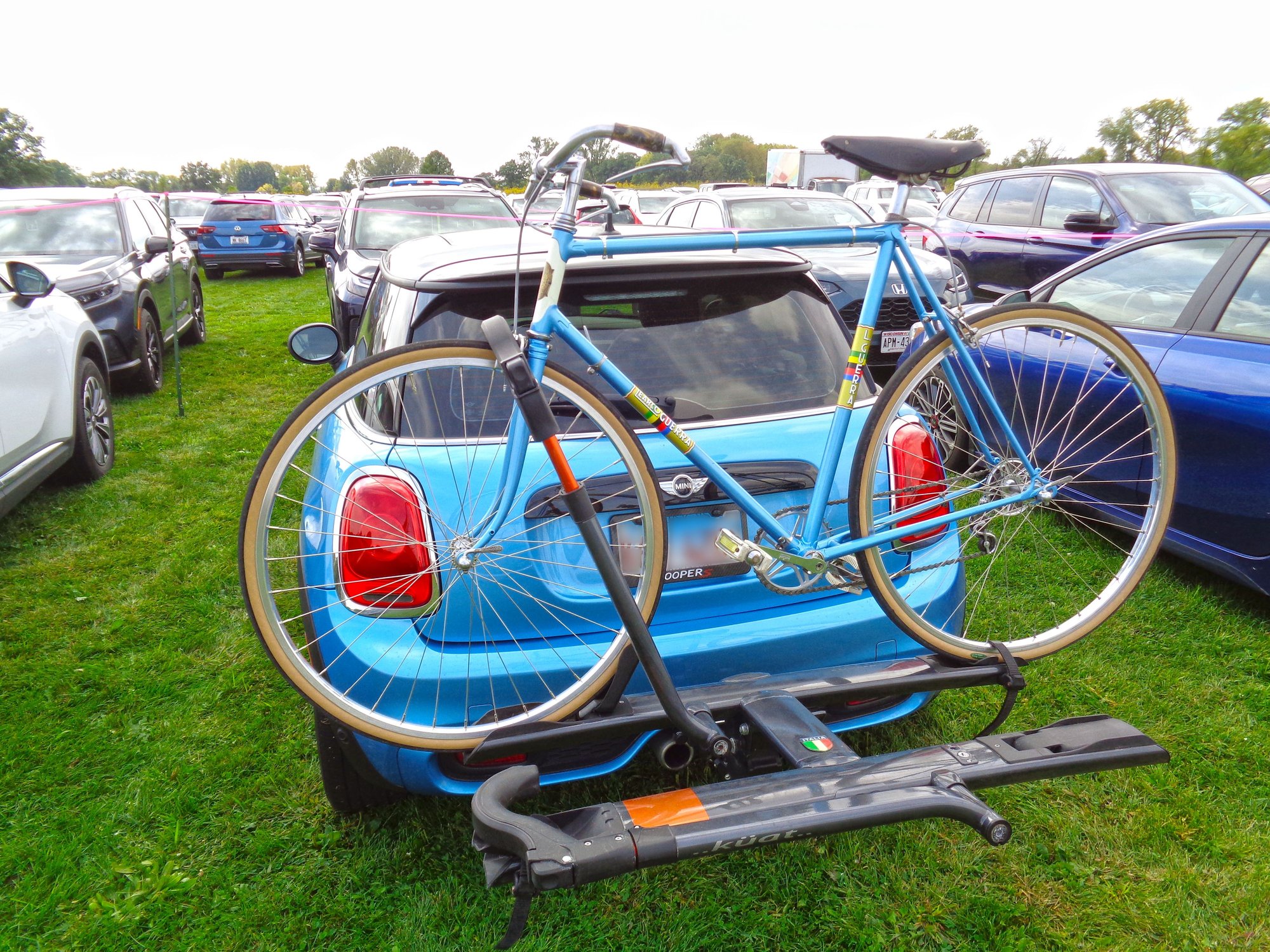
The second car, 2019 Mini, has a faster 0-60 than than the first. And that is before the stage 2 tune I plan on doing. And while I have no urge to drive 100+ anymore, I have gotten it to 90 without noticing. Looked down, said oh crap in my head, and slowed down. Quiet, smooth. It's a cloud compared to the Shelby and will drop the Shelby like a bag of wet sand.
The only thing I liked more about the Shelby, I would not say it is better or worse, is the rear wheel drive. I prefer the understeer over the oversteer of the Mini. I hate front wheel drive. But to be clear, they both suck for handling when compare to allwheel.


icemilkcoffee
Senior Member
close

04-28-26
- Join DateAug 2009
- Posts:4,254
-
iTrader Positive Feedback0
-
iTrader Feedback Score(0)
-
Likes:5,845
-
Liked:3,655 Times in 1,883 Posts
Quote:
That's a 0mm tire! 0 rolling resistance!Originally Posted by nlerner
Oh, I can report that I'm running a 23mm tire on my trainer bike. I'm ripping it in Watopia!

squirtdad
Senior Member
close
04-28-26
- Join DateJul 2006
- LocationSan Jose (Willow Glen) Ca
- Posts:11,470
-
iTrader Positive Feedback0
-
iTrader Feedback Score(0)
-
Likes:3,354
-
Liked:4,863 Times in 2,443 Posts
When riding yesterday (today it was sea kayaking) it struck me that width as the only discussion point is an over simplifictiona
Supple tires in also part of the discussion 32mm gator skins are not going to be more comfortable or faster than 28 mm high end tire with supple sidewalls
High end tires are part of the deal also, meaning expensive
Tubeless ready tires with tubes will not ride as nicely as the same non tubeless ready tire as sidewalls in tubeless ready are not as supple
Type of tube or tubeless makes a difference
Inflation needs to be correct for tire size and total weight of bike, accessories and rider
Supple tires in also part of the discussion 32mm gator skins are not going to be more comfortable or faster than 28 mm high end tire with supple sidewalls
High end tires are part of the deal also, meaning expensive
Tubeless ready tires with tubes will not ride as nicely as the same non tubeless ready tire as sidewalls in tubeless ready are not as supple
Type of tube or tubeless makes a difference
Inflation needs to be correct for tire size and total weight of bike, accessories and rider

gugie
Bike Butcher of Portland
close
04-28-26
- Join DateJul 2014
- LocationPortland, OR
- Posts:12,427
-
iTrader Positive Feedback0
-
iTrader Feedback Score(0)
-
Likes:1,251
-
Liked:7,916 Times in 2,860 Posts
Quote:
Must be a 0 bike.Originally Posted by icemilkcoffee
That's a 0mm tire! 0 rolling resistance!
jackbombay
Senior Member
close

04-19-26
- Join DateJun 2019
- LocationPortland Oregon
- Posts:1,063
-
iTrader Positive Feedback0
-
iTrader Feedback Score(0)
-
Likes:1,040
-
Liked:537 Times in 308 Posts
Quote:
Most people way over inflate their tires, I like the numbers from this tire pressure calculator a lot. For me at 165 pounds it suggests 60 psi in a 28mm tire for rough surfaces, thaty seems crazy low, but it turns the bike into a hover craft on the coarsely chip sealed roads of Death Valley while not being soft enough to get corner squirm.Originally Posted by squirtdad
Inflation needs to be correct for tire size and total weight of bike, accessories and rider
https://www.renehersecycles.com/tire...ftLdwvYtNxiczs
I ride a TREK SL6 with 32 tyres. With my othe bikes running a maximum of 25 the comfort is totally amazing! They are also tubeless which has given me three years of (almost) puncture free riding. Most of it is road work but the british roads today are appalling.
squirtdad
Senior Member
close
04-28-26
- Join DateJul 2006
- LocationSan Jose (Willow Glen) Ca
- Posts:11,470
-
iTrader Positive Feedback0
-
iTrader Feedback Score(0)
-
Likes:3,354
-
Liked:4,863 Times in 2,443 Posts
Quote:
https://www.renehersecycles.com/tire...ftLdwvYtNxiczs
I have tried all of the calculators and this is my go to one, simple and the results have worked for me.Originally Posted by jackbombay
Most people way over inflate their tires, I like the numbers from this tire pressure calculator a lot. For me at 165 pounds it suggests 60 psi in a 28mm tire for rough surfaces, thaty seems crazy low, but it turns the bike into a hover craft on the coarsely chip sealed roads of Death Valley while not being soft enough to get corner squirm.https://www.renehersecycles.com/tire...ftLdwvYtNxiczs
I do tend to go to the high end of the suggested range. A 28 for me, using 250 lbs (me plus bike) it gives a range of 82 to 101 I run 90 to 95
Classtime
Senior Member
close
04-28-26
- Join DateJan 2015
- LocationLos Angeles
- Posts:5,766
-
iTrader Positive Feedback0
-
iTrader Feedback Score(0)
-
Likes:4,854
-
Liked:3,314 Times in 1,640 Posts
Funny that numbers from J.H.'s tire pressure chart is what I have been using without knowing it. For my last two rides on my Le Champion, I used 26mm Gravel King Slicks at 90psi instead of 30 mm Challenge Strada Bianca Pros at 60 psi (at my current 154 lbs) and I was maybe even more "comfortable" over a some of the rough patches of my regular route. (It sure does look better with skinnier tires.)

noglider
aka Tom Reingold
close

04-28-26
- Join DateJan 2009
- LocationNew York, NY, and High Falls, NY, USA
- Posts:44,115
-
iTrader Positive Feedback0
-
iTrader Feedback Score(0)
-
Likes:6,942
-
Liked:6,327 Times in 3,389 Posts
The original question was favorite, not fastest. Favorite can be based on feel or even look. It can depend not only on road conditions but the goal of riding. Carrying cargo will change the feel. I notice high pressure is fine on a light bike and even when I have a heavy backpack, but when I attach my luggage to my bike, hitting bumps can be uncomfortable. If I remember right, Heine's argument about efficiency is that the body fatigues from road shock so over a long ride, more suspension is preferable even if it's not more energy efficient as a machine. (I may be extrapolating there.) So wouldn't that mean that it changes depending on how long your ride? My commute is 4 miles each way, and road shock probably doesn't weigh into it much, but on a long weekend ride, it probably does.
And I'd bet the size tires you're used to weigh in as preferable, too.
One thing that someone -- I think Heine -- mention is that narrow tires feel faster because they respond better to "steering input," i.e. the tiny movements we make left and right on our handlebars. Even when you're not turning deliberately, you can tell that it requires less effort on a narrow tire at high pressure. This could create an illusion of faster-ness.
And what about age? The discs in our backs compress over time, so -- spitballing here! -- we older folks want our bikes softer than we wanted them when we were young and foolish. I dunno. Waddya think?
The science is not settled. There are placebo effects, and "feels faster" sometimes translates to "is faster." (And again, is faster the most important parameter?) Also, comparing widths of tires should require us to keep all variables the same. But that's impossible. A wider tire of the same construction is going to be heavier. We could switch to a lighter method of construction to maintain the weight, but now we've changed another variable. The science is not settled, and there are trends in bikes (and everything else) that come in waves.
And I'd bet the size tires you're used to weigh in as preferable, too.
One thing that someone -- I think Heine -- mention is that narrow tires feel faster because they respond better to "steering input," i.e. the tiny movements we make left and right on our handlebars. Even when you're not turning deliberately, you can tell that it requires less effort on a narrow tire at high pressure. This could create an illusion of faster-ness.
And what about age? The discs in our backs compress over time, so -- spitballing here! -- we older folks want our bikes softer than we wanted them when we were young and foolish. I dunno. Waddya think?
The science is not settled. There are placebo effects, and "feels faster" sometimes translates to "is faster." (And again, is faster the most important parameter?) Also, comparing widths of tires should require us to keep all variables the same. But that's impossible. A wider tire of the same construction is going to be heavier. We could switch to a lighter method of construction to maintain the weight, but now we've changed another variable. The science is not settled, and there are trends in bikes (and everything else) that come in waves.

Senior Member
Doc Sharptail
Senior Member
close
04-28-26
- Join DateAug 2024
- LocationWinnipeg Canada
- Posts:733
-
iTrader Positive Feedback0
-
iTrader Feedback Score(0)
-
Likes:1,155
-
Liked:1,001 Times in 384 Posts
Kinda figured the topic was going to sidetrack into inflation pressures here.
Just a minor caveat here:
Some tire manufacturers took the time to stamp the tire sidewalls with both minimum and maximum pressures- which should be referred to first, before any on-line inflation guide is consulted.
Personally, running low pressures on a road style tire is an invitation to punctures- I seem to puncture a lot less at the minimum, or above it recommendation pressure than I do below it.
-D.S.
Just a minor caveat here:
Some tire manufacturers took the time to stamp the tire sidewalls with both minimum and maximum pressures- which should be referred to first, before any on-line inflation guide is consulted.
Personally, running low pressures on a road style tire is an invitation to punctures- I seem to puncture a lot less at the minimum, or above it recommendation pressure than I do below it.
-D.S.
Atlas Shrugged
Senior Member
close
04-28-26
- Join DateMar 2010
- Posts:2,611
-
iTrader Positive Feedback0
-
iTrader Feedback Score(0)
-
Likes:3,268
-
Liked:2,196 Times in 1,119 Posts
Quote:
And I'd bet the size tires you're used to weigh in as preferable, too.
One thing that someone -- I think Heine -- mention is that narrow tires feel faster because they respond better to "steering input," i.e. the tiny movements we make left and right on our handlebars. Even when you're not turning deliberately, you can tell that it requires less effort on a narrow tire at high pressure. This could create an illusion of faster-ness.
And what about age? The discs in our backs compress over time, so -- spitballing here! -- we older folks want our bikes softer than we wanted them when we were young and foolish. I dunno. Waddya think?
The science is not settled. There are placebo effects, and "feels faster" sometimes translates to "is faster." (And again, is faster the most important parameter?) Also, comparing widths of tires should require us to keep all variables the same. But that's impossible. A wider tire of the same construction is going to be heavier. We could switch to a lighter method of construction to maintain the weight, but now we've changed another variable. The science is not settled, and there are trends in bikes (and everything else) that come in waves.
Your premise is flawed in that you figure the increasing popularity of wider tires is because there are no substantive performance differences and that it is a trend. The use of wider tires is not like the preference towards neon colours which could be considered a trend. Much like friction shifting, steel lugged frames, toe clips, tubular tires, 5 speed freewheels, rim brakes, etc. are or have been phased out due to performance advantages so are narrow high pressure tires.Originally Posted by noglider
The original question was favorite, not fastest. Favorite can be based on feel or even look. It can depend not only on road conditions but the goal of riding. Carrying cargo will change the feel. I notice high pressure is fine on a light bike and even when I have a heavy backpack, but when I attach my luggage to my bike, hitting bumps can be uncomfortable. If I remember right, Heine's argument about efficiency is that the body fatigues from road shock so over a long ride, more suspension is preferable even if it's not more energy efficient as a machine. (I may be extrapolating there.) So wouldn't that mean that it changes depending on how long your ride? My commute is 4 miles each way, and road shock probably doesn't weigh into it much, but on a long weekend ride, it probably does.And I'd bet the size tires you're used to weigh in as preferable, too.
One thing that someone -- I think Heine -- mention is that narrow tires feel faster because they respond better to "steering input," i.e. the tiny movements we make left and right on our handlebars. Even when you're not turning deliberately, you can tell that it requires less effort on a narrow tire at high pressure. This could create an illusion of faster-ness.
And what about age? The discs in our backs compress over time, so -- spitballing here! -- we older folks want our bikes softer than we wanted them when we were young and foolish. I dunno. Waddya think?
The science is not settled. There are placebo effects, and "feels faster" sometimes translates to "is faster." (And again, is faster the most important parameter?) Also, comparing widths of tires should require us to keep all variables the same. But that's impossible. A wider tire of the same construction is going to be heavier. We could switch to a lighter method of construction to maintain the weight, but now we've changed another variable. The science is not settled, and there are trends in bikes (and everything else) that come in waves.
Senior Member
Doc Sharptail
Senior Member
close
04-28-26
- Join DateAug 2024
- LocationWinnipeg Canada
- Posts:733
-
iTrader Positive Feedback0
-
iTrader Feedback Score(0)
-
Likes:1,155
-
Liked:1,001 Times in 384 Posts
Quote:
Not quite yet with the narrow "high" pressure tires- ask at any LBS for road tires and see what they come up with.Originally Posted by Atlas Shrugged
Your premise is flawed in that you figure the increasing popularity of wider tires is because there are no substantive performance differences and that it is a trend. The use of wider tires is not like the preference towards neon colours which could be considered a trend. Much like friction shifting, steel lugged frames, toe clips, tubular tires, 5 speed freewheels, rim brakes, etc. are or have been phased out due to performance advantages so are narrow high pressure tires.

Current rage seems to be folders. I'm less than impressed with them, and will be sticking with the w/o road tire as long as I can.
-D.S.
noglider
aka Tom Reingold
close
04-28-26
- Join DateJan 2009
- LocationNew York, NY, and High Falls, NY, USA
- Posts:44,115
-
iTrader Positive Feedback0
-
iTrader Feedback Score(0)
-
Likes:6,942
-
Liked:6,327 Times in 3,389 Posts
Quote:
I guess I kind-of succeeded because you seem to think I prefer narrow tires. Nope, I prefer wide, and the arguments for why they perform well is fairly convincing to me. Trend doesn't mean meaningless trend.Originally Posted by Atlas Shrugged
Your premise is flawed in that you figure the increasing popularity of wider tires is because there are no substantive performance differences and that it is a trend. The use of wider tires is not like the preference towards neon colours which could be considered a trend. Much like friction shifting, steel lugged frames, toe clips, tubular tires, 5 speed freewheels, rim brakes, etc. are or have been phased out due to performance advantages so are narrow high pressure tires.

SurferRosa
señor miembro
close
04-28-26
- Join DateDec 2018
- LocationPac NW
- Posts:3,515
-
iTrader Positive Feedback0
-
iTrader Feedback Score(0)
-
Likes:9,463
-
Liked:8,844 Times in 4,287 Posts
Quote:
What to do when the Vittoria sidewall reads "inflate to min 90 psi" and the Vittoria online calculator tells you to only go to 70 max ... for the rear!Originally Posted by Doc Sharptail
Some tire manufacturers took the time to stamp the tire sidewalls with both minimum and maximum pressures- which should be referred to first, before any on-line inflation guide is consulted.
Senior Member
Doc Sharptail
Senior Member
close
04-28-26
- Join DateAug 2024
- LocationWinnipeg Canada
- Posts:733
-
iTrader Positive Feedback0
-
iTrader Feedback Score(0)
-
Likes:1,155
-
Liked:1,001 Times in 384 Posts
Quote:
That is the reason I go with the tire markings. Personal experience says 70 on the rear is a bit on the low side for me, my bike, and the roads I ride. (pinch flatting)Originally Posted by SurferRosa
What to do when the Vittoria sidewall reads "inflate to min 90 psi" and the Vittoria online calculator tells you to only go to 70 max ... for the rear!
-D.S.

P!N20
Senior Member
close
04-28-26
- Join DateAug 2010
- LocationWurundjeri Country
- Posts:2,821
-
iTrader Positive Feedback0
-
iTrader Feedback Score(0)
-
Likes:1,313
-
Liked:2,390 Times in 1,130 Posts
Quote:
Start a thread about it and watch the outrage?Originally Posted by SurferRosa
What to do when the Vittoria sidewall reads "inflate to min 90 psi" and the Vittoria online calculator tells you to only go to 70 max ... for the rear!
jackbombay
Senior Member
close
04-19-26
- Join DateJun 2019
- LocationPortland Oregon
- Posts:1,063
-
iTrader Positive Feedback0
-
iTrader Feedback Score(0)
-
Likes:1,040
-
Liked:537 Times in 308 Posts
Quote:
The science is pretty settled, there is tons of information about tire rolling resistance and rim/tire aerodynamics on the web. The source I like best is https://www.bicyclerollingresistance.com/Originally Posted by noglider
The science is not settled. There are placebo effects, and "feels faster" sometimes translates to "is faster."

diphthong
velo-dilettante
close
04-28-26
- Join DateApr 2009
- Locationinsane diego, california
- Posts:9,000
-
iTrader Positive Feedback0
-
iTrader Feedback Score(0)
-
Likes:8,797
-
Liked:4,022 Times in 2,062 Posts
'23's roadie.

USAZorro
Señor Member
close
04-28-26
- Join DateOct 2004
- LocationHardy, VA
- Posts:18,460
-
iTrader Positive Feedback0
-
iTrader Feedback Score(0)
-
Likes:2,182
-
Liked:1,552 Times in 876 Posts
Quote:
what would you have said? Don't believe the hype! The more of us who purchase tires designed for our rims, the more likely they will be produced.
Originally Posted by Bianchi84
I don't know why many people want such wide tires. Is it because it's promoted so much? Everyone needs widev tires now. 23 to 25c is what I have and still used. Be honest; if back in 1985 someone told you to squeeze 35c tires onto your bikewhat would you have said? Don't believe the hype! The more of us who purchase tires designed for our rims, the more likely they will be produced.
It is NOT hype. I don't care what anyone puts on their bike, but don't dismiss those of us who feel and appreciate the difference made by wider tires as trend chassers.
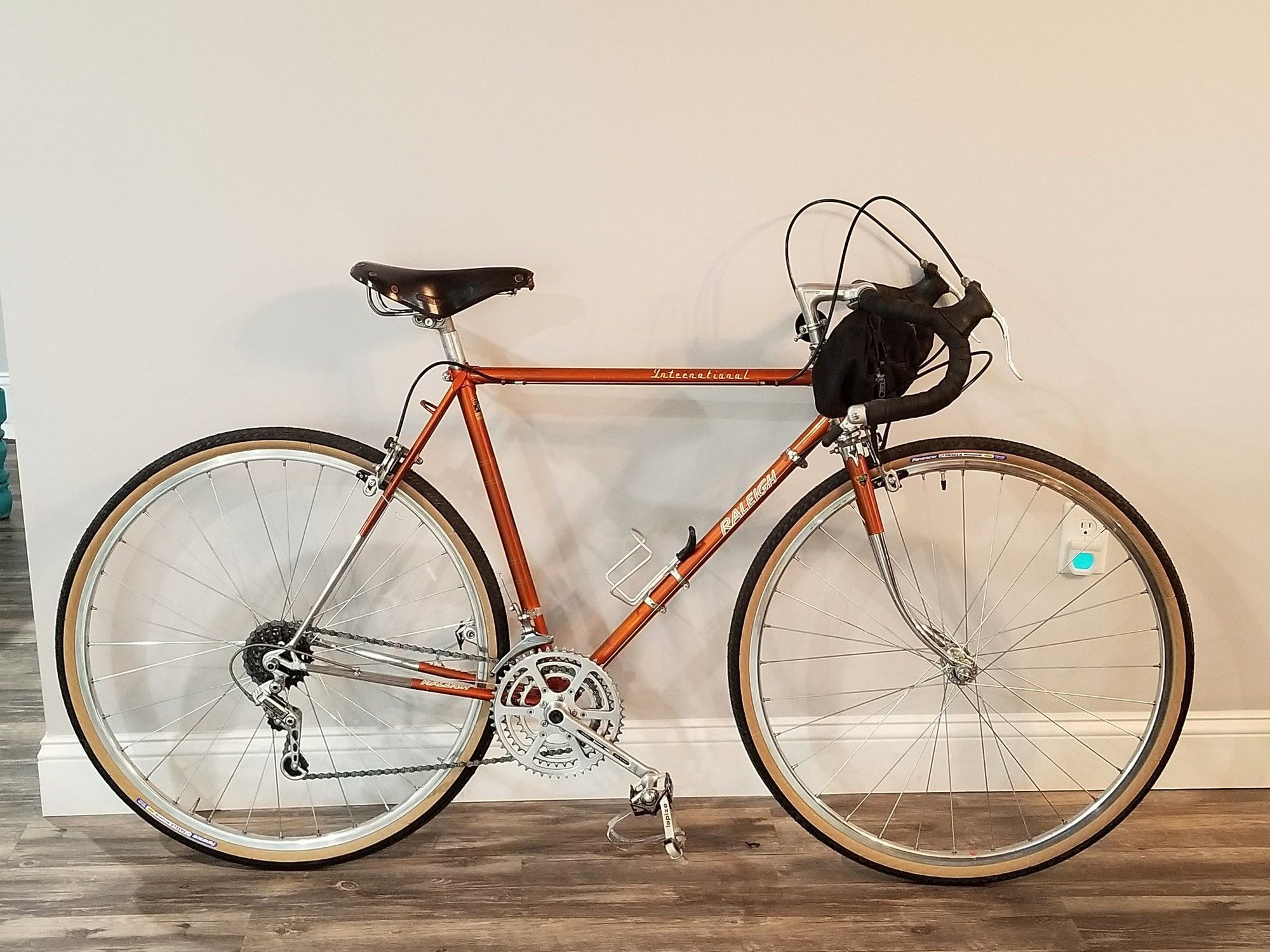
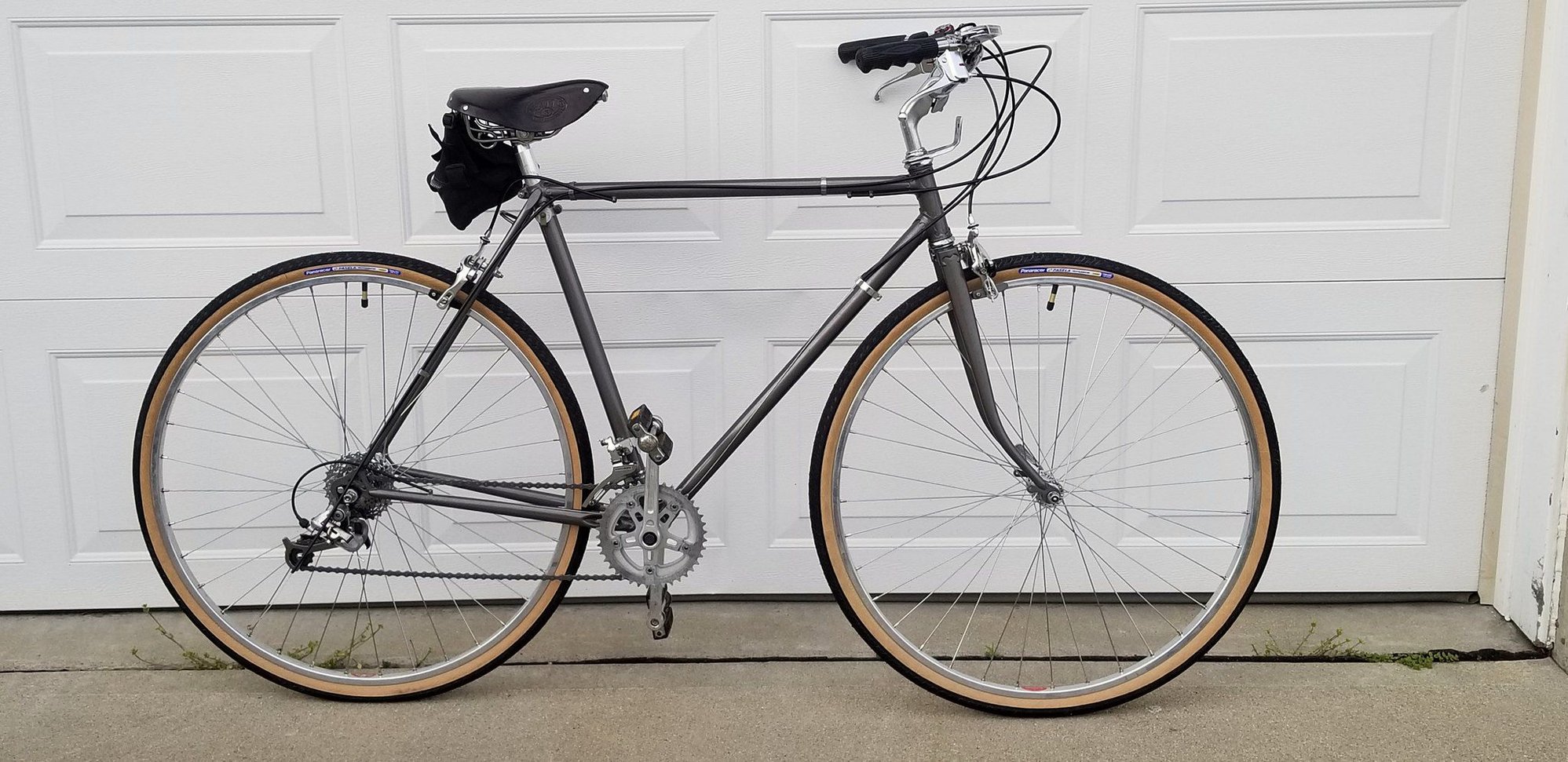
The narrowest I will ride now are a wheelset I have with 26mm Compass tires, but depending on the bike and usage, I'll go only go with 28s or wider. I have 35s on my International and it doesn't sacrifice anything by doing so. I also have 35s on a few, 42s on my Gugified 650b and 54s on my converted Giant Iguana. That last one is purely for fun, (riding on giant marshmallows), but as those are Rat Trap Passes, even they don't suffer much of a speed penalty (on a bike that was not designed for speed to start with).
Raleigh Grand Sports with 26s

Clubman with 590 x 32mm

International with 35s
81-speed Super Course conversion with 35s
Converted 1972 Competition - 650B x 42

Giant Iguana with 54s

USAZorro
Señor Member
close
04-28-26
- Join DateOct 2004
- LocationHardy, VA
- Posts:18,460
-
iTrader Positive Feedback0
-
iTrader Feedback Score(0)
-
Likes:2,182
-
Liked:1,552 Times in 876 Posts
Quote:
Interesting how we try to conflate two separate phenomena into a single result. Also, I think you're not quite reading what Tom wrote the way he intended.Originally Posted by Atlas Shrugged
Your premise is flawed in that you figure the increasing popularity of wider tires is because there are no substantive performance differences and that it is a trend. The use of wider tires is not like the preference towards neon colours which could be considered a trend. Much like friction shifting, steel lugged frames, toe clips, tubular tires, 5 speed freewheels, rim brakes, etc. are or have been phased out due to performance advantages so are narrow high pressure tires.
Wider tires are generally going to be more comfortable for the rider. Period.
Wider tires, when properly engineered and inflated can match, or slightly exceed to performance of narrower tires. Note 'can', not 'will'.
Now, there aren't many cyclists who will tell you they wouldn't like to go a little bit faster, but seriously, almost nobody here is racing. Many of us have memories of turning sixty. Many of us tend to be sore and achy after a lengthy ride. Why incur additional suffering on 23s? Even if you reach your destination 2 minutes faster - at what cost? Give me wider tires, and I'll tend towards the better quality ones because, yeah - I'd rather have an average speed of 13.7 mph over 13.6.
nlerner
Senior Member
close
04-28-26
- Join DateDec 2005
- Posts:18,752
-
iTrader Positive Feedback0
-
iTrader Feedback Score(0)
-
Likes:8,855
-
Liked:11,475 Times in 3,768 Posts
On longer rides, I become increasingly sensitive to road imperfections (kind of the norm around here) after about the 50 mile mark. After 60 miles, I'm very thankful for whatever suspension effects wider tires might offer.