
Member
As the title implies, I want to know the consequence of a short cut fix for this frame. I know the proper repair would be to replace the seat tube. But given that I still ride this bike (now with a much longer seat post) as-is, how improper would it be to just have the crack filled in with brazing material? Would that sort of repair be strictly cosmetic?
For some back-ground... I bought this 531-tubed frame (unpainted) from an amateur frame-builder in the 1970s. At the time I (temporarily) had a very short seat post in it, which ended right where the crack is. While the bike was stationary something heavy fell on the seat resulting in this crack -- apparently levered out by the seat post. I replaced the post with a very long one and continued to ride it and have not noticed the crack getting any worse (although it might be).
Recently I have dusted off this old friend and started to ride it. Now I am trying to decide what to do with it first if I want to get it repainted.
Senior Member
I wouldn't just fill it with brass, but a brazed-on patch would be strong enough - though not so good aesthetically.
i do quite a few patches on courier bikes, they get beaten up and can't afford proper repairs ;-)
i do quite a few patches on courier bikes, they get beaten up and can't afford proper repairs ;-)


Noob question: Would it be acceptable to carefully TIG the crack closed? It would probable need clean up inside the seat tube afterwards.

Decrepit Member
Quote:
Since it's 531, the wall thickness at the top of the seat tube is probably half a millimeter. I think that's awfully thin to do a decent TIG repair, even for someone who's really good at it. Just MHO.Originally Posted by nesteel
Noob question: Would it be acceptable to carefully TIG the crack closed? It would probable need clean up inside the seat tube afterwards.
The easiest solution is to braze on a patch as Ben suggests. A tight fitting patch can be fashioned from a 120° section of 1mm thick 1-1/8" (28.6mm) O.D. chromoly tubing large enough to cover the crack. It won't be pretty, but it will be solid and can be made more attractive by fitting a similar patch to the other side of the seat tube for symmetry.

Decrepit Member
Quote:
Good point; 531 isn't air-hardening, so it really isn't suitable for TIG welding. You're pretty much limited to brazing.Originally Posted by tuz
I think that 531 can't be welded?
Reynolds FAQ - Welding/Joining
Senior Member
If you are going to ruin the paint you may as well take the level of the repair to the point where is will stand a good chance of lasting a long time. I seriously doubt you'l be able to get good results with a tigged repair for two reasons........first is that it looks as if the crack runs around to the monostay and welding in that area will of course melt whatever brazing is hold the mono on. Couple that with the fact that getting the crack perfectly clean so that you can get a solid tig bead in there is near impossible so it's likely that the contamination will seriously compromise the weld.
I'd silver braze a patch over the crack. If you get the surface clean you'll get a good adherence of the patch and the size of the patch will move the stresses away from the problem area. One can take a scrap piece of tube and hack it into a pair of sections that will for the most part wrap all the way around the seat tube. If the patch has a relief cut into it you'll be able to butt is right up against the mono and really have a solid repair.
You are of course right - one should replace the tube to do it 'right'. But if you need to do a short term field repair a patch will get you on the road again until you can have it fixed for real.
dave
I'd silver braze a patch over the crack. If you get the surface clean you'll get a good adherence of the patch and the size of the patch will move the stresses away from the problem area. One can take a scrap piece of tube and hack it into a pair of sections that will for the most part wrap all the way around the seat tube. If the patch has a relief cut into it you'll be able to butt is right up against the mono and really have a solid repair.
You are of course right - one should replace the tube to do it 'right'. But if you need to do a short term field repair a patch will get you on the road again until you can have it fixed for real.
dave
Member
Quote:
Do you know a ball-park price range I should expect to pay for tube replacement? I realize there are limits to unseen estimates.Originally Posted by Dave Kirk
...You are of course right - one should replace the tube to do it 'right'.
I am pretty sure that the cost of tube replacement plus a new powder coat would be better spent if it were put towards a new frame. But I have a "thing" about restoring or salvaging old stuff. I'll probably go with a patch.
Randomhead
unterhausen
Randomhead
close
- Join DateAug 2008
- LocationHappy Valley, Pennsylvania
- Posts:25,930
-
iTrader Positive Feedback0
-
iTrader Feedback Score(0)
-
Likes:2,819
-
Liked:4,825 Times in 3,234 Posts
I would expect to pay $250 to have that replaced unless your desire to fix up old things is subsidized by the builder
Senior Member
Quote:
I am pretty sure that the cost of tube replacement plus a new powder coat would be better spent if it were put towards a new frame. But I have a "thing" about restoring or salvaging old stuff. I'll probably go with a patch.
Originally Posted by arbalest
Do you know a ball-park price range I should expect to pay for tube replacement? I realize there are limits to unseen estimates.I am pretty sure that the cost of tube replacement plus a new powder coat would be better spent if it were put towards a new frame. But I have a "thing" about restoring or salvaging old stuff. I'll probably go with a patch.
Typically replacing a simple tube like a top tube will cost $200 or so not counting paint. But a seat tube is much different. Replacing a seat tube is like getting a spine replacement - everything hooks to the seat tube and you end up undoing so many of the joints to get it done.
The repairer would cut the seat tube in half somewhere in the middle and them undo the top tube and the monostay from the upper part. Then he would remove the other half from the BB and where it intersects the down tube and c-stays. Then all that needs to be cleaned up and made ready for another tube. In many cases, with a fillet bike, I'll bet I could make a new bike in nearly the same time as pulling and replacing a seat tube.........and since time is money and the materials used are cheap you will pay a huge amount of labor to make the frame whole again. And even after all that you have an old bike still.
And then you need to repaint it.
So unless the frame was made by your granddad for you right before he passed I'd cut your losses and put a patch on it...........or better yet buy a new one and enjoy and no worry about it.
dave
Member
Thanks to all for the info. I really appreciate the input.
I think I will buy some tubing and attempt to fashion a patch or two during the fall or winter. When I get something I like I'll find someone to braze it in place or even try it myself.
In that spirit, I might as well ask three more questions:
1) Should I look for a particular type of CroMo tubing (like 4130), given that the bike is 531?
2) If I try it myself, will a small dual tank MAPP gas plus Oxygen set-up be hot enough for this?
3) Can someone recommend a person/place in the Chicago area to do this? (post or PM is OK).
I think I will buy some tubing and attempt to fashion a patch or two during the fall or winter. When I get something I like I'll find someone to braze it in place or even try it myself.
In that spirit, I might as well ask three more questions:
1) Should I look for a particular type of CroMo tubing (like 4130), given that the bike is 531?
2) If I try it myself, will a small dual tank MAPP gas plus Oxygen set-up be hot enough for this?
3) Can someone recommend a person/place in the Chicago area to do this? (post or PM is OK).
Decrepit Member
Quote:
I think I will buy some tubing and attempt to fashion a patch or two during the fall or winter. When I get something I like I'll find someone to braze it in place or even try it myself.
In that spirit, I might as well ask three more questions:
1) Should I look for a particular type of CroMo tubing (like 4130), given that the bike is 531?
4130 tubing would be perfect. Silver brazing a 4130 patch to the 531 seat tube after removing the paint, thoroughly cleaning both the seat tube and the patch, and generously applying flux would work just fine. Use Silvaloy A56T cadmium-free brazing alloy and Harris Stay-Silv white flux (or equivalents).Originally Posted by arbalest
Thanks to all for the info. I really appreciate the input.I think I will buy some tubing and attempt to fashion a patch or two during the fall or winter. When I get something I like I'll find someone to braze it in place or even try it myself.
In that spirit, I might as well ask three more questions:
1) Should I look for a particular type of CroMo tubing (like 4130), given that the bike is 531?
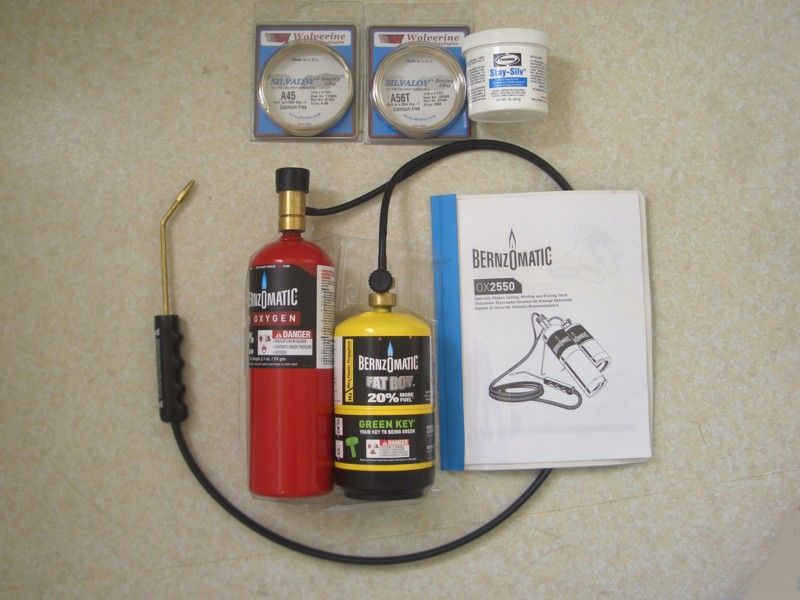
Quote:
Yes. I'm not sure MAPP is available any more, but I've successfully used the Bernz-O-Matic OX2550 "Max Power Propylene" fuel/oxygen torch kit for similar repairs.Originally Posted by arbalest
2) If I try it myself, will a small dual tank MAPP gas plus Oxygen set-up be hot enough for this?
Quote:
Humble Frameworks on Chicago's South Side does repairs for $65 an hour.Originally Posted by arbalest
3) Can someone recommend a person/place in the Chicago area to do this? (post or PM is OK).
Member
Quote:
The dimension you suggest (1.125") seems to be the OD of the current seat tube. Do you mean to say that using the same dimension tube cut into half or third-circle patches pushed on to the existing tube makes for the best tight fitting patch? Originally Posted by Scooper
The easiest solution is to braze on a patch as Ben suggests. A tight fitting patch can be fashioned from a 120° section of 1mm thick 1-1/8" (28.6mm) O.D. chromoly tubing large enough to cover the crack. It won't be pretty, but it will be solid and can be made more attractive by fitting a similar patch to the other side of the seat tube for symmetry.
I measured before buying the tube and this didn't register (in my brain) as a problem. But I want to double check before making the patches. I am planning to cut the new material into a faux lug so I am expecting to spend a good deal of time cutting and filing etc.
Decrepit Member
Quote:
I measured before buying the tube and this didn't register (in my brain) as a problem. But I want to double check before making the patches. I am planning to cut the new material into a faux lug so I am expecting to spend a good deal of time cutting and filing etc.
That's precisely what I meant. Use a small "C" clamp to hold the patch tightly in place while brazing, but take care not to dent the tubing by tightening it too much.Originally Posted by arbalest
The dimension you suggest (1.125") seems to be the OD of the current seat tube. Do you mean to say that using the same dimension tube cut into half or third-circle patches pushed on to the existing tube makes for the best tight fitting patch? I measured before buying the tube and this didn't register (in my brain) as a problem. But I want to double check before making the patches. I am planning to cut the new material into a faux lug so I am expecting to spend a good deal of time cutting and filing etc.