If the indicator spindle isn't a genuine S-A, sometimes setting the adjustment per the Oficial Sturmey Archer method doesn't work. If the indicator is as old as you say, the chain may be "stretched", as well. I start by setting to Sturmey regs and then I set the trigger into 3rd and loosen the adjusting sleeve until it finally drops into 3rd. that usually gets 2nd and 3rd to work, at least. Here is what Sheldon says about adjusting the indicator:
Cable adjustment
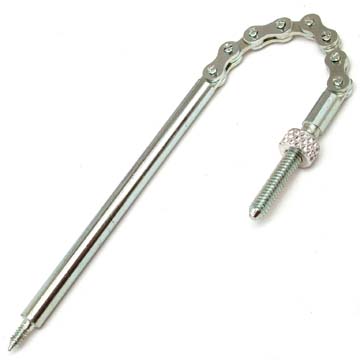

ost Sturmey-Archer hubs have a little chain coming out of the right end of the rear axle, to which the end of the control cable attaches. This chain (called an "indicator spindle" by cognoscenti) screws into an internal part of the hub by rather delicate threads. Some Sturmey-Archer hubs have a special two-part indicator spindle, or another indicator-spindle on the left side, or rotary shifting (the cable wraps around a pulley concentric with the hub's axle). These variations are covered in the instructions for specific hubs.
When you install an indicator spindle, screw it in finger-tight, then back it off 1/2 turn. It should not be bottomed out on its internal threads, so that it can swing freely to face the cable. This adjustment must be checked every time the cable is re-attached.
The fine adjustment of the cable tension is accomplished by how far the sleeve at the end of the cable screws onto the threaded stud at the end of the indicator spindle's chain. The official manuals tell you to adjust it by visual examination of the end of the indicator spindle shaft, but this doesn't always work, especially if the indicator spindle is not original equipment. For best results, adjust the cable by tension. When the trigger is in high-gear position, the cable should be totally slack. Shift down to middle gear, while watching the indicator chain-it should clearly move as you make the shift. Then shift to low gear; again, you should see more chain coming out of the axle nut. Sometimes the internal parts line up in such a way as to prevent
downshifting. If you have trouble getting the hub to
downshift, turn the pedals slightly forwards. Once you are sure that the hub is in low gear, take hold of the indicator-spindle chain and try to pull more of it out of the axle. If the adjustment is correct, you should be able to get just a tiny bit more movement from the chain. If it is completely taut, the cable is too tight. Make sure to tighten the knurled locknut on the indicator spindle so that the adjustment will stay as you have set it.
Double-check the adjustment in all gears. In low gear, you should be able to see that the sprocket moves faster than the wheel, and the hub should not make a ticking sound while being pedaled forward. In middle gear, the sprocket should move at the same speed as the wheel, and you may hear a slow ticking as you pedal. In high gear, the wheel should turn faster than the sprocket. The same slow ticking may be audible in high gear.
If you hold the trigger halfway between middle and high gear with an older hub, it will disengage so that you can spin the pedals forward without going anywhere. If it freewheels forward in high gear, the cable is to tight or has too much friction to release properly. If it freewheels forward in middle gear, the cable is too loose. Be sure you keep the cable correctly adjusted. If the hub pops out of gear, especially when you are standing to pedal, you could crash, or bang a knee on the handlebar.
Check and see if the pulley that the cable runs through isn't overly worn on one portion; this can lead to a miss- aligned indicator,too.