Uh, you're not.
If you have track ends you can just lock the front and frame to a rack.
If you have vertical / horizontal dropouts you just lock the rear and frame (or rear inside the triangle, same thing) to a rack.
Like so:
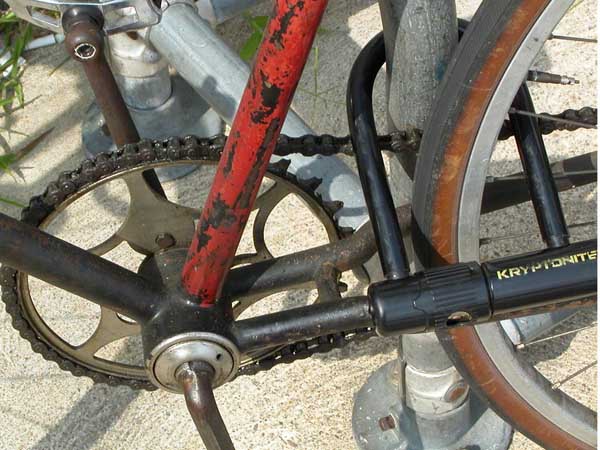
If I was locking up for a few hours on a campus, I'd also invest in some locking skewers. They're cheap.
Top it all off with a cable.
Why? If you're dismissing cables out of hand, it's because you're foolish.
Cables are light and fit in small places. I wrap my cable lock around the flat kit and it fits in my hip bag easily, and it's a kinda bulky cable.
Thieves will cut a cable to steal a whole bike, but they're not gonna waste their time when all they get out of it is a front wheel (which are a dime a dozen for a bike thief).
it's easier to remove the front wheel and lock it together with the rear right at the seatstay bridge.
assuming you can find an object to lock it to of similar height.
locking up one wheel only at a campus is really asking for the other to get stolen and just because you use locking skewers, it doesn't mean you're 100% safe either. If the thief is professional enough, they'll just use a cone wrench and tighten up the cones to defeat locking skewers. Much better to lock both wheels up together. Of course, it's impractical unless it's a QR.
There are, however, hubs with no adjustable cones on the outside and require a 6mm hex to loosen. These are excellent with locking skewers, as there's no way to tighten the hub cones. They don't really have cones, since they're cartridge bearings, but you get the idea.
Now, if the bike is completely unattractive, including the parts on it, then it's very unlikely to get touched at all.