Originally Posted by
auchencrow
I would submit that it's more of a blessing, because the average seller on eBay or CL would not apply it with any rigor, and thus the simple phrase "caveat emptor" provides a much clearer expression of how it actually works.
I would agree it is probably more of a blessing than curse. The price differences between a near mint and very good bicycle, even a decent collectible, are not what they are in comic books. For the rare stuff, the price goes up exponentially. I graded this yesterday:
Dell Four Color 203, Donald Duck in the Golden Christmas Tree, by Carl Barks (Disney) (12/48)
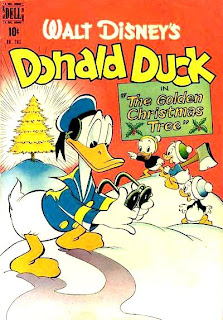
Note: this is not an image of the copy I graded yesterday. This one looks a lot better.
Good (2.0) VG (4.0) Fine (6.0) Very Fine (8.0) VF/NM (9.0) NM- (9.2)
50$ 100$ 150$ 425$ 738$ 1050$
Notice the big jump between fine and very fine (about as nice as you're likely to ever see this book, though better copies prolly exist). You can probably get more than guide for this book in grades above fine.
For contrast, let's look at the Huffy Aerowind of comic books, Marvel's truly awful "NFL Superpro #1" (oct. 1991)
Good (2.0) VG (4.0) Fine (6.0) Very Fine (8.0) VF/NM (9.0) NM- (9.2)
-- -- -- -- --- 2.25$
The jump is not as great. okay, from nothing to 2.25 is technically an infinite jump, but you get the idea.
In a lot of ways, it's good for us there isn't a price guide and grading scale. It means the hustlers and quick buck artists, who neither know or care much about bikes, have not taken over the market.