Originally Posted by
genec
John the reason your argument is so ridiculous is because the entire American Motorway system is designed for incompetent motorists, why should cyclists have anything less?
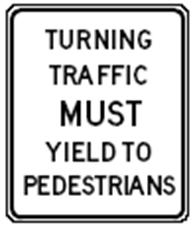
And to support my end of the debate, is this sign, that is totally redundant, if in fact motorists understood their responsibilities and the rules of the road... which apparently they do not.
But you are such an apologist for the American motorist and the motor vehicle that you continue to fail to see that cyclists only want the same opportunities to drive their bikes in the same manner as "incompetent" motorists.
And to support my statement that you continue to play word games... where I specified a
separated path as being safer, you reply with "please provide data demonstrating the mechanism by which
typical American bikeways, meaning bike lanes and side paths, actually make cycling much safer than proper cycling on the roadway." You left out the "separated path," which doesn't have to be a side path at all... but you want to play semantic games, rather than truly encourage cycling. Way to go, yet again, John.

I did not realize that when you stated that cross-country paths are different from bike lanes and side paths you meant to say that only cross-country paths may actually reduce the car-bike collision rate. I have always recognized the difference, which is why I restricted my question to the two most common types of urban bikeway, bike lanes and side paths, wondering whether you had an answer for these types of facility. I take it that you know of no means by which either bike lanes or side paths significantly reduce the car-bike collision rate. I have no such knowledge myself; indeed I conclude that if there is any effect, it is rather the opposite.
As for the question of being designed, or at least intended, for operation by incompetent users, it is official policy, with examples stated before, that the bikeway system is intended to attract users who have no training at all. Of course, the American policy regarding bicyclists, whether on bikeways or on roadways, is that they don't need training and need not obey the rules of the road for drivers of vehicles. Vehicular cyclists are so hated because they maintain that cyclists should act and be treated as obeying the rules of the road for drivers of vehicles. You, Gene, assert that American motorists are expected to be equally incompetent. While there are few examples, it is well known that when people with no driving training, save for driving bullock carts or similar, are placed in control of motor vehicles the crash rate is horrendous. In a way, being drunk is a stand-in for being incompetent, and we know that drunken drivers have a very bad safety record. For that matter, Gene, would you allow the eight-year-old child with no training, the supposed exemplar of the desired cyclist, the right to drive a motor vehicle on the roads?
In short, your argument about equal relative degrees of incompetence between cyclists and motorists is sadly mistaken.
It appears, Gene, that your complaint with me, and presumably with other vehicular cyclists, is that we don't advocate programs designed to be most attractive to people who are, or would be, incompetent cyclists, and that we oppose the governments' policy of encouraging incompetent cycling. Of course, we encourage competent cycling, we encourage people to improve their cycling competence, both for their own safety and enjoyment and to try to reduce the American view, supported by both empiric evidence and desired policy, that cyclists are incompetent. We are proud that we are doing the right thing for cyclists, even though people such as yourself, Gene, despise us.