Originally Posted by
rebel1916
If it had been backbone or downtube the results may have been different. If I had been accelerating hard out of a tight corner they almost certainly would have. All materials can break. With little or no warning.
And let us not forget that steel is proven to be the weakest of frame materials.
http://sheldonbrown.com/rinard/EFBe/...tigue_test.htm
Can we please get past
this discredited test and get to the crux of the
failure mode of CFRP structures?
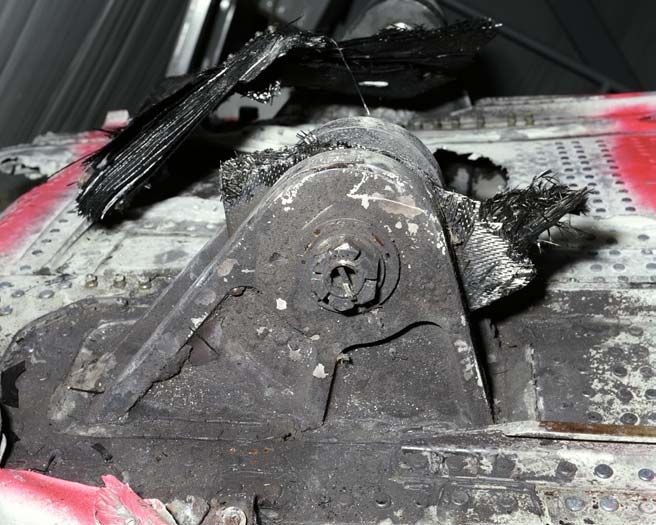
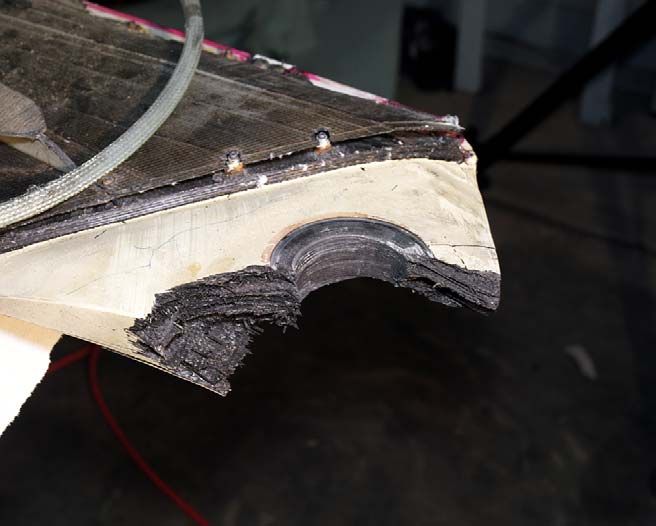
Here are post-mortem photographs of the CFRP vertical stabilizer attachment lugs of the scarebus, er... Airbus 300 equipment used for American Airlines Flight 587. The vertical stabilizer spar attachment lugs, which separated from the airframe in flight resulting in the loss of 260 passengers and crew members and 5 people on the ground, simply snapped because the aerodynamic loading on the rudder exceeded the design stress of the spar to lug attachment. Because of the low elongation of CFRP, the failure mode of CFRP structures is sudden and catastrophic. Would a Boeing airframe billet aluminum vertical stabilizer spar to airframe attachment have failed under similar loading? It might have deformed (bent), but it is highly unlikely that it would have failed so catastrophically.