From Dave Moultons blog site
The Stayer bike as it is called, has a smaller front wheel, a steeper head angle, and reverse fork; all designed to get the rider closer to the motorcycle that is pacing him. There is a roller mounted behind the pace machine, set at a regulation distance. It is up to the rider to get as close to that roller as he can for maximum drafting effect.
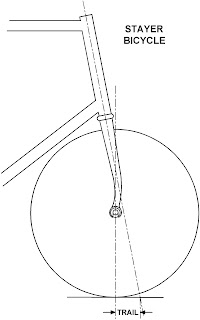
If you look at the drawing on the left, you can visualize that a smaller wheel means less trail, a steeper head angle also means less trail, but the reverse fork increases trail to compensate. A stayer bike may have a little more trail than the average track bike, but not an excessive amount.
Another reason to have the fork reversed is that occasionally the rider will bump the roller on the back of the motorcycle. If he does the roller will spin and the fork will flex easier in the direction it is raked or bent, thus absorbing these slight bumps.