OK; the interface between the ground and the front wheel axle (at the fork dropouts) does put stress on the fork blades when braking, and it makes sense that a fork blade with a shorter fore-and-aft axis will flex more than a blade with a longer fore-and-aft axis under heavy braking.
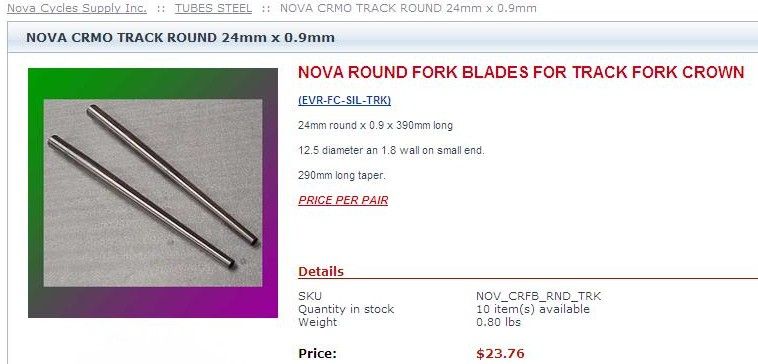
Today's round track fork blades are typically 24mm in diameter with a 0.9mm wall thickness at the crown.
My point in the earlier post is that the difference between the 24mm fore-and-aft axis of a round blade and a Continental Oval blade with a 27.5mm fore-and-aft axis isn't enought to make a significant difference in fork blade flex unless the braking is really extreme.
This is much different than a thirties or forties track bike like my 1940 Paramount where the round fork blades had a diameter of 19mm and would flex significantly under braking.