First, let me start by saying that I have read Sheldon's article on this topic. I'm asking to verify that I understood it correctly.
I have a bunch of Regina freewheels that I got second hand. Some of them are hand-marked "FF" but I don't see any other visual clue as to what the threading might be. I have, as a result of the same purchase, some hubs that are very clearly marked as to how they are threaded. As it turns out, I have at least one each of British, Italian, ISO, and French. I would have guessed that maybe the "FF" marking indicated French threading, but that seems not to be the case. That's where my question comes in as to whether or not my understanding is correct.
Here's an example of what I'm looking at.
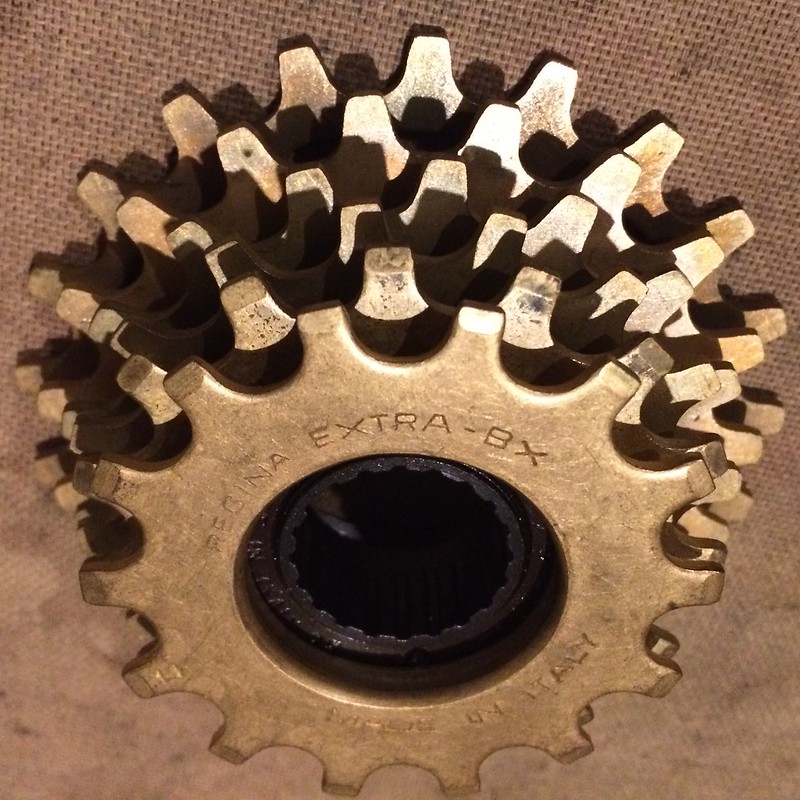
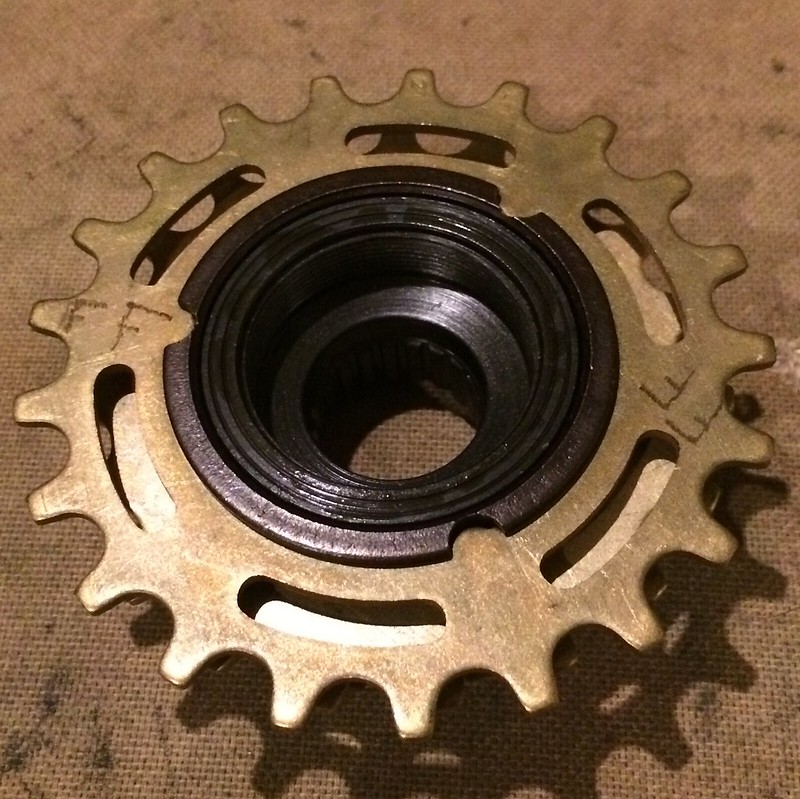
So what I thought was this:
1) Any freewheel will thread on (at least loosely) to a French threaded hub (though only French threaded will actually be safe to use that way).
2) A French threaded freewheel will bind if I try to put it on any non-French threaded hub.
3) The only possible way to distinguish between British, ISO, and Italian threading on an unmarked freewheel is by judging how tightly they fit.
Have I got that right?
I don't remember the exact results of my experiment except that at least one of the freewheels started to bind on an ISO-threaded hub and at least on of the freewheels that was marked "FF" did not.
These are corn-cob freewheels which I'll never use. They are in excellent condition so I'd like to find a new home for them, but I'd like to be able to tell prospective new owners what they actually are with some confidence.