Originally Posted by
Garfield Cat
Does that mean the saddle thing should be custom made? Imagine, you bring in your bike. Put it on a trainer and the saddle is replaced with a high tech saddle that begins to use sensors to locate the pressure points at various riding positions.
You can do that. The problem is that you are talking about the contact points between two convex surfaces, rather than putting a round behind on a flat plate or floor. The choices made about the 3D shape of the saddle dictate where the contact areas are going to be to such an extent that you can't just add and subtract material to change pressure in one spot without majorly impacting pressure in some other spot.
Originally Posted by
Lazyass
I have customers with sit bone widths exceeding the total width of the saddle.
Perhaps I am reading this wrong. I hope so. You need a saddle wide enough to support the sitbones if you want to have children someday. You CANNOT have a saddle where your sitbones exceed the total width and your weight is supported by soft tissue.
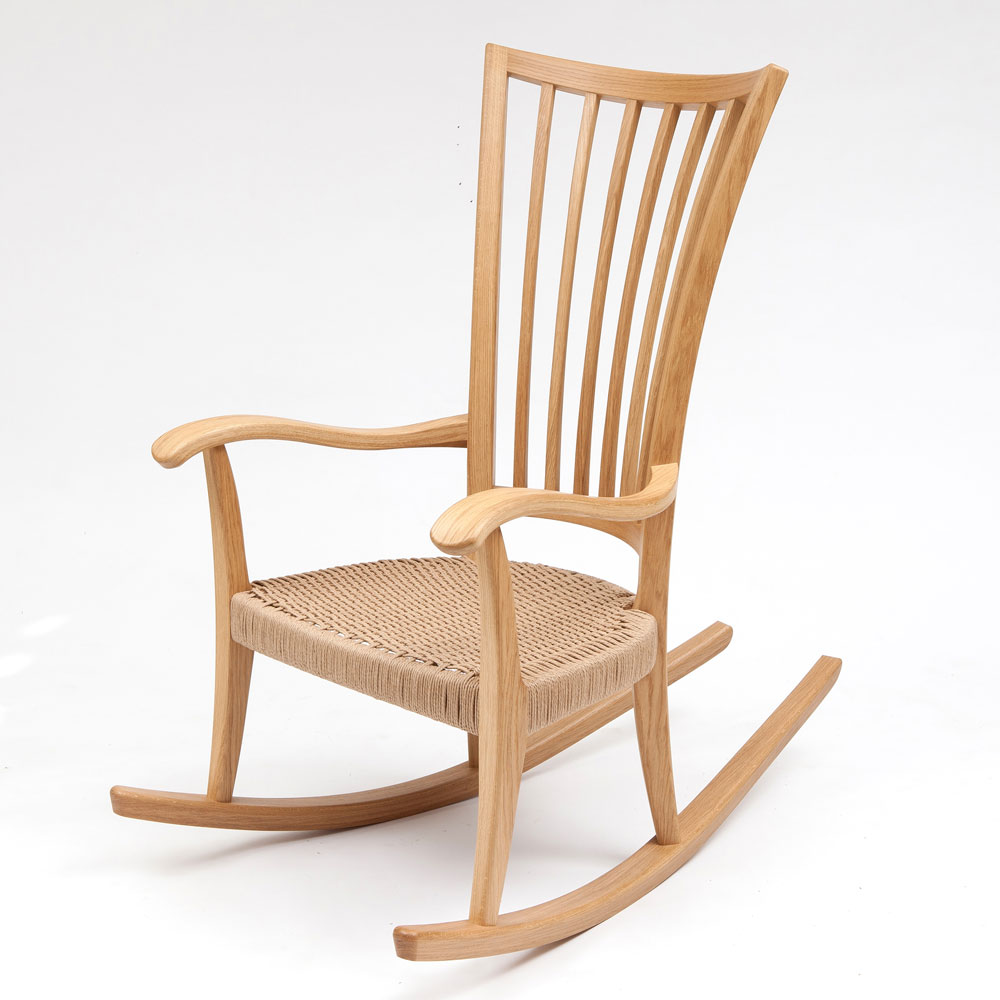
"Sit bones" is a term that either refers specifically to the Ischial Tuberosities or more generally to the arch of bone that runs from the Tuberosities to the Pubic Symphysus. As cyclists are leaned forward, we lift the Tuberosities up off the saddle and locate the Ischial Ramus at the bottom most part of the pelvis. Since those bones are narrowing toward each other to eventually join at the pubis, they are definitely spaced much narrower than the Tuberosities are - just like an old fashioned rocking chair where the runners get closer in the back.
Originally Posted by
hazetguy
Anyone can make a video, and Tony10Speed doesn't know anything about bike fit anatomy. The Ischial Ramus is not covered with nerves and arteries any more the the Tuberosities are. The nerves and arteries are in the soft tissue between the bones. He should read the links he provides, because Steve Hogg does know about cycling anatomy:
Here's Steve's model of how the pelvis interacts with the saddle:
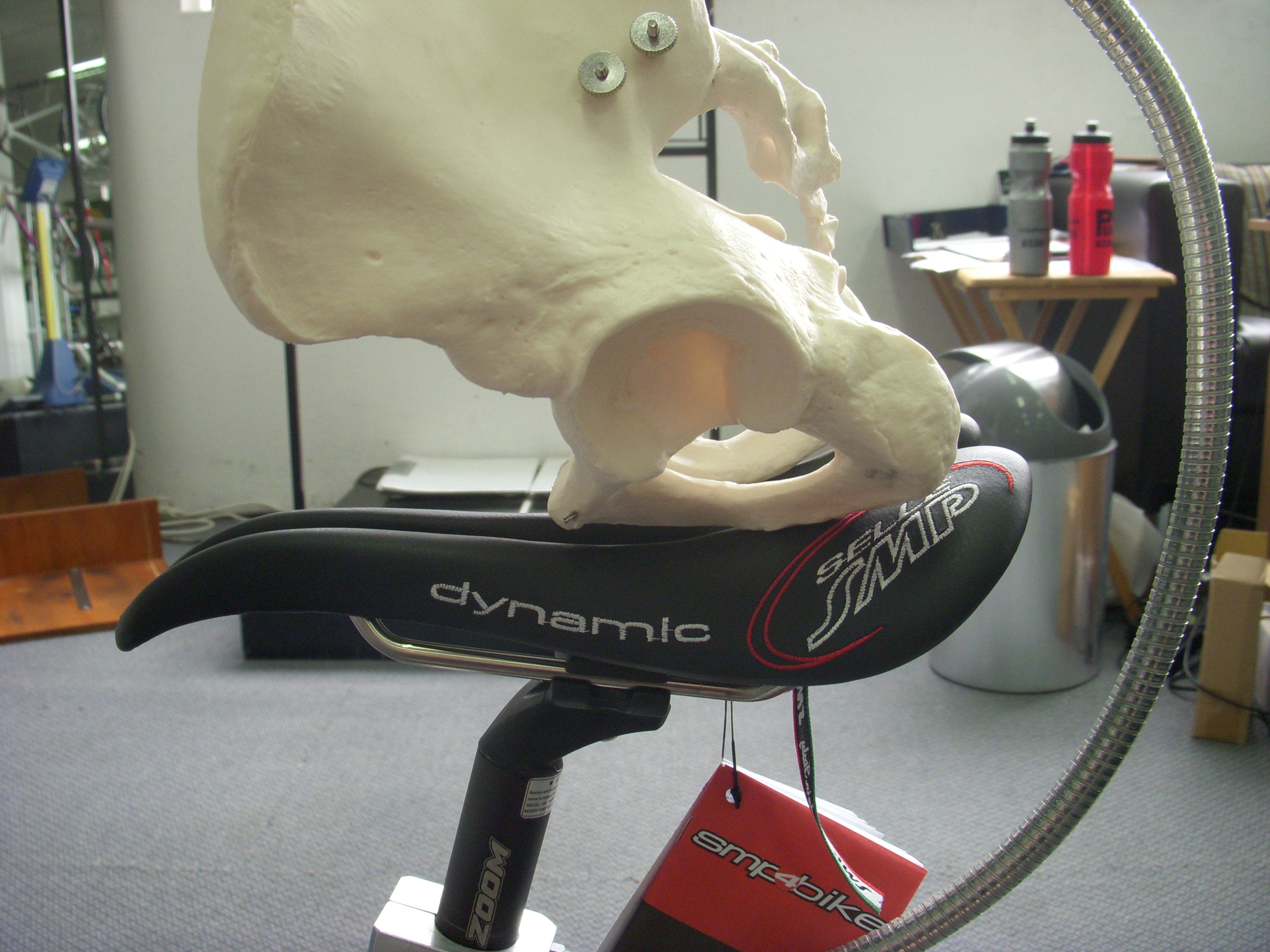
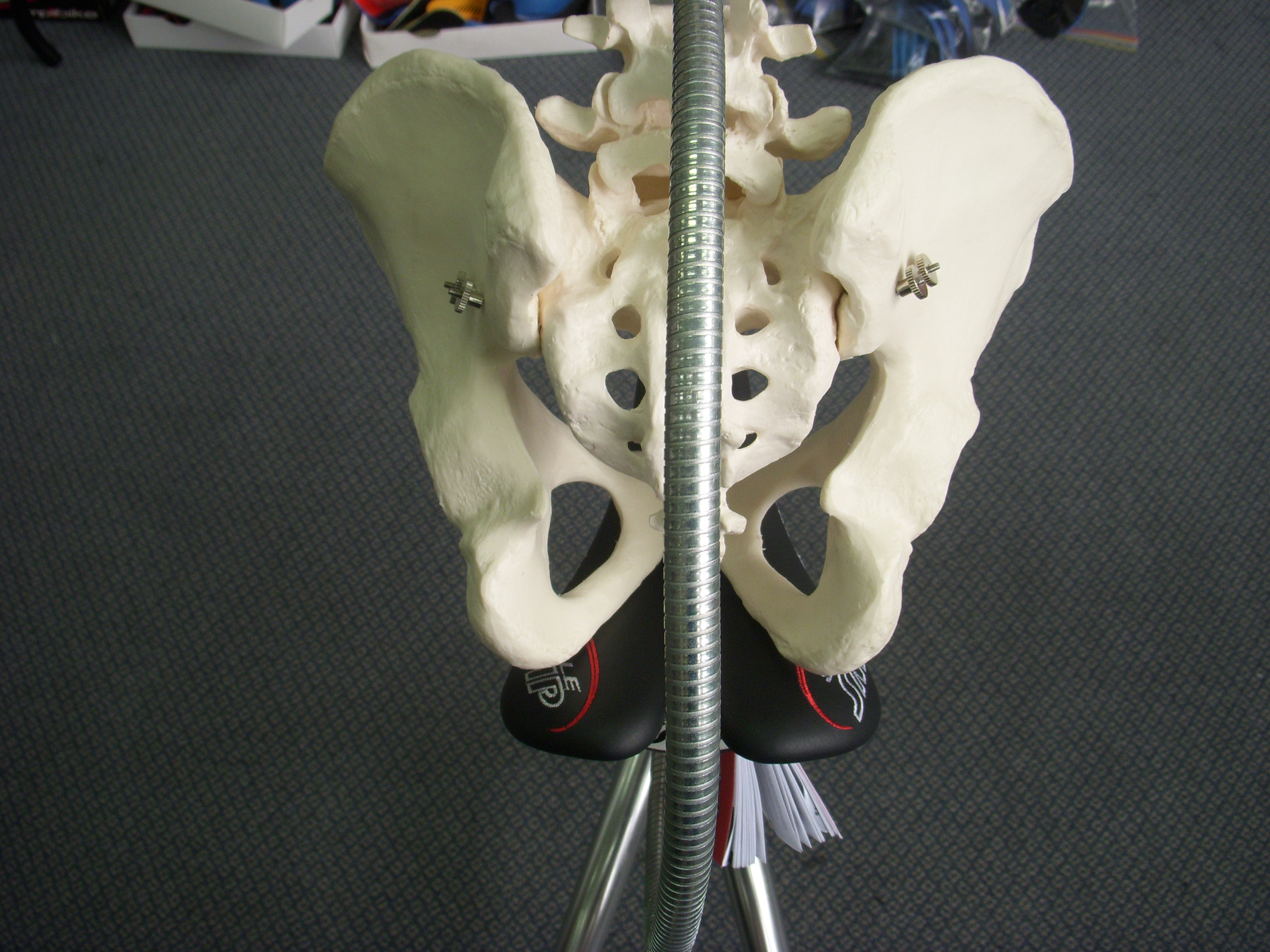 https://www.stevehoggbikefitting.com...ion-smp-seats/
As you can see, the Ischial Tuberosities are the bones floating above the P in SMP, not contacting the saddle at all at the pelvic angle at which we ride bikes.
And if you were to do the aluminum foil thing with a flat, triangular panel shaped something like a seat, you would see that the pressure marks left behind are indeed narrower than what you see when you sit on a floor because your thighs are out of the way.
Here's the kind of posture you'd need to have to get your Ischial Tuberosities in contact with the saddle:
