The main point in the 700c/520c frame design was to keep the power and enable the fit to a smaller person, generally with shorter legs. Ms. Terry knew that sacrificing speed would probably not market well. I have seen these do quite well under rather short riders at triathlons. I chatted up the owners, but had to run when they called 911.
The 650c/650c design with a steel bike is generally about gearing, not sizing. When used with "normal" gearing, you should be able to spin better and climb. Still, gear inches are gear inches, so if you want to go the same speed, you have to increase rpm's (seems like that should be r'spm) somewhere to compensate for that.
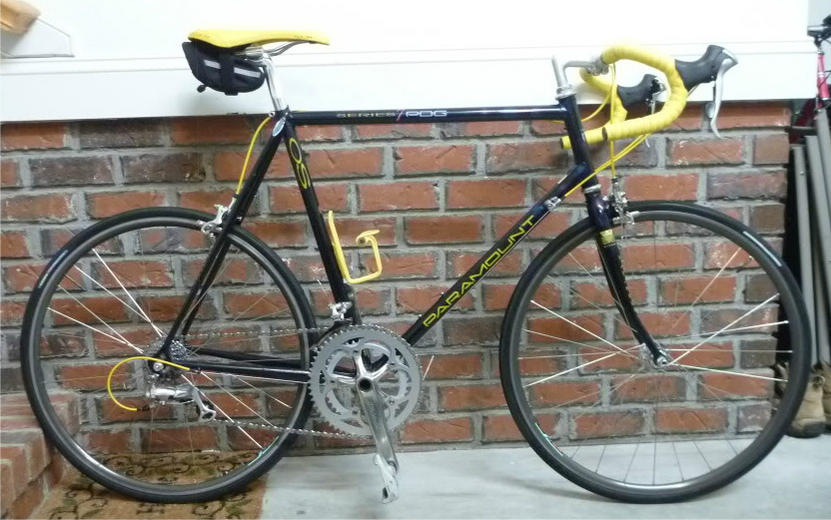
Schwinn, for example, had the Series 7 PDG Paramount, a well-made and very nice steel frame, funky paint job, and it came in both 650c/650c and an amoeba "splash" paint scheme, and a 700c/700c "splatter" scheme. Per Schwinn's ad, it was "reduced frontal area/wind resistance." I had one and noticed "not much." Of course, being fat may have been a factor. However, given the 650c rear wheel, Schwinn spec'd it with a 54/42 crankset. Maybe it was psychological, but when I climbed on that big ring, I thought it was harder, and when I fell out of a pace line, I had to climb 2-3 cogs, spin back up to cruising speed. Herewith a 56cm Series 7/650c:
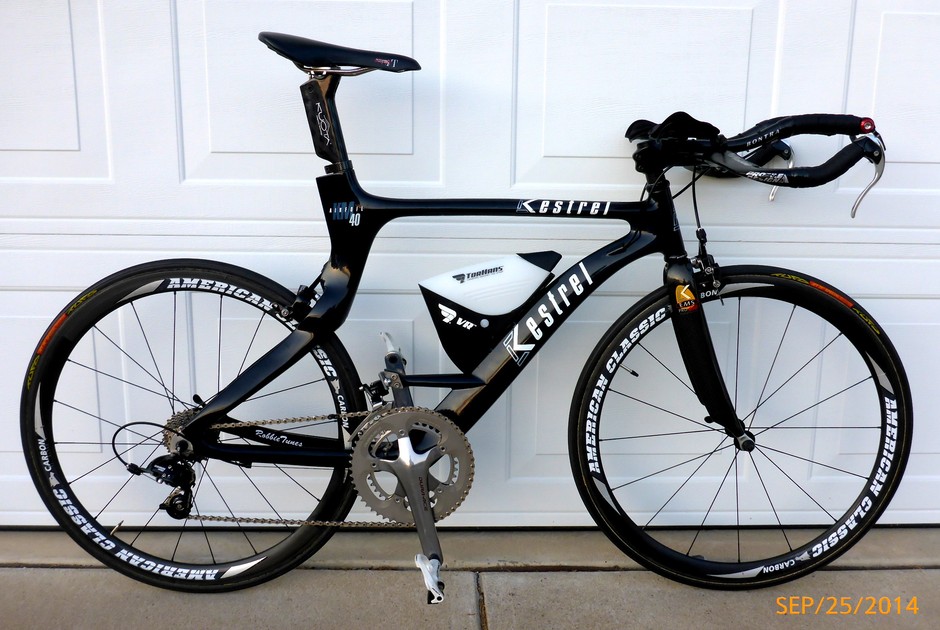
The aero "advantage" was all the rage when Cervelo and Kestrel were making the P2 and the 650c Airfoil. Spinning is also kind of a triathlon trait, if you will, so it worked for them. Apparently, not well enough. My problem on this one was fear and loathing of the aero position. I felt so "vulnerable." The Airfoil, also a 56cm:
PS: My Pedal Room page says both cranksets are 56/42.
I truly can't remember, but doubt I ever turned a crankset that big.
Maybe, as the photos show an extremely small likelihood of chain slap, eh?
My mind is not what it used to be.