If you're looking at real oval/elliptical rings like:
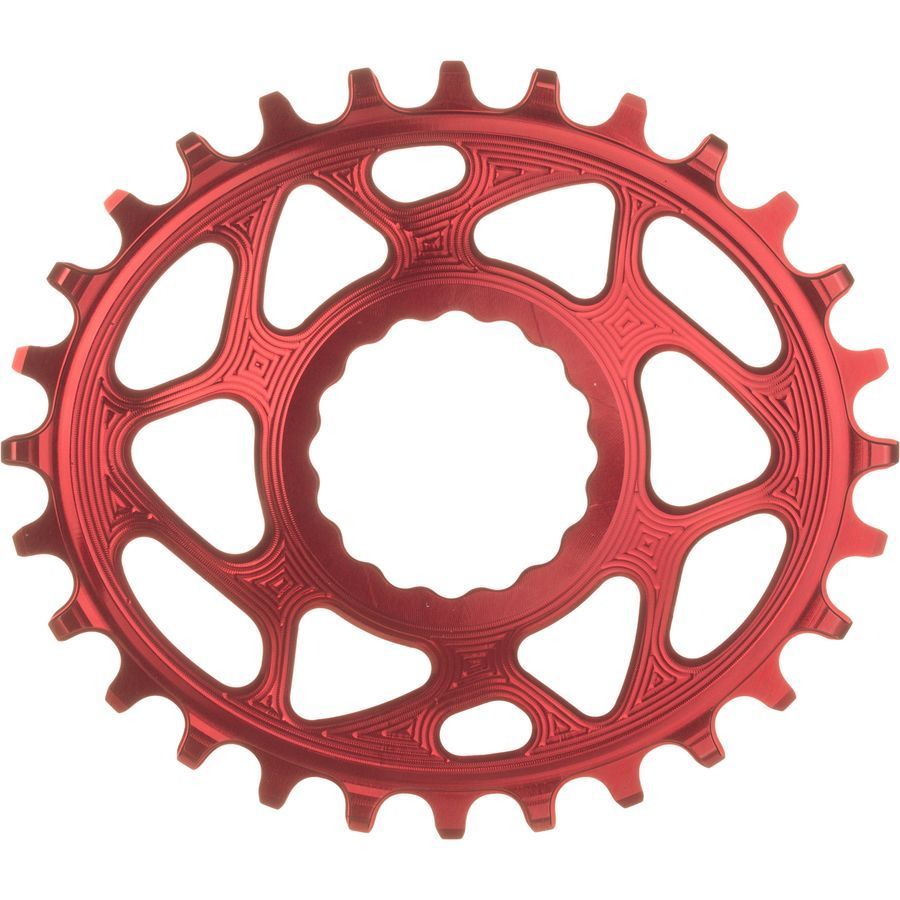
then, yes, they change the effective mechanical advantage (gear) as they turn. When the chain engages the teeth on the long axis of the ring the effective gear inches will be given by:
Gear inches = long axis radius/rear cog radius * diameter of driven wheel
whereas when the chain engages the teeth on the short axis that's the measurement that would be used. Note that the amount of chain pulled forward by a given angular rotation of the chain ring is greater when engaging the teeth near the long axis. So at that point in the rotation it's equivalent to a round chain ring with a radius equal to the long axis radius.
Note that the Shimano 'Biopace' rings were kind of an odd shape without that much variance in the effective radius of the ring at different points of the rotation. So there were some minor variations in effective gear ratio but not as pronounced as with a very ovalized ring.