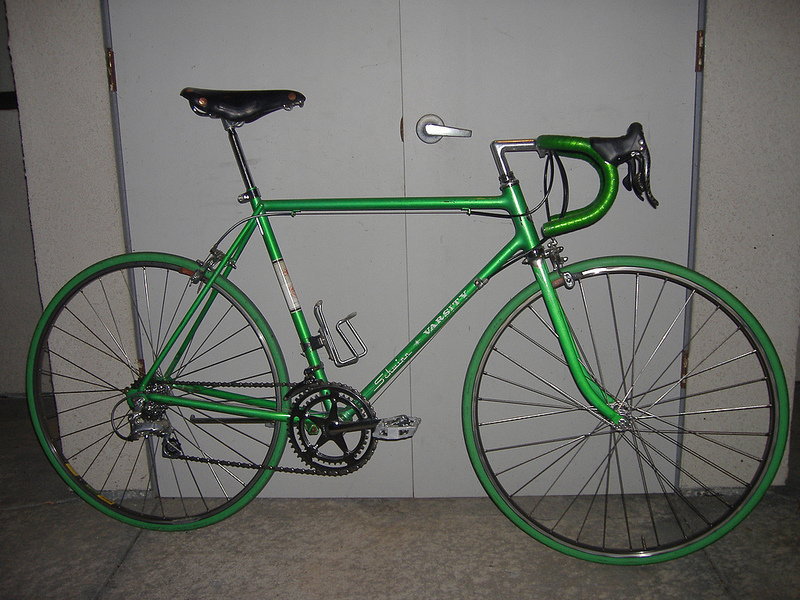
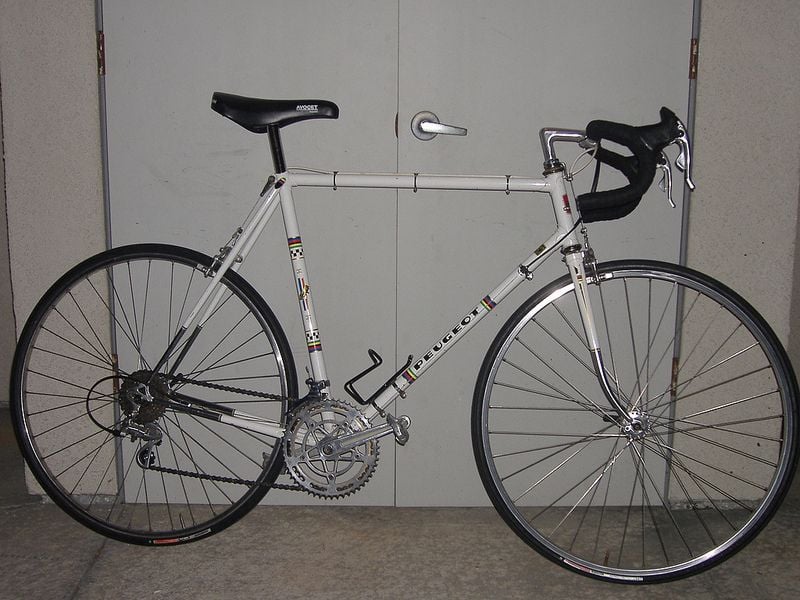
Originally Posted by
Phamilton
...I have the saddle and bars adjusted the same on both bikes, the fit is identical to within 1/8"...
Are the saddle and bars really in the same positions relative to the bottom bracket?
Find a pair of walls that meet to create a "point" that you can place your bike's crank dust cover against, and measure the forward distance from this protruding corner (vertical line) to your handlebar. Then measure the saddle-to-bars reach (which it sounds like you've already done).
Is the forward reach from (bb to handlebar) the same on both bikes?
As USAZorro mentioned, the "front center" distance (from bb to front axle) is also a crucial part of how weight is distributed between the front and rear wheels (more weight on the front wheel makes the steering heavier and more stable).
A longer front-center distance also inhibits a rider's ability to draft closely and safely behind a leading rider, which matters more in competition (and matters none while riding alone).
A shorter stem length will tend to quicken/lighten the steering response and feel, so how a frame fits the rider thus affects how the
fitted bike will perform.
A 71-degree headtube angle is off-road geometry, as found on cyclocross/gravel bikes and on traditional mtb's and hybrids.
Depending on the stem length needed on a particular frame/rider combo, even a 75-degree headtube angle can be quite stable in spirited riding.
Lots of bikes in between these two extremes!
69-degrees square versus 76 degrees square.
I've done lots of riding on both, at speeds up to 50mph, and their handling quirks become less noticeable and less significant after riding the same bike for a few days: