Originally Posted by
wphamilton
I'm sure you've seen pictures like this.
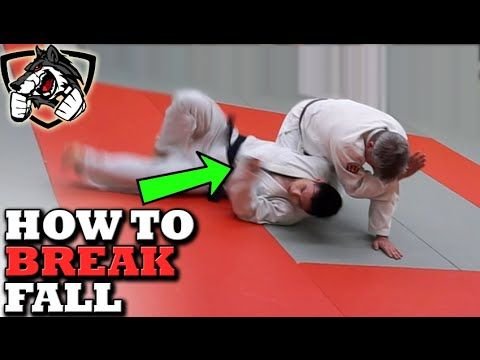
His legs aren't haphazardly flopping - he has positioned himself precisely at his feet, his hip, and the angle of his shoulder. His right foot is "planted" taking a portion of the impact, and his left arm has already pounded the floor to ease the impact on his shoulder.
Put a bicycle between his legs. He couldn't "plant" his foot to take a portion of the impact because there is a gear in the way. The bicycle also increase the mass of the system which will change the dynamics of the impact. Also increase the speed the person being throw before the throw and see how quickly he can react to the impact with the ground.
Originally Posted by
wphamilton
You can absolutely do this on a low slide fall off a bike, if you are quick enough. You *could* do it over the bars - the bikes speed does not stop you - but you would prefer a less jarring technique.
How many crashes are "low slides". Sure you eventually get to the ground but you are falling from a height that is slightly higher than your standing height. Plus there is momentum to consider.
Originally Posted by
wphamilton
With all due respect, having no training and no knowledge, you might refrain from making pronouncements about it. You have described it incorrectly here, the bolded part diametrically wrong. I don't have any problem with your advice for people who don't know how to fall, and don't need to put the time it takes into learning it, but you shouldn't be misinforming them about how to protect themselves vastly more effectively.
The person getting throw is loose in joint and muscles. They may have some contact with the ground but they aren't trying to stop the fall. On the other hand, are you saying that people
should tense up and stick out limbs in an attempt to "catch themselves" during a fall?
Originally Posted by
wphamilton
You guys with the "added speed of the bicycle" - you realize that the added speed is parallel to the ground, and doesn't add anything to the vertical impact of the fall, right? The impact you feel from the speed is added by deceleration from friction, and whatever rises from the surface, including "concave up" shaped road grade. On a flat and smooth road, you could fall at 100 mph and that fall is not the danger. Getting part of your body wrenched back, or sliding into something, is where the danger is.
Say WHAT?!!! The speed at which you fall isn't divided up into vectors. You can describe it with vectors and assign a value to the different components of the speed but you can't say that you won't be hurt because you are only falling over about 5 feet. A shell fired horizontally from a cannon only has a vertical fall from the cannon's mouth to the ground. The vertical component of the speed of the shell is only going the speed due to the pull of gravity. That doesn't mean that the shell won't do damage if it hits you. There's still the horizontal speed to consider.
If you fall at 100 mph on a smooth, flat road, you aren't likely to survive the fall.