Originally Posted by
Sy Reene
Maybe to help visualize, a profile diagram of a typical tubeless rim helps?
If I understand what's being said... After removing one bead from the rim, the opposite bead has to be brought into the deepest part of the center channel. With a tube, that tube somehow then has to fit between the bead that's sitting in the channel, but be out of the way, so you can fit the other bead back into the rim? Is this how it goes?
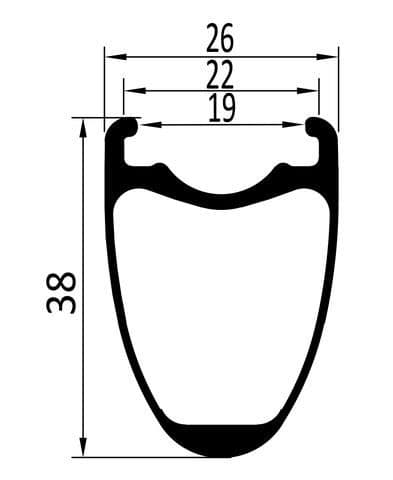
That little curved part in the middle? That part we used to call the spoke bed? Some of these rims don't have that, they're flat across. The question I was asking is during a tube installation on the road where it wouldn't be necessary to break both beads why is it harder to get the tire back on if there's a tube in it? How does the tube interfere with stretching the tire bead? If it's just the tube makes things more crowded and takes room from manipulating the stupid tire, I guess I can accept that.