Originally Posted by
fishboat
I've read about it a number of times here on BF(part of my own pre & post-purchase of Brooks saddles). Did you search all the sub-forums here on BF? The search engine isn't the greatest. What you search and how you search, and whether searching the entire thread or just thread titles makes a big difference in the hits you get. I tend to do extensive research and check all options when looking into something...which is why I seldom create a new thread, as most everything has been discussed before.
In any event, it's sort of a moot point as you can't un-ring a bell. You've slathered yours up extensively already.
So you have no links to support your statements?...honestly I didn't figure you would cause like I said I do know a few things about leather and the only damage "Over-Conditioning" might cause (if such a thing were possible) would be stained clothing but it most certainly would never cause harm to leather.
Now I have a link by the fellow mentioned named "Sheldon Brown" and here's what he has to say about...
Breaking in a Leather Saddle
If a leather saddle is not oiled, and especially if it is allowed to get wet with water repeatedly, perhaps even ridden while soaked, it will eventually crack and disintegrate. The low-quality leather saddles that came on inexpensive ten-speeds of the sixties and seventies would also often go out of shape under such conditions.
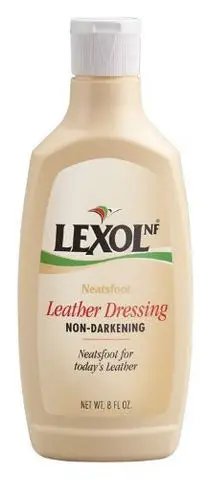
The easiest and fastest method to break in a new saddle is with a liquid leather dressing, such as neats-foot oil, Lexol, seal oil (a French favorite) or baseball glove oil.. These products are available from shoe stores and sporting-goods stores, and over the Internet. There are probably lots of other liquid oils that would work as well. Race Across America pioneer Lon Haldeman uses SAE 30 motor oil, but his saddles tend to wear out after only 300,000 miles or so (according to
Cyclist magazine).
You can just pour the oil on and rub it in by hand, or for a more drastic approach, you can actually soak the saddle. The easiest way to soak a saddle is to turn it upside-down on a sheet of aluminum foil, then form the foil up around the saddle for a snug fit. Pour in a whole 4-ounce can of neats-foot oil or whatever oil you prefer, and let the saddle soak for 30 minutes to an hour. Pour the remaining oil back into the can, and wipe the excess oil off with a rag or paper towel. Install the saddle onto the bike, put on your black shorts, and ride. Even the most recalcitrant saddle (the thick-skinned Brooks Professional) will be substantially broken in within 200 miles or so.
The soaking technique is best for thick, hard-to-break in saddles such as the Brooks Professional. For most leather saddles, the pour-and-rub technique is adequate. A saddle needs baptism by immersion only once. After that, some oil should be poured onto the saddle and rubbed in by hand every few weeks. Once the saddle has become soft and comfortable, it is only necessary to oil it lightly every few months to keep it from drying out.
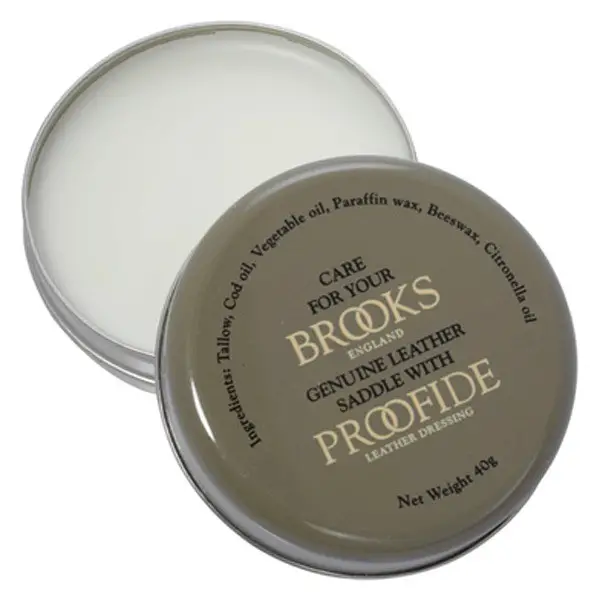
Paste- or wax-type leather dressings, such as Brooks Proofide, Sno-Seal, and saddle soap will work, but it takes much, much longer to break in a saddle that way. They will absorb faster into the leather if it is warm -- in the sun on a hot day, or in a warm oven. Temperatures up to about 50° C (120° F) are safe. Higher temperatures can cook and ruin the leather.
Here's the link...
https://www.sheldonbrown.com/leather.html