Originally Posted by
hokiefyd
I'm not quite sure what the disadvantages of these larger pulleys are. I have a number of lower end derailleurs that have 13- and 15-tooth pulleys and I also have a number of more mid-tier derailleurs that have 9- and 11-tooth pulleys. I have swapped them before and there don't seem to be any negative consequences. Indeed, the drivetrain just seems to operate "smoother" with the larger pulleys (and perhaps even quieter).
Shimano put a 13- and 15-tooth combo on their lower end RD-M310 (Altus) many years ago.
Grant Peterson loves it (or at least claims to). Chain wrap is increased in a smaller package (this makes sense -- a sinuous path is longer than a straight path). This pulley arrangement (large top pulley, even larger bottom pulley) is what many of the current race teams use. I find it really interesting that Shimano tried this on an Altus derailleur and...then...nothing. It hasn't escalated through the design chain, and it doesn't even exist anymore in the current Altus lineup (the current Altus RD-M2000 uses conventional 11-tooth pulleys).
My guess is it really does make little-to-no real world difference. If one design approach was clearly superior, then wouldn't all derailleurs be using it...or at least the more expensive ones? Why'd Shimano seemingly try this on an entry level derailleur and then apparently abandon it?
They will bring it back at some point.
I remember assembling some Adamas Ax dept store bikes at one of my first jobs, back in '81 or so. They used octalink BB's (which were abandoned, then came back years later in the 9 speed groups) as well as brake cables under the bar tape, which was also abandoned and then re-adopted on all groupsets 3-4 years later.
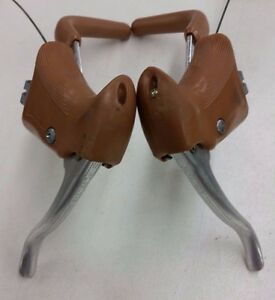
That groupset also contained a lot of stuff that was not re-adopted though, like rubber padded turkey levers, and those weird aero brake calipers that kind of resembled Campy Deltas.