After digging through three boxes of old hubs, I came up with 31 Shimano hubs, 23 of which are the later style.
I tore all of them apart and tossed everything in the parts washer in the garage.
Out of 31 hubs, there's one 36h hub, and that one has a loose flange and was a 13ga spoke model.
It was still laced to a 26x1.75" steel rim. Its likely from a Worksman warehouse bike or a newer Schwinn Heavy Duti.
Out of all the internals, I have two complete sets of parts, I'm short about four axles to make four more working assemblies.
9 of the 24 later style hubs had broken or loose flanges, two had broken axles, one was just plain shredded inside, rust, dirt, and metal shavings throughout. I gave up trying to get that one apart and tossed it in the scrap pile.
I didn't do a side by side pic but these aren't has robust as an old Bendix. I really haven't spent much time trying to save one before, we always sort of considered bikes with these as disposable or if a customer came in with a blown up hub, we sold them a new wheel.
Most coaster brake bikes from this time period really weren't worth buying a new hub, plus the labor of building a new wheel. It was cheaper for the customer to just buy another wheel.
Here's what I keep finding with these hubs: (These are all likely 'D' type hubs), most from no later than the 90's or so.
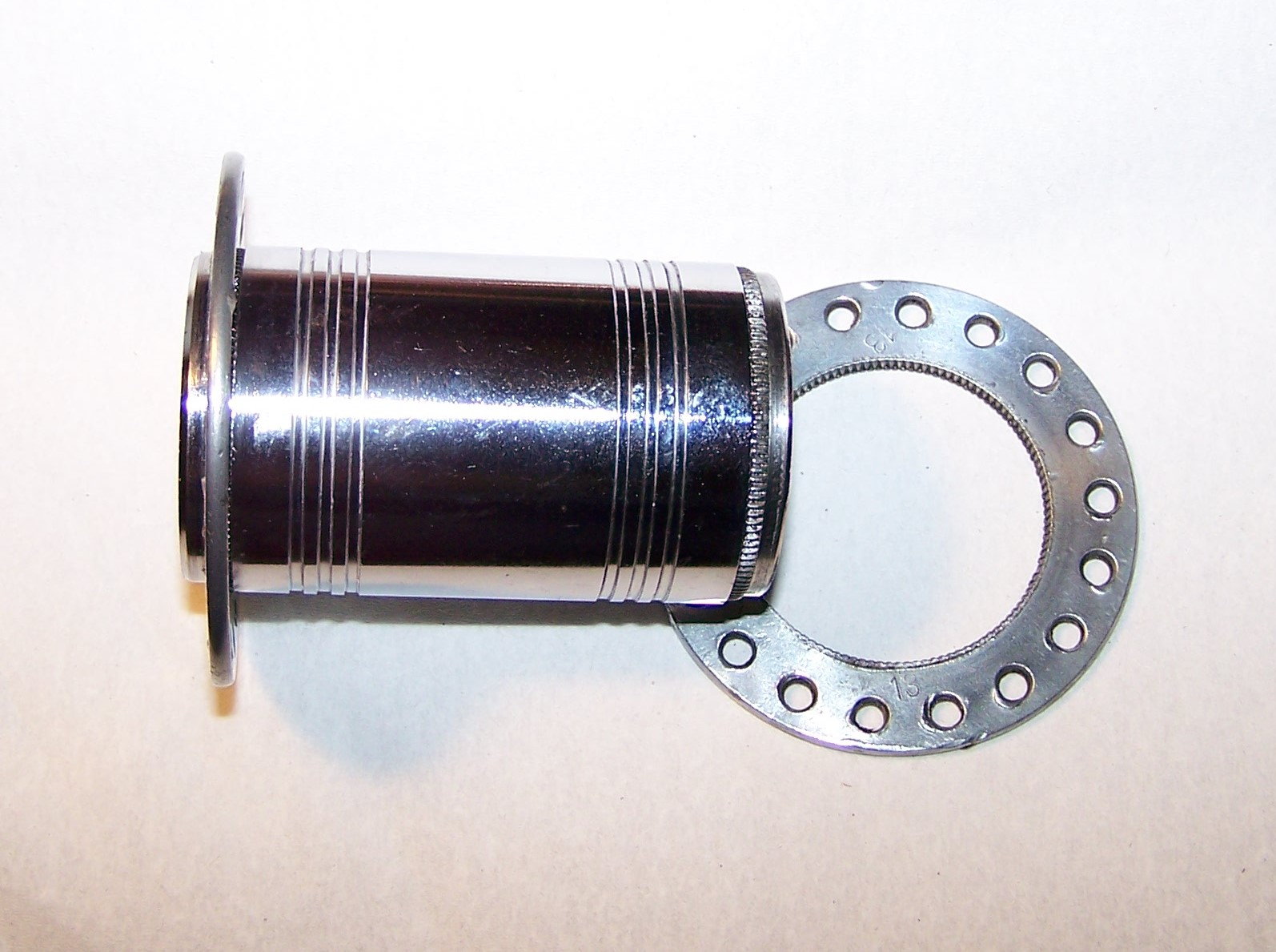
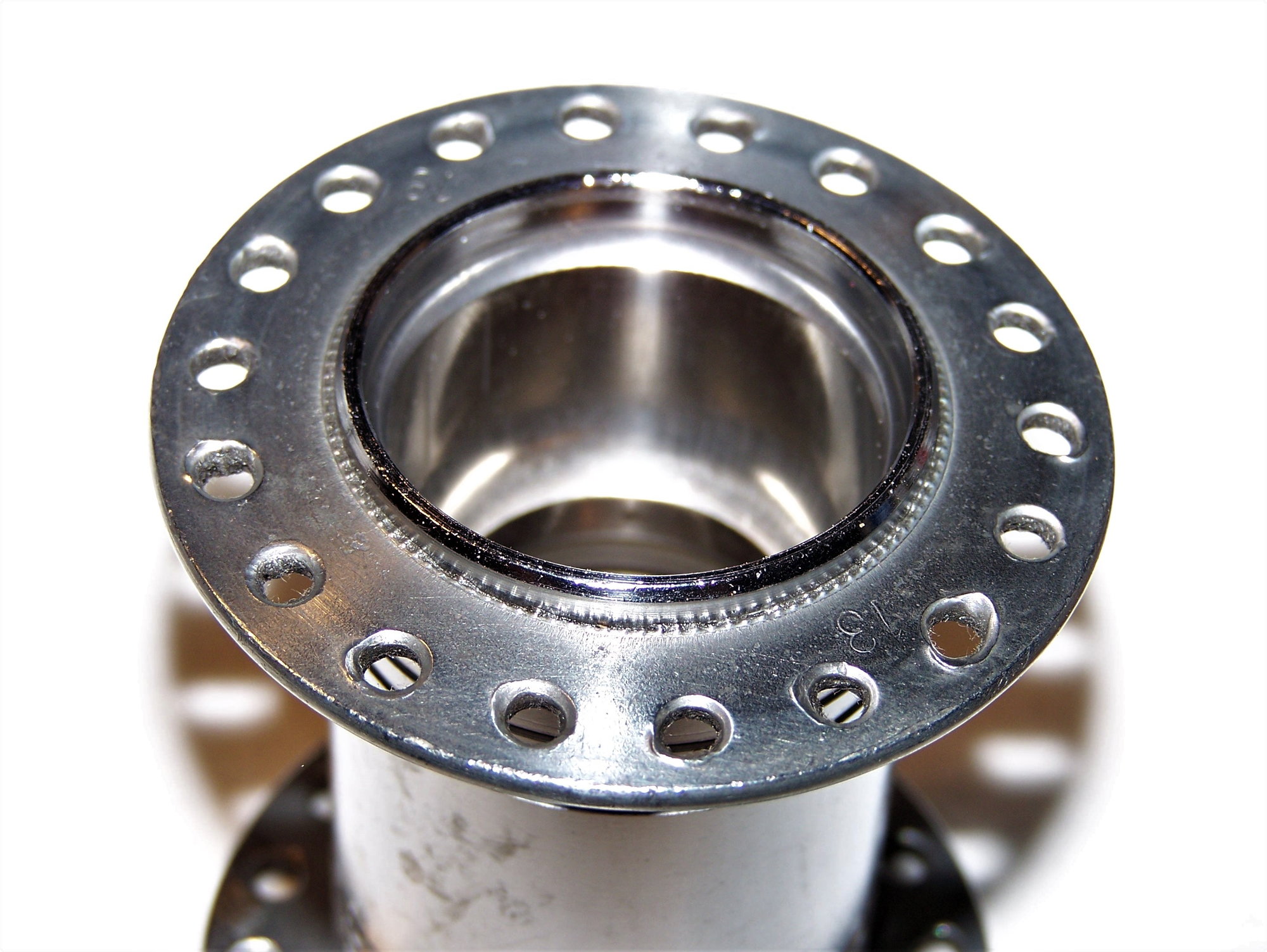
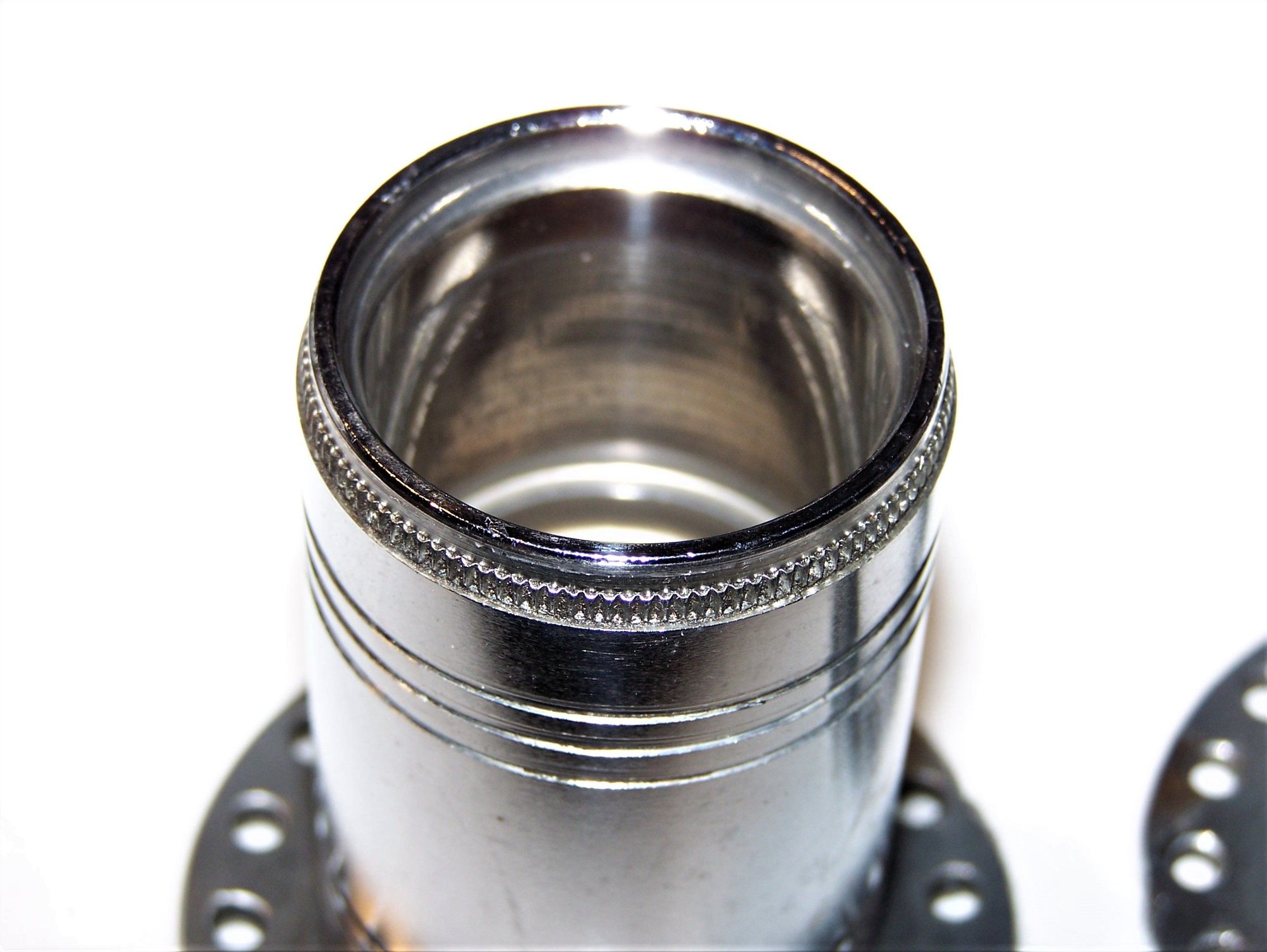
Out of the whole lot of hubs, 7 have loose flanges like this one.
Both flanges on this hub are loose, one fell off and allowed the spokes to go slack on the left side. Its likely what dislodged the right side flange. I have no idea how or why, its just how I keep finding these things over and over. Stuff like this is what made me leery over the years of Shimano CB hubs. They also have less brake surface area compared to older Bendix hubs, and the hub ID is smaller. Several that I took apart had the drive clutch and shoes badly discolored from heat. The grease in those hubs was black and very thin. The OEM grease appears to be clear or yellow.
I also took apart several older '333' coaster brake hubs, four of the five I took apart had their threaded driver broke off just beyond the inner bearing. (Threaded portion had broken off). I can see where that was likely the reason for the redesign on later models.
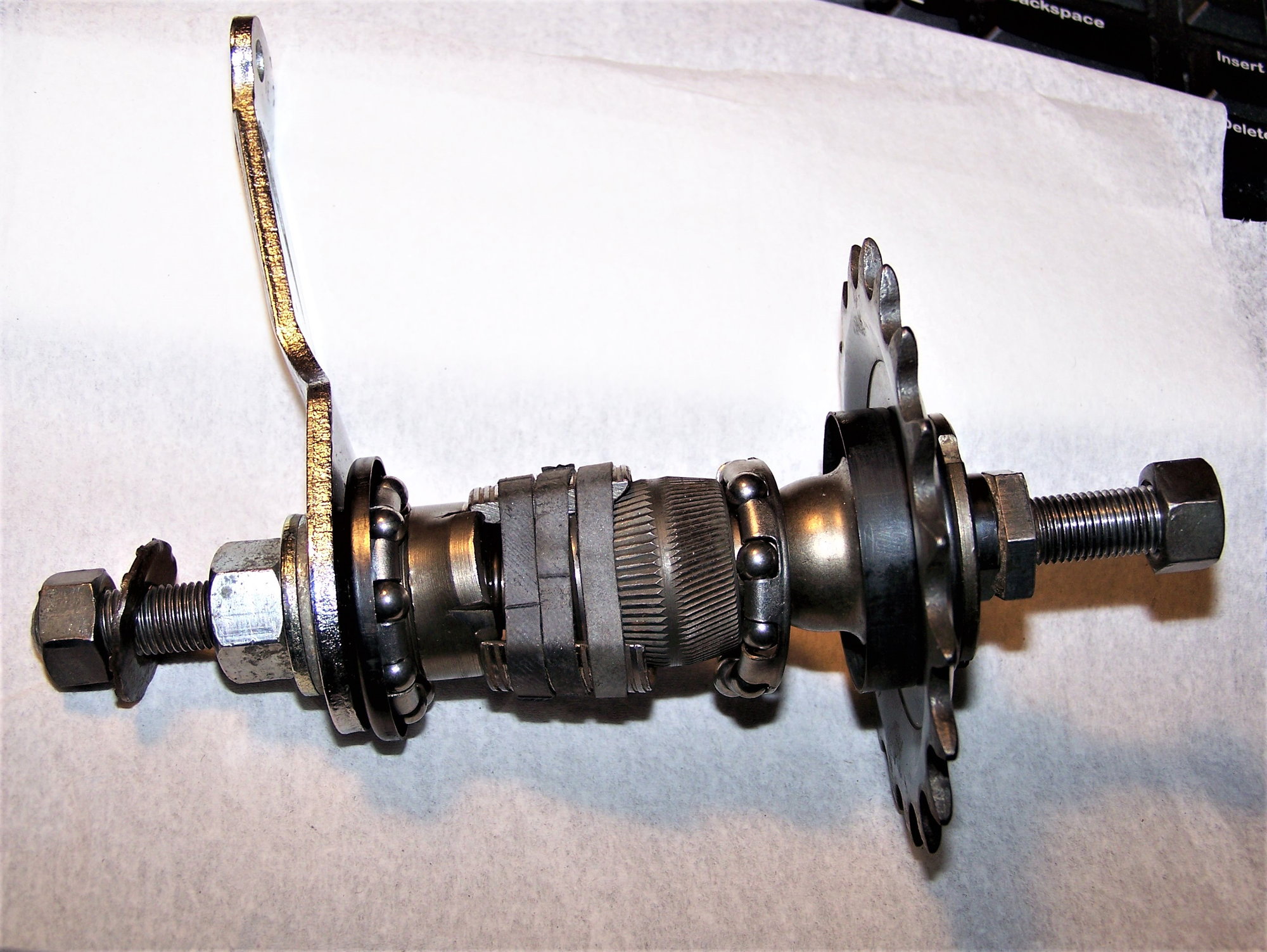
This hub appears to have had little use, there's barely any wear pattern formed on any parts and the internal surfaces of the hub are still smooth with no wear.
If I had a good 36h - 14ga, shell, I could build a wheel but I've yet to find a good 36h hub shell.
The flange could likely be pressed back on, maybe even tig welded to prevent it from happening again but it just don't look like a sound design to me if out of such a small sample, I have so many failures, but the pile I have are all likely just hubs that were replaced for one reason or another. Since most had cut spoke nubs still hanging on, I suppose they were from complete wheels that were scrapped, and not just hubs that were discarded.
Back in the day I never threw anything out, and what they threw out at work, I took home if I thought it may give me some free parts or use in the future. Its why I've got half a garage full of old bike parts.