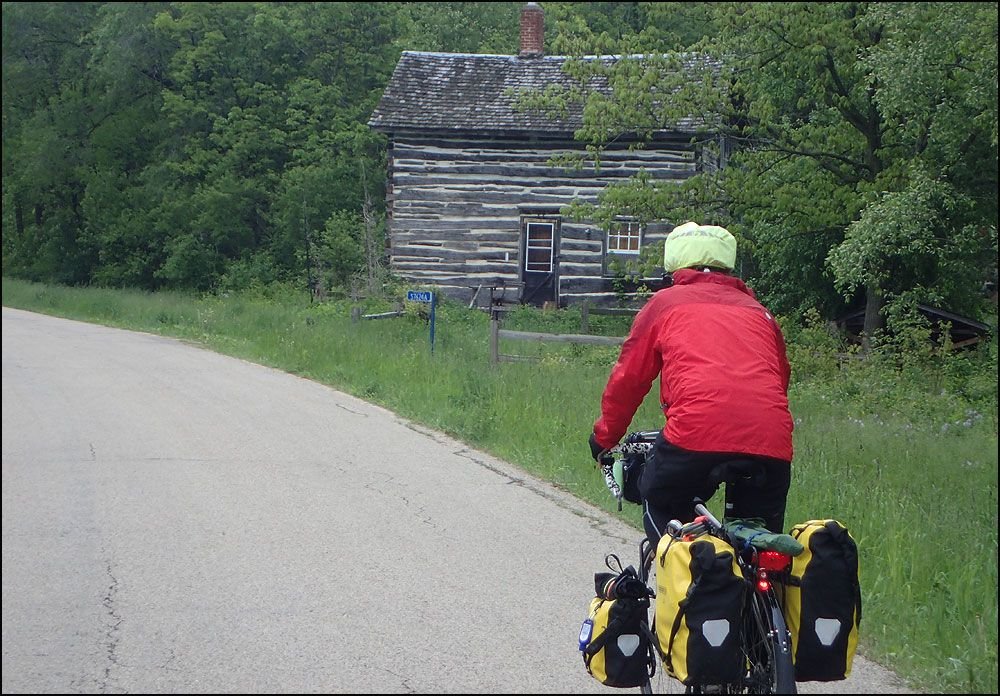
Based on advice from others, I was always careful to balance my load, was obsessive about trying to pack both front panniers with an equal amount of weight. Then, I overslept one morning on my first ACA group tour, was rushed to get packed that morning. I decided to save time and just shove stuff anywhere I could cram it, did not worry about weight distribution. Had four panniers, handlebar bag, a bunch of community group stuff in a rack top bag. Expected the bike to handle poorly, but my bike handled just fine. I was the first one to the destination that day, had some spare time so I took my luggage scale and weighed each bag and pannier. I was really surprised how one front pannier weighed over five pounds more than the other, yet that weight imbalance did not cause the bike to pull to one side. Ever since that tour, I make minimal effort to balance my load on that bike, as I know that bike will take an imbalanced load just fine.
Different bike, my Pacific Coast tour, I had a bad shimmy from Astoria all the way to San Francisco. Did not matter how I packed it, tried lots of things. That was the Surly frame that Surly refused to warranty. When I got home, the frame went into the recycle bin. A frame builder explained to me how the welder had their heat settings all wrong to get the bottom bracket shell that warped, that weakened the whole frame.
And my heavy duty touring bike, I consider it to be my expedition bike, I can load that any way I want and it is rock solid, but that one was built for heavy duty usage and when unladen is also quite heavy. That is the bike in the photo in post number 3, above. On one trip I carried several weeks of food on that bike and it took the weight without protest.
My rando bike was not designed to carry a load, it has the smaller diameter steel tubing that was common decades ago. I almost never put much weight on that bike but I occasionally buy groceries with it. One time there was a really good sale price on some weighty on-perishable items, so I stocked up. That bike had a nasty shake on the ride home with two very heavily loaded rear grocery panniers. It is a great bike, but was not designed for that load.
I have petty much come to the conclusion that a well designed and manufactured bike will handle imbalanced loads just fine, a lighter duty bike might benefit from careful balancing. Older bikes that have the smaller diameter tubing are more likely to have a soft ride and likely will benefit from careful balancing. And then there is the one I stripped the parts off and put in the recycle bin, that was a wet noodle that nothing could help.
Packing, I try to put the most dense stuff, like tools, spare tire if I carry one, canned goods in the bottom of a pannier. Least dense stuff up high in a pannier. Touring, I use a Tubus Logo EVO in back, or a Racktime Addit rack in back, those racks put the panniers several inches lower than a conventional rack to give a lower center of gravity.
Front panniers, I usually put reasonably dense stuff in those panniers but the same stuff goes in each front pannier every day, as it is easier to find stuff that way. The front right pannier is the only pannier that I can remove without the bike getting unstable on the kickstand, so that pannier has my tent, as that pannier comes off the bike first within a couple minutes of my arrival at a campground. Even on a sunny day without a cloud in the sky, I want shelter set up first. An old habit based on past experience.
Photo below, the only bag on top of the rear rack is a tent pole bag. Earlier in the trip I had a dry bag on top of the rear rack with food, but we ate the food. I think my rain pants are strapped on top of the left front pannier, but I am wearing my rain jacket and helmet rain cover. I use the Racktime rear rack instead of the Tubus rack on that bike, I consider that bike to be my light touring bike.