Originally Posted by
staehpj1
Yep, just like jetting in a carb.
I have read of folks claiming they actually preferred the results with the white gas jet when burinng kero. Some claimed less sooting and a bluer flame. Pretty easy to chalk up any advantage to just being their personal impression, but at least it can be assumed that they were successful in burning it. Elevation will have some effect on it too. So that could be a factor in comparing folks results.
Smaller jets for higher elevation is the rule if I remember correctly. So that would make using the smaller kero jet more important at higher elevations. At sea level you would be more likely to get by with the larger white gas jet. Or am I getting something backwards?
I know jetting isn't super critical on a camp stove, but if you were already marginal and went from sea level to 14k feet I bet it could make a real issue.
White gas jet is bigger, so that would be a richer flame if using kerosene fuel and a white gas jet. So, maybe whomever said that the white gas jet was bluer had things backwards.
I do not recall the situation on the photo, but I have only had yellow flames like that from kerosene. This is my Omnifuel stove. This was clearly too rich. But that was over five years ago so exactly what happened here I do not remember. That probably was before I started mixing some white gas into my kerosene.
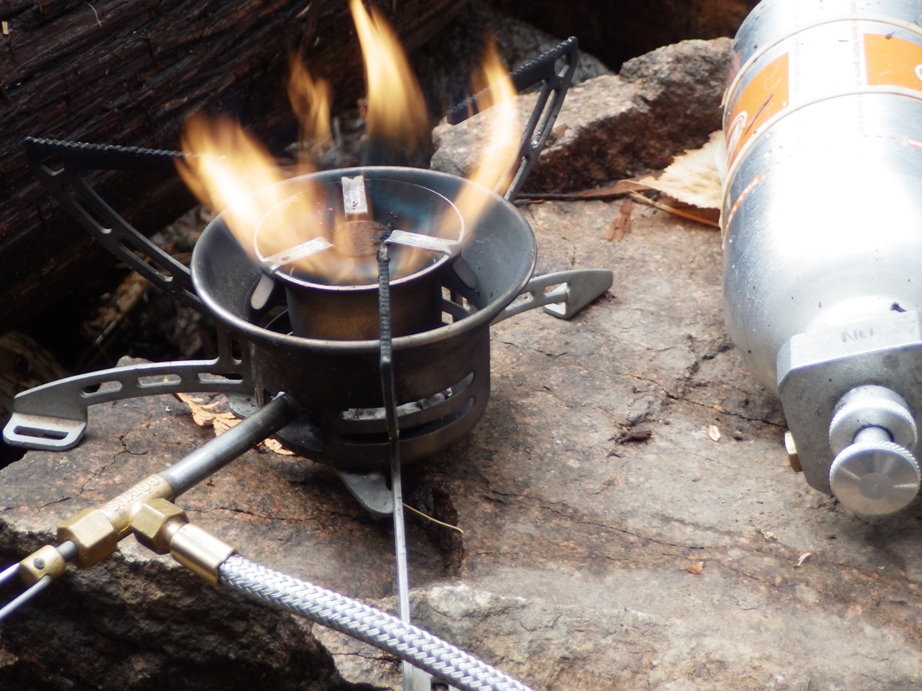
As far as elevation, I think you were thinking jetting in a carburetor, not on a stove.
On a carburetor, the fuel comes out of the jet as a liquid. Stove, the fuel comes out as a gas (vapor phase). So, with a stove you are mixing fuel (a gas) with air (a gas), elevation should not change the ratio.
My Optimus 111T in the photo below, nice blue flame, I think this was on coleman fuel. The stove is rated to burn either that or kerosene with the same jet, but the kerosene flame is more yellow. I have used kerosene in this stove too.
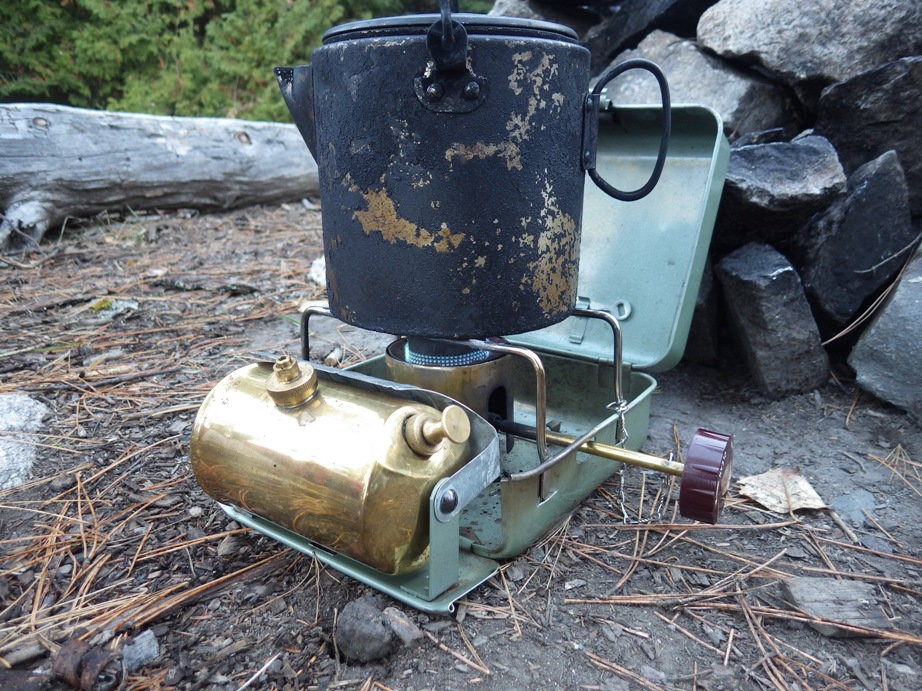
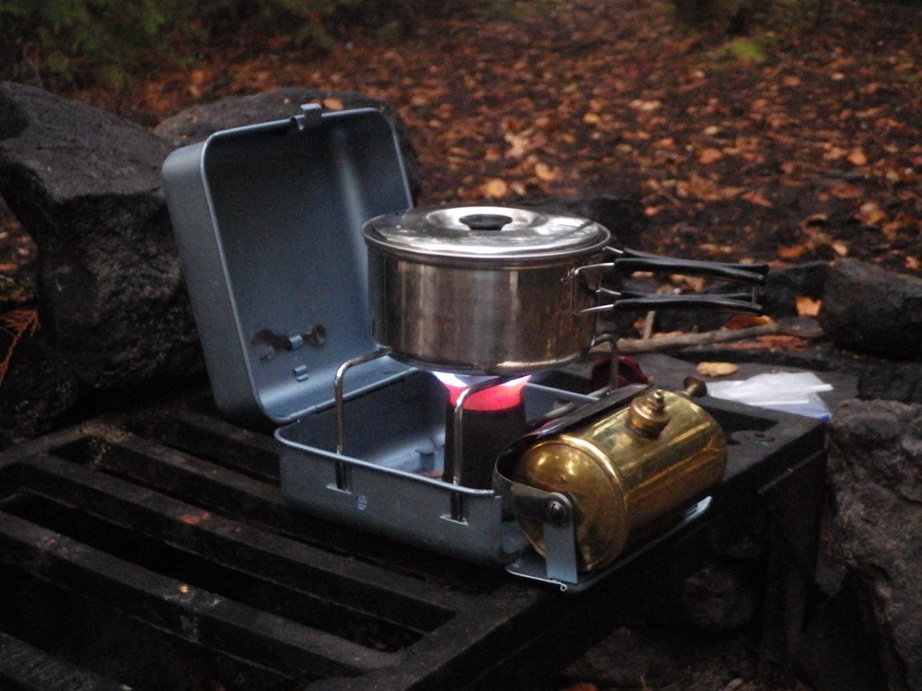
Photo below, my Optimus 111B, photo from this past Oct on my canoe trip. This is the first camp stove I ever bought. It is only rated for coleman fuel (or white gas) which is all I ever used in it.
One cold morning in northern Minnesota in the late 1970s, this was the only stove we had in our group that would work, it was minus 36 degrees (F) that morning according to our thermometer. It took a while to get it lit, a puddle of white gas in the priming cup was too cold to ignite, had to use paper matches like a wick to get the priming cup gas warm enough to burn. But once lit, it was our only functioning stove out of three stoves on that trip. I re-sprayed it a couple years ago, now looks as good as new.
This is quite off topic from the thread which is on bikepacking stoves, the 111T and 111B are a bit heavy and big for bikepacking. Sorry.