Originally Posted by
T-Mar
Shimano introduced SIS commercially for the 1985 model year. At that time the vast majority of European pro teams were still using horizontal dropouts. The only exceptions that I recall were were the Vitus based PY10FC of the Peugeot team, the Vitus 979 of the Skil-Sem team and the Alans of the Teka and Varta - Café de Columbia teams.
If you examine 1985 race photos, advertisement and catalogues, you'll find that the the bicycles supplied to the following teams were equipped with horizontal dropouts: La View Claire (Hinault), Panasonic - Raleigh, Lotto (Eddy Merckx), Kelme (Eddy Merckx), Hitachi (Splendor), Sommontana (Bianchi), Carrera (Battaglin), Renault - Elf (Gitane), Ariostea (De Rosa), Malvor (Bottecchia), Gis - Trentino (Moser), Kwantum - Decosol (Colnago), Del Tongo - Colnago, Safir - Van De Ven (Colnago), Atala - Camapgnolo, La Redoute (Motobecane), Fagor (Zeus), Zor (Zeus), Alpilatte (Olmo), Gin - MG (Orbea), Reynolds (Pinarello).
The only major European based pro teams using bicycles with vertical dropouts were those with aluminum or carbon frame frames. The vast majority were still using steel frames with horizontal dropouts. If you look at the bicycle industry in 1985, vertical dropouts were used primarily on non-ferrous frames, grand touring bicycles and ATBs. Yes, there were some exceptions, but the industry as a whole, and road racing in particular, was still overwhelmingly steel frames with horizontal dropouts. Indexing would become the prime factor in reversing that situation.
Lots of good points,

Originally Posted by
T-Mar
When I started racing in the early 1970s, it was still very popular to use fixed gears for early season training. However, the reason had nothing to do with derailleur contamination, as you were still doing more frequent bearing overhauls and chain cleaning. The reason was to force the legs to be constantly moving, to reintroduce muscle memory for pedaling and get your spin back.
In 1974 I tried my hand at racing. I was 30 years old and a masher. In short order I learned to spin and also learned "souple" French for supple meaning pedaling smoothly.
CADENCE is a term I rarely see used these days. When spinning (while riding) I also learned about Cadence. I was soon able to pedal at a cadence of 90 rpm all day long on the flats and rolling hills.
For most cyclists in the US, a derailleur enabled the use of low gears for climbing hills. During the Bike Boom Fad, Alpine gearing with a 14-28T 5 Speed FW and 52-42T chain rings (also 40T & 36T) became the standard. Back then bike racing was almost unknown in the US market even though the buzz word was "10 Speed Racing Bike"! "Eddy WHO!"
For competitive cyclists who were fairly uncommon in the US back then, a 13-21T FW with 52-42T chainrings were De rigueur! Anyone using a 23T or 24T large sprocket was a gurly man!
The idea behind close ratio gearing was a rider could maintain the same Cadence over varying terrain and only went to the "low" gears for climbing!
Jobst Brandt and a friend riding the Alps with 13-22T FWs and 53-42T chainrings. He and his friends used to ride all over the passes in the Alps every summer. They did "Credit Card Touring".

Originally Posted by
T-Mar
Back then, n+1 and specialized bicycles were rare, except for the well off, so for most amateur racers their competition bicycle was general purpose. About the only fairly common concession, was an extra set of wheels, for training.
The destruction that occurred in Europe during WWII left most of the economies in shambles. Financial recovery in those nations didn't start for "working folks" until the late 60's to early 70's. In France many towns had at least one constructeur who built custom bikes and frames. They were expensive and intended to last for years. Think Herse and Singer...
A lot of those frames were built with vertical dropouts most likely for use on bikes with fenders also randonneur bikes with bags. Simplex and Huret produced vertical dropouts but many constructeurs made their own. For the most part, horizontal were far more popular.
Simplex vertical dropouts.
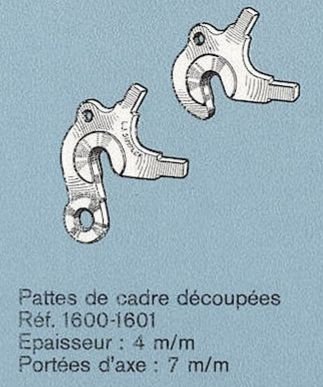
Things were similar in the UK but amateur bicycle competition seems to have been more popular than in some other countries. A customer bought a bike for transportation as well as for sport. As I mentioned above horizontal dropouts allowed a cyclist the flexibility to use fixed gears or a single speed freewheel, an internal gear hub or a derailleur with a multi sprocket freewheel.
Attachments were available that mounted on the forks for carrying "sprints" - tubular wheels so they could ride to a race on clinchers and then switch wheels for the competition.
Time Trials, criteriums and similar types of events were very popular. Many bikes made for those events had short wheelbases for stiffness including very short chain stays. Vertical dropouts became very popular because you could change rear wheels without deflating the tire. A lot of those frames came with Campagnolo 1060 stamped steel dropouts.
An "Alpine" criterium frame that I had that was made in the UK with 75° angles and a super short wheel base plus lots of toe clip overlap.

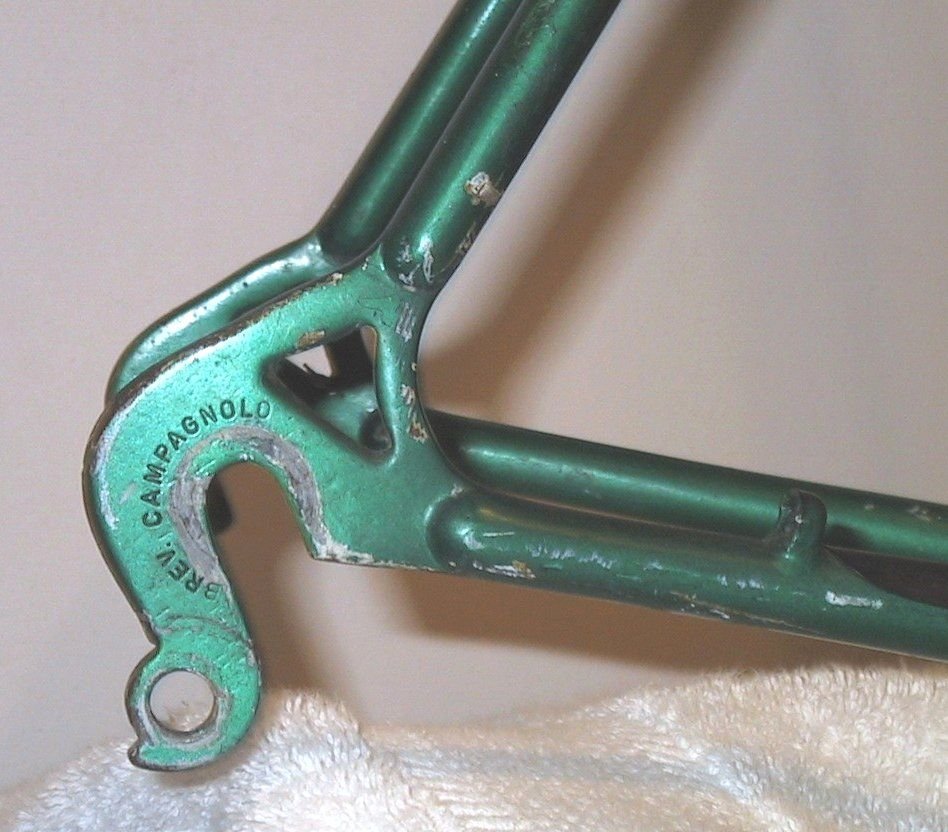
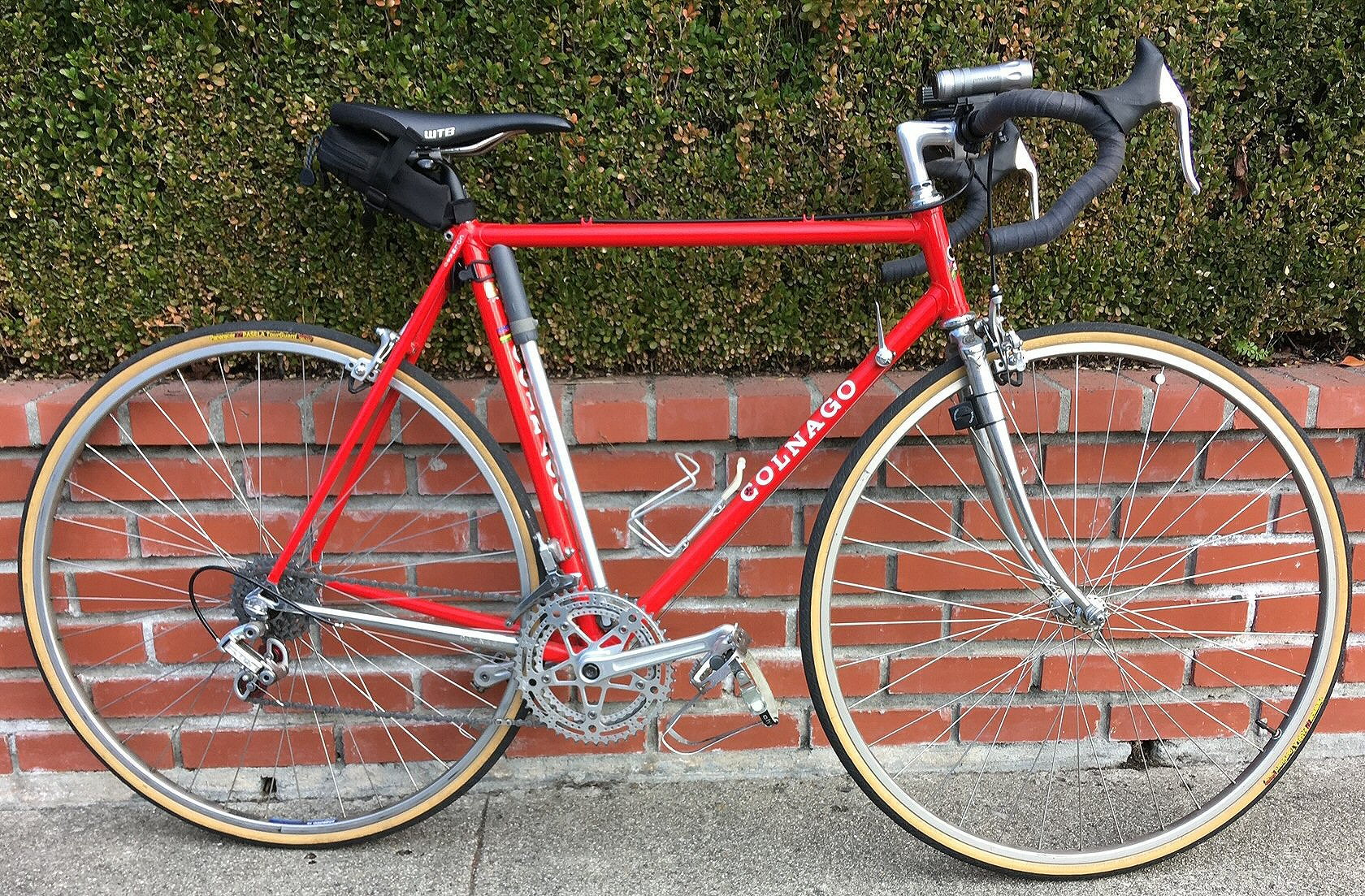
A lot of frames and bikes made during the 1980's had short rear triangles for use with 20mm-23mm tires. They would have been better served with vertical dropouts.
For example my 1983 Colnago Super...
verktyg
