Ok, I have been playing around with measurements (measure twice, saw once), and wouldn't mind a bit of a reality-check, if anyone is interested. The bike frame is fairly similar to my bike, so posted below are the measurements for mine, printed, and hers, in red handwriting. The reach is slightly longer for hers, and the stack significantly lower (-32 mm).
I have 20 mm of spacers on mine, which adds about 19mm to the intrinsic frame stack, resulting in an "effective" stack of 596mm.
Max. 40mm spacers and her intrinsic stack of 545 mm = 583 mm "effective" stack. So I used these as starting points to play around with the stem geometry website input. (I used 72.0° for the fork/head tube angle, as it splits the difference evenly).
Here is what I am getting, using a Ritchey adjustable stem I have set to 45° and it is 90mm center-center:
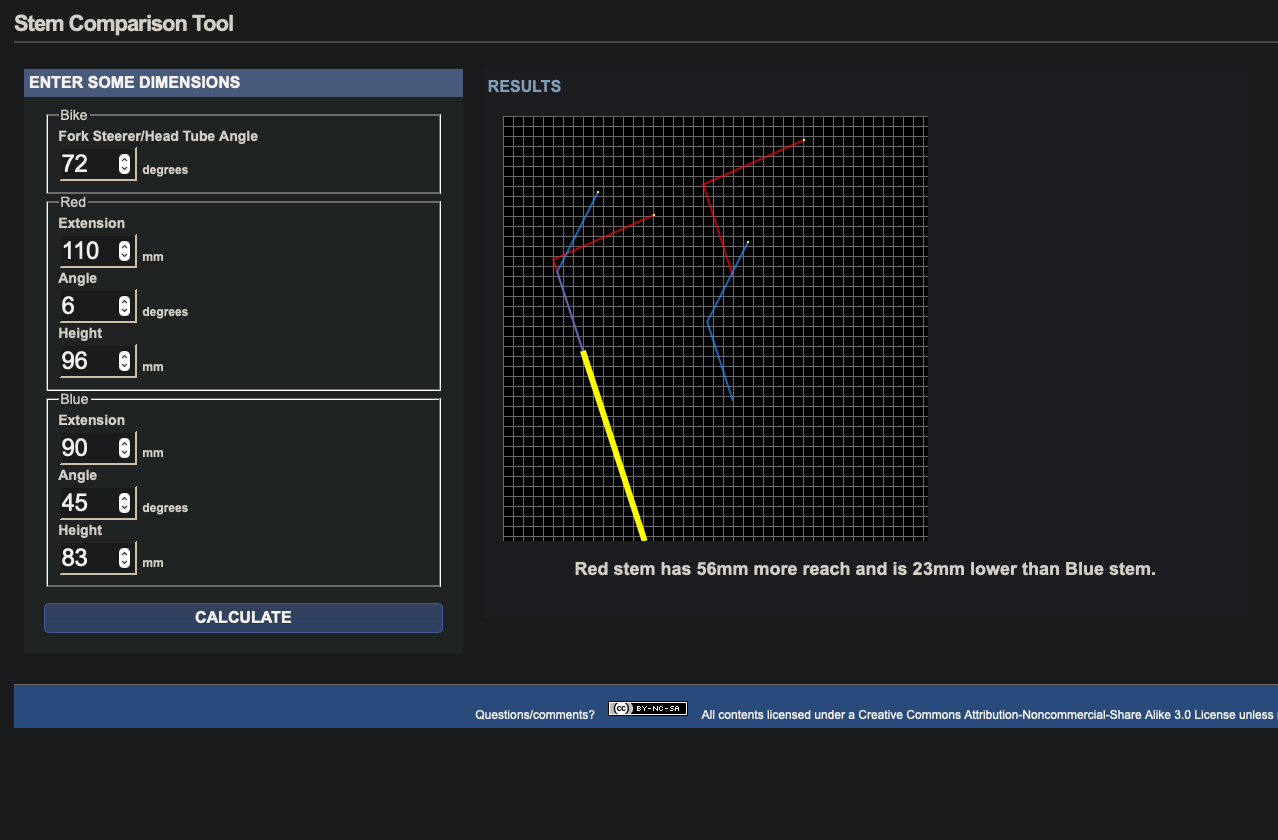
(I've subtracted 500mm from both heights so that I can see what is going on in the plot grid). Red is my bike, blue is her prediction.
Here are the bike geometry vitals:
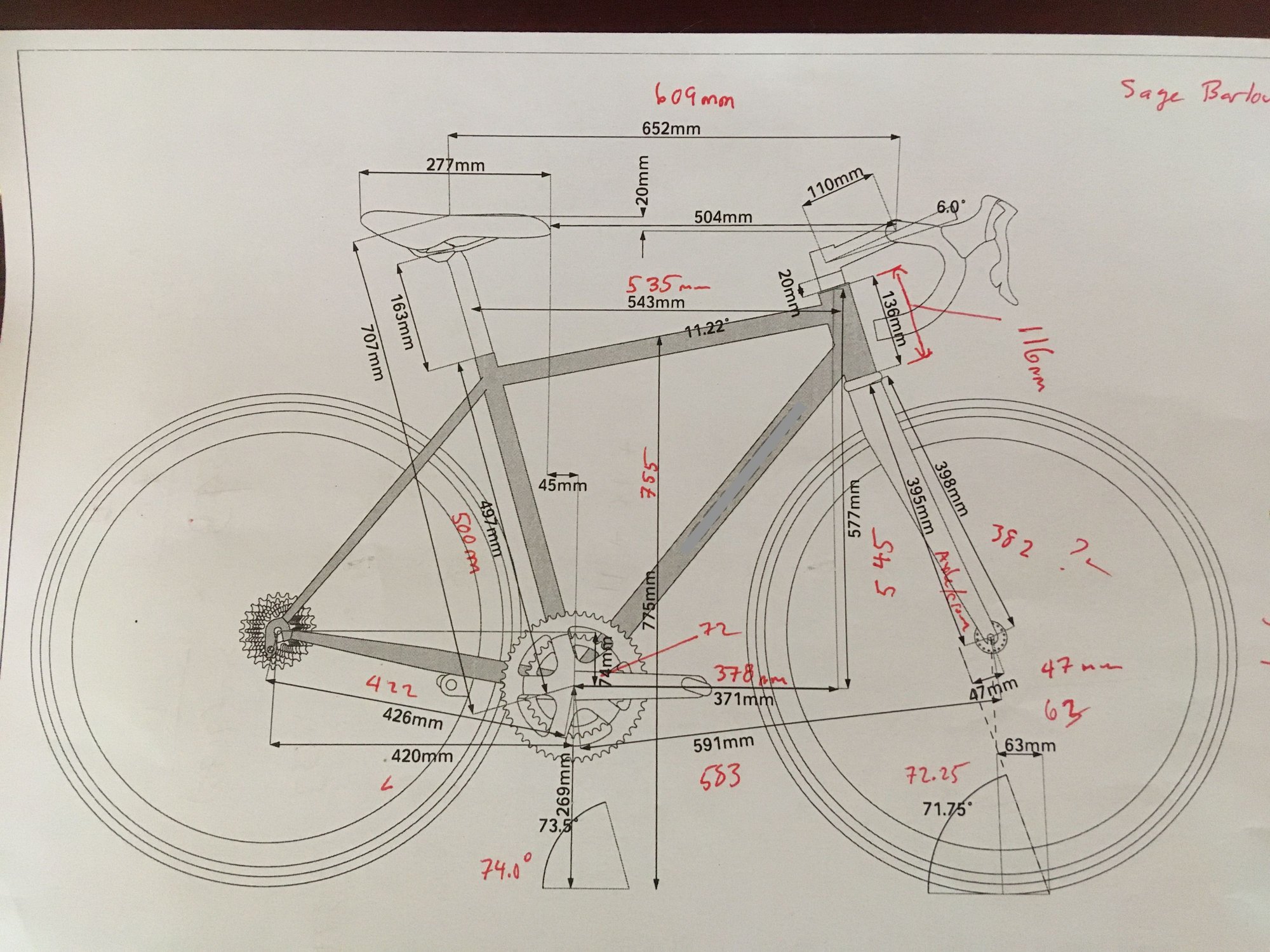
Even though I currently have too many spacers in place, the reality is that the measured difference in effective reach is 8mm less than predicted, and, more significantly, the drop (from saddle to bars) appears to be greater in her case, (i.e., the bars sit lower than mine, not higher as predicted). Both saddles are at the same height for simplicity.
I must be doing something wrong, but I can't figure it out.
Briefly, my assumptions are that the most relevant differences are the intrinsic (frame) stack, the angle of the stem, and the length of the stem. (The difference in intrinsic reach is +7mm for her bike, but the total handle bar height is what has me more worried. Currently she has a zero set-back saddle, and mine is set back 10mm).