Originally Posted by
sam21fire
The other factor to consider during 'expedition' rides, or even fairly remote rides in the US is to include a certain percentage of food/water (and gear) as the Oh S--t buffer in case you have a significant problem in a remote area. Crossing the Mohave Desert in July I carried roughly 4-5 gallons of water (depending on the day's route) which beside the weight took up a lot of space. Although I only drank/used 3-4 gallons per day, the extra could have made the difference between life/death in some areas.
Yup.
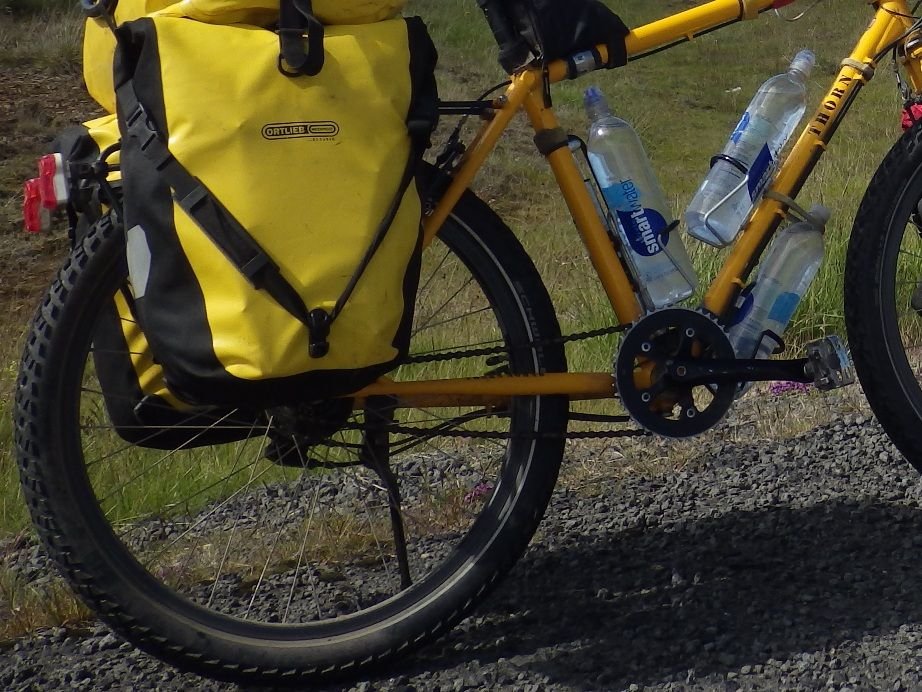
The photos of my yellow bike in the posts above, that frame is rated to carry 60 kg of stuff not counting weight of rider or bike itself. I have not had that much stuff on it, but I can say that it carried a lot of weight and felt very confident in doing so. The rims are Andra 30 CSS (the CSS braking surface is no longer made), the Rohloff hub provides the confidence that you won't bend a hanger or break a derailleur. It uses M6 rack bolts instead of M5 for extra strength. I would trust that bike to go anywhere that a bike with tires at 2.25 width can go. It is a heavy bike, but for difficult terrain where support is minimal, that is what you need. And that bike has the longest chainstays of any of my bikes at 466mm.
I know a guy that has the same model of bike that camps in the desert, he pulls a trailer just for the weight of water he has to carry. I however do not like hot weather for touring, I would rather not have to worry about lack of water, so I take trips where I do not have to worry about that. I have carried five liters of water at times, but I usually try to keep it to only the three liters in the bottles on the frame.
Like I said in a previous post above, some have done genuine expeditions on bikes that I would consider to be campus commuters, but why risk it?
At the time of the photo, I was using a bigger chainring as a bashguard, I have since bought a proper chainguard/bash guard for it.
The next tour I am contemplating will be on a bike that is much lighter, as it will be on pavement in USA where food and water should be readily available.