I have been both enjoying this thread and learning from it. My preference for train travel has much to do with the fact that I'm pretty tall--which makes long flights an ordeal--but I also just like trains.
A few additional observations:
1. If you plan to take a rinko bike on the train, pack it up in the park outside, or somewhere else out of sight, and only bring it into the station once it's fully packed and ready to go. If Amtrak personnel see you using tools to make your bike smaller, that could potentially call into question whether it is a "true folding bike."
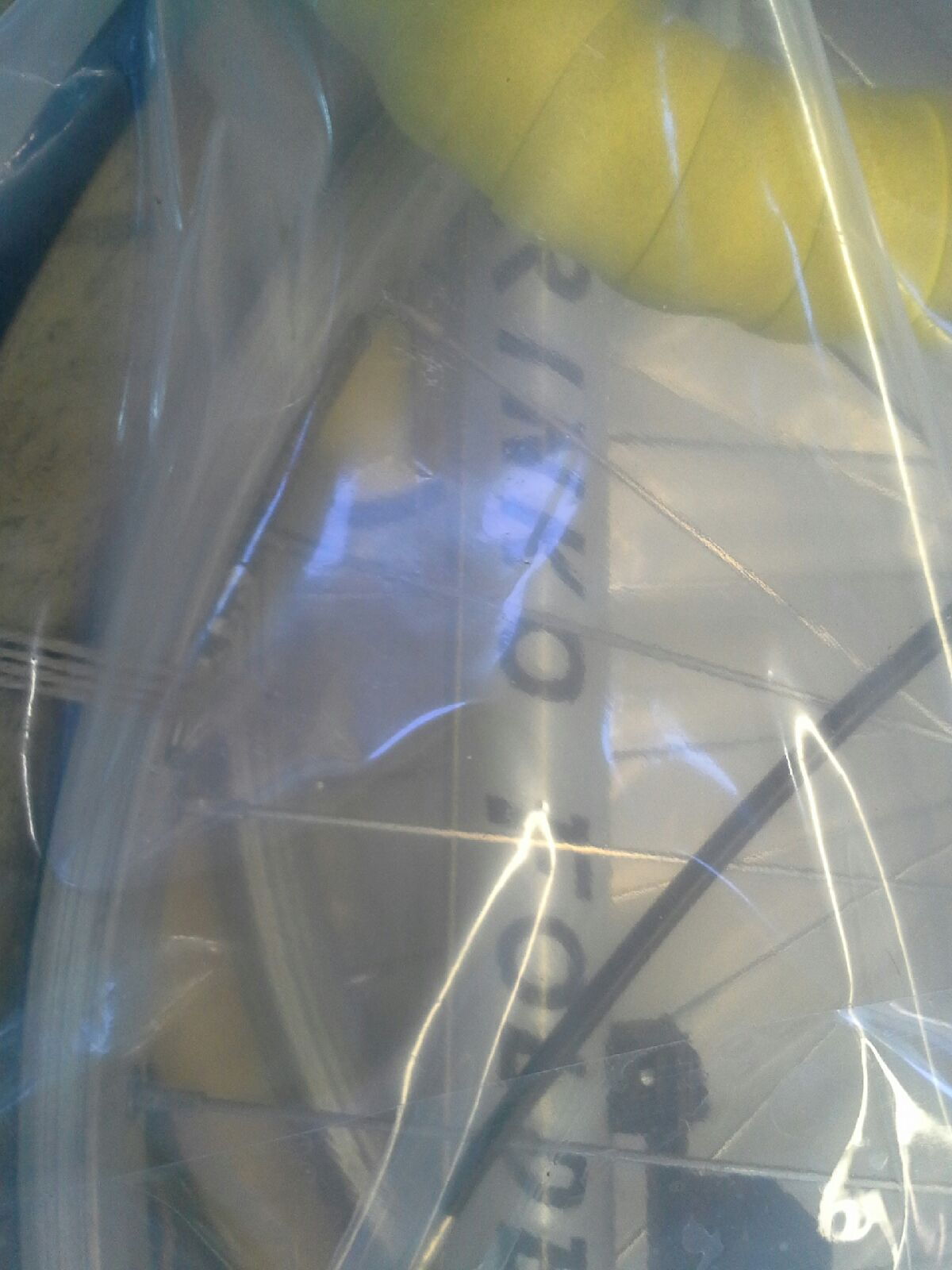
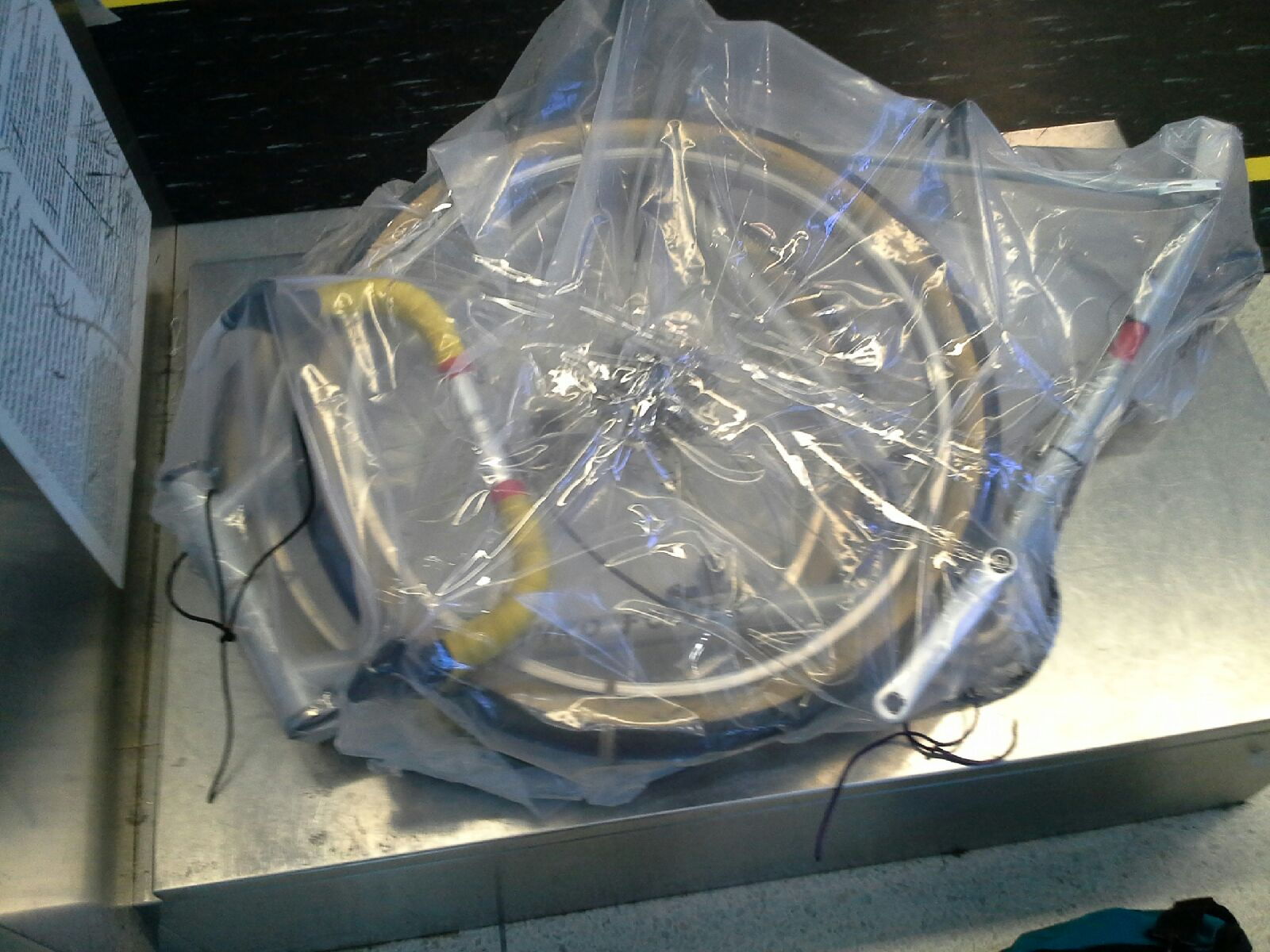
2. Put the bike in a bag. I use a big 3- or 4-mil industrial poly bag (I bought a roll of them years ago, and now can't remember the thickness) . It's durable enough to let me use the same bag going and coming for each tour. It protects the bike pretty well, assuming that the frame and wheels are
tightly strapped together. Since you can see the bike through the bag, it would be easy to take a tape measure to it and confirm that it is within the size limits (no one has ever asked). The "Rinko Folder" decal on the down tube--something that I just made up--could also be useful as a way of confirming that it is, in fact, "true folding bike". Again, no one has ever questioned me on this point.. It's inconceivable to me that someone would ask me to unpack the bike looking for--what? Some kind of smoking-gun evidence that it's not a "true folding bike?" In any case, they would not find such evidence--it does not exist.
3. For ease in carrying, I use a pencil or some other convenient object to poke a couple of small holes through the plastic bag next to the head tube, and knot a short loop of parachute cord through the frame. Then I clip a shoulder strap to the loop. It makes carrying the packed bike very convenient. It would otherwise be troublesome to get a grip on it anywhere.
4. I second what others have said or implied about keeping a low profile. Don't ask anyone at the station for help or information (other than ordinary questions about where the train boards, etc.). As the say in Japan, "the nail that sticks up is hammered down." The impression you want to convey is that you have things well in hand, are doing something that you have done many times before, and that it's manifestly correct and aboveboard. Project an air of quiet competence.
5. One potentially unsolvable problem that
could in theory arise would be if the train pulls into the station and there are already seven folding bikes on board, and no room left for yours. Not sure how Amtrak would handle that one. It could happen, I guess, but it doesn't seem very likely. This would be getting into Act of God territory.
6. I started traveling by train with a rinko bike because the Northeast routes I was likely to travel on didn't have racks for assembled bikes. That was just half a dozen years ago. Now they do have racks, and that's the option I used in traveling from New York Penn Station to Newark, Delaware and back last fall. Not having to break the bike down was convenient. My only reservation about traveling with an assembled bike is that the station stops (on the route I was on, at least--not sure if this is true everywhere) were
really brief, like a minute or two at most. I was okay because I anticipated the coming stop, left my seat and unstrapped my bike from the rack, installed the front wheel, and crouched in the open area next to the aisle in back until the train stopped, then scrammed. If I had waited for the train to stop before getting the bike off the rack and installing the wheel, I would never have gotten off in time. With a folded-up bike, you just pick it up at the last minute and saunter off--much less stressful.