Originally Posted by
oneclick
It's bloddy tight either way, and being nice shiny aluminium I'd like to know before pushing as hard as it seems to need.
I got the "mobile" out, was rh.
Bearings are at least dry, that's why it has to come apart.
You can lube them without disassembly. (Great, NOW you tell me!?)
The axle has a tiny hole in the center (right-to-left) that breaches into the main hollow, allowing you to add oil through the crank fixing bolt hole to freshen up the existing grease. Or you can even pump it full of grease until the old grease comes squirting out. Though that adds a bit of weight and some bearing drag (grease shear). Plus more grease will ooze out as you ride, so bring a rag to wipe off the wad before it flings onto who-knows-where. Getting that wad on your rim doesn't improve braking action.
I don't know any Mavic owners who actually did this, but it was shown to me by a Mavic rep as a selling point.
I used to do it, but not with Mavic. I once made myself a "can" to go between the right and left cups of a cup'n'cone BB set, for my MTB. In the Pacific Northwet, especially in winter, wet rides were the norm, and I got tired of overhauling the BB so often.
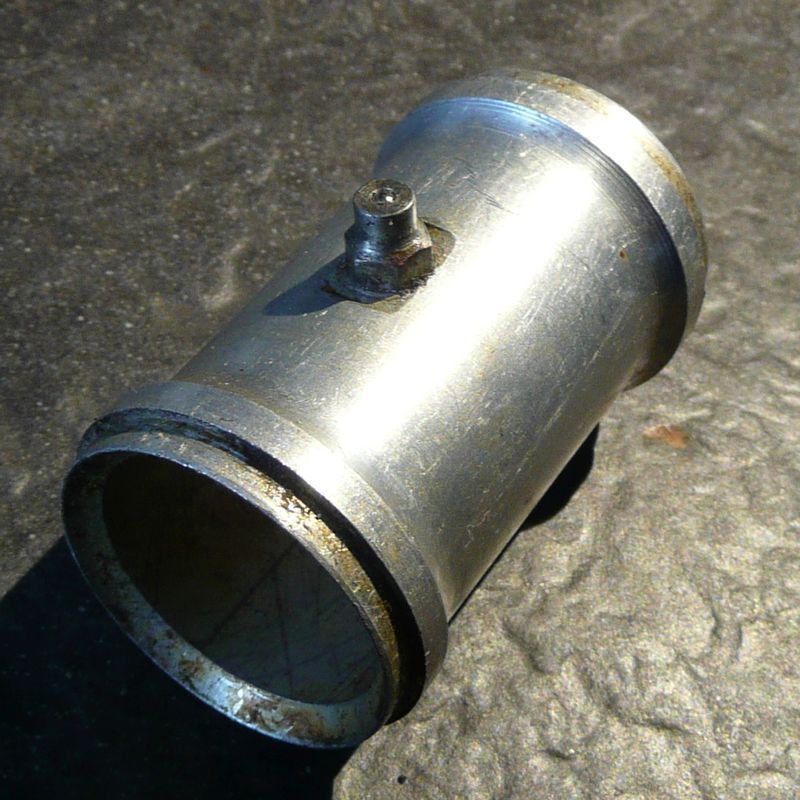
The frame needs a big enough hole to let that grease fitting poke through. Oh, and the socket wrench too, the grease fitting gets threaded in and tightened down after the can is fitted in the BB shell. But I like a big drain hole in the lowest spot on a frame anyway. Water is always going to get in, so give it a way out.
This was on my circa 1980 custom, which was Trials oriented, though it had 26" wheels and could be used as a general-purpose MTB.
You might say "why not just use a Phil?" Well I did, and after the BB was completely submerged in a creek crossing, the bearings rusted and would barely move the next time I used the bike, maybe a week later. That Phil was practically brand new, pretty much ruined by one wet ride. I could have sent it back for them to install new bearings, but I knew this would just happen again. I didn't want to use a BB that has to be sent back to California after each wet ride.
My home-made solution, the can shown above, being completely full of grease with no air space, wouldn't let
any water in. And anything that did get in got flushed back out by pumping in more grease.
The can had to be precision machined though, to tighten up and seal between the two cups exactly at the point where the bearings were adjusted right. It wasn't a design I could make to sell to others, not practical, so it stayed a one-off, my secret weapon. I guess I didn't know about O-rings back then?
I didn't keep using it on my second custom MTB, which was a XC racer. I was a weight-weenie on that one, the extra weight and drag was not acceptable for racing. I liked it on the Trials bike though.
Mark B