Originally Posted by
Schlafen
I'm currently building one of these PSV10's and my frame came without the seatpost. I've measured the bore and I'm getting 2 dimensions depending on where I measure. The cause for that is the slightly ovalised hole (the slit is narrower at the top than it is at the bottom). If the PSV10 above is still part of your stable, I would very much appreciate it if you could check the seatpost size.
Originally Posted by
oneclick
Wedge something in the slot to make it the same width all along, then measure.
(You want the slot the right size anyway.)
Originally Posted by
1simplexnut
My Vitus 980 Peugeot frames have 26.4mm seat posts
Less than brief answer to all of (or at least some of) your French seatpost diameter questions. These specs in general apply to better quality PRODUCTION bikes with alloy steel frames.
(Scroll down to Now the Reality for the reasons for most of these issues and problems)
The most common size seatposts for most better quality French bikes from the late 1960's to the early 1980's was 26.4mm diameter.
Why? Metric seat tubes = 28mm OD. The majority of Reynolds 531 French production frames used 1.0mm x 0.7mm wall thickness butted tubes. 28mm - 2x 0.7mm wall thickness (1.4mm) = a 26.6mm Internal Diameter with 0.2mm of clearance.
This also included Spanish Zeus, some Belgian, Swiss and other European bikes made with metric diameter tubes. Some high end Stellas and a few other French brands used heavier gauge Columbus SP tubes that also had 1.0mm x 0.7mm wall thickness tubes.
Peugeot, Motobecane, Gitane and other French makers used lighter gauge Reynolds 531, Super Vitus 971 (see note below about SV 980 and SV 983) and Columbus SL tubing on some of their top performance models. They had seat tubes with a 0.9mm x 0.6mm wall thickness and "should" have had 26.6mm seatposts.
A few top "Pro" Peugeots, Gitanes and other marques were made with Reynolds 531SL "Super Legere" tubing later known a 531P or Professional and also metric Reynolds 753. Those seat tubes had a wall thickness of 0.8mm x 0.5mm thick. A 26.8mm seat post would be the proper size.
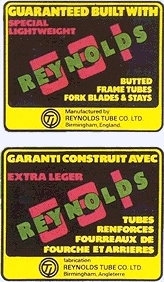
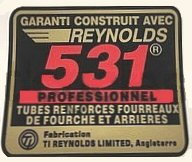
Most specs for Super Vitus 980 list it as having a 0.9mm x 0.6mm wall thickness... But it was also made in a lighter version with a 0.8mm x 0.5mm wall thickness.
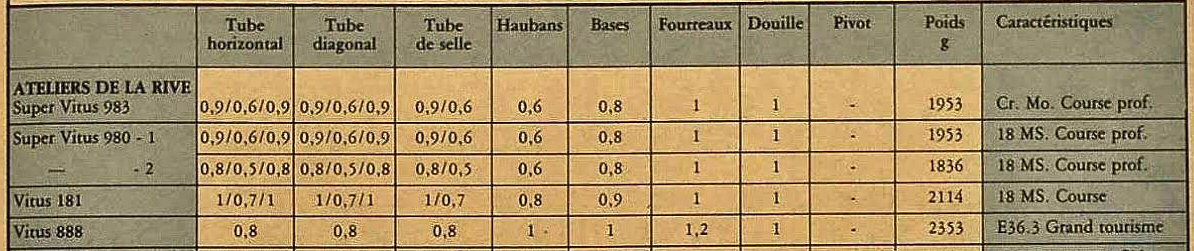
My 1983 Peugeot PSV-10 is made of SV 980-1 and takes a 26.6mm seat post. My 1988 Peugeot Biarritz is SV 980-2 and has a 26.8mm seat post. My 1984 Gitane Super Corsa has a SV 983 frame which is supposed to have the same wall thicknesses as SV 971 and SV 98-1 but it takes a 26.8mm seat post and is as light as my 1988 Peugeot Biarritz so I suspect that SV 983 was made in 2 weights like SV 980???
To muddy the water a little more, Butted Durifort and Vitus 172 from the early 70's had main tube wall thicknesses of 1.1mm x 0.75mm and used 26.2mm seatposts. Some Motobecane models from 1977 to about 1983 used butted Vitus 172 and used either 26.2mm or 26.4mm seatposts. Later Durifort and Vitus 172 had straight gauge 0.8mm and 0.9mm main tubes so there are too many variables to list here.
BTW, SV 971 was introduced in 1971, 980 in 1980, 983 in 1983, Vitus 172 in 1972 and Vitus 181 in 1981.
Now the reality... Bike makers, even some of the best rarely sized or properly reamed the seat tubes. When I started assembling my 1980's De Rosa, I was sorely disappointed because the seat tube was out of round. The most frequent use of reamers for many bikes and frames was to clean the paint overspray out of the seat tube so that they could jam in what ever size seatpost would fit in the hole! Proof: how many times have you seen zigzag snake lines on a new seatpost in a new frame or bike???
Worst case scenario ARGH:
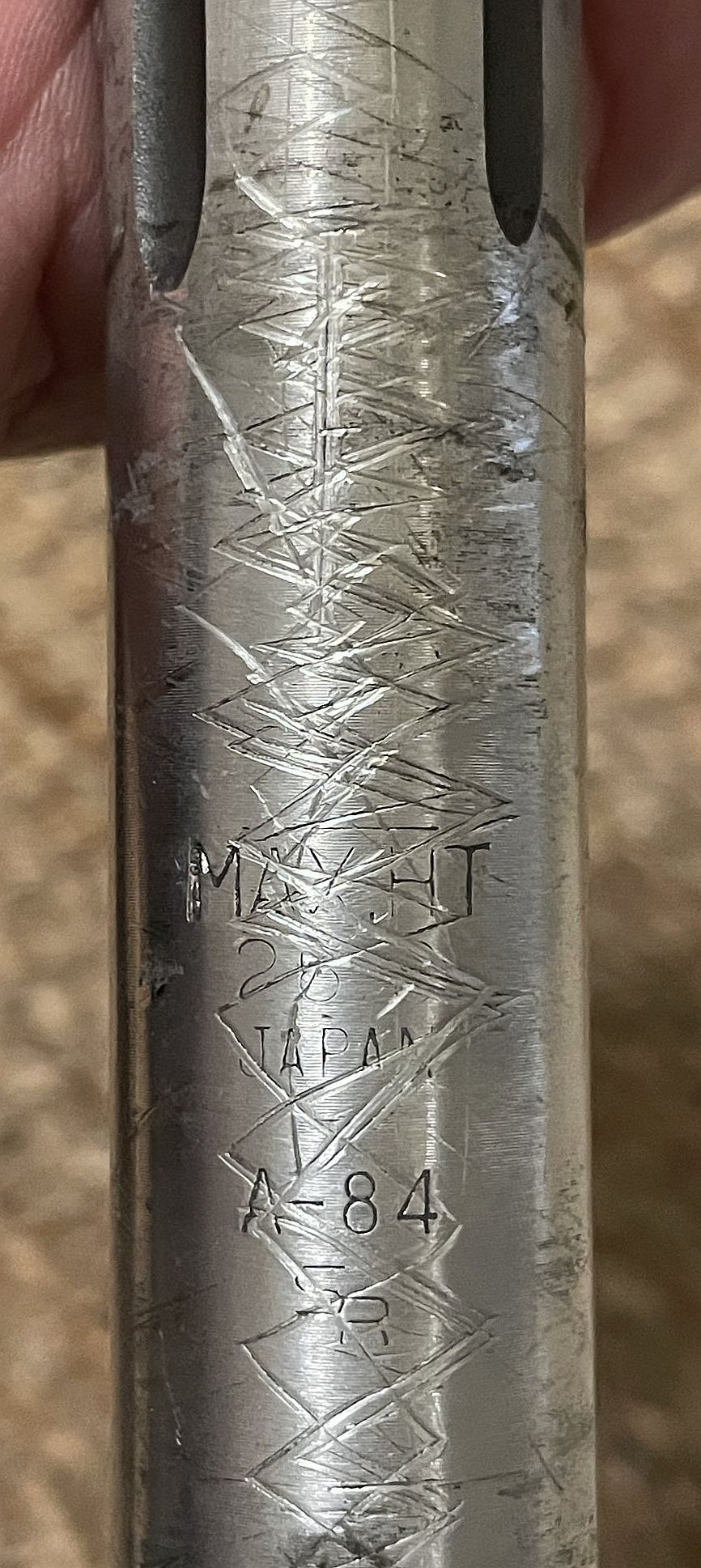
Seat lugs were frequently not round from the factory which resulted on out of round seat tubes after brazing. Also the seat tubes inside the lugs frequently bulged from overheating especially when attaching the seat stays.
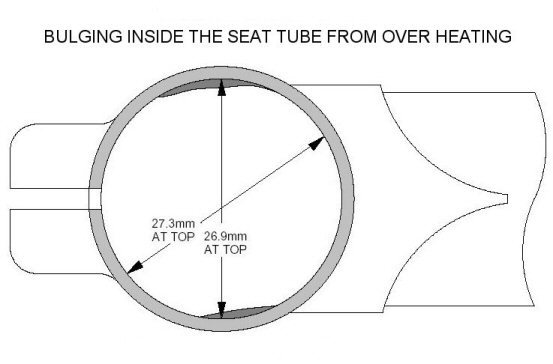
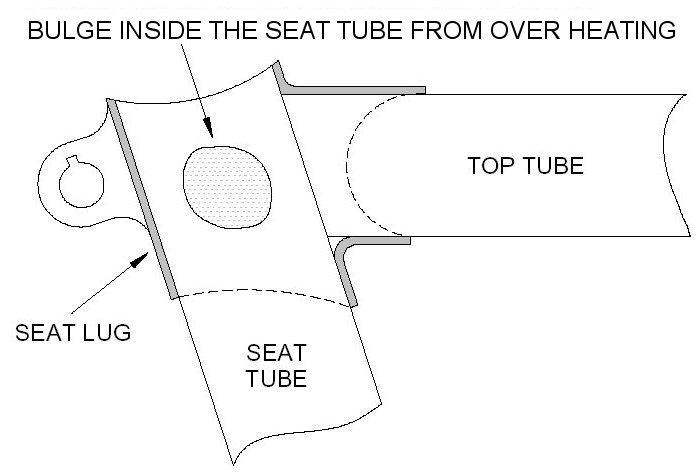
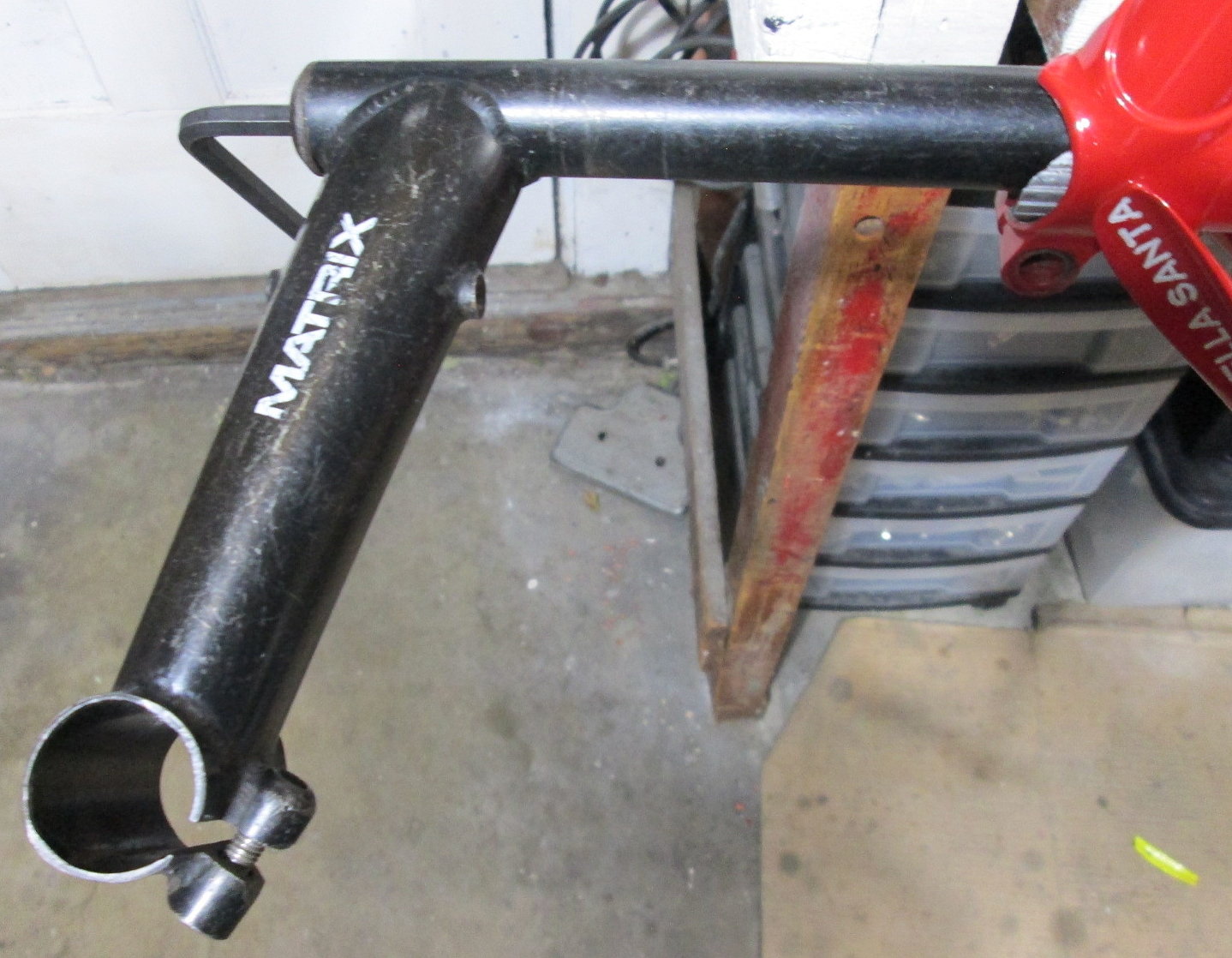
The Full Monty cure is to begin by rounding out the seat tube lug. At our shop back in the 70's we machined a set of tapered mandrels to do this. Now I use a cheap old steel MTB stem with an aluminum wedge plug so that it doesn't ding up the inside of the tube. A long neck makes a good handle. I start by gently rotating and tightening it to round out the hole, lowering it as I go around. I usually need to clamp onto the seatpost bolt ears to collapse the rear area to a rounder shape.
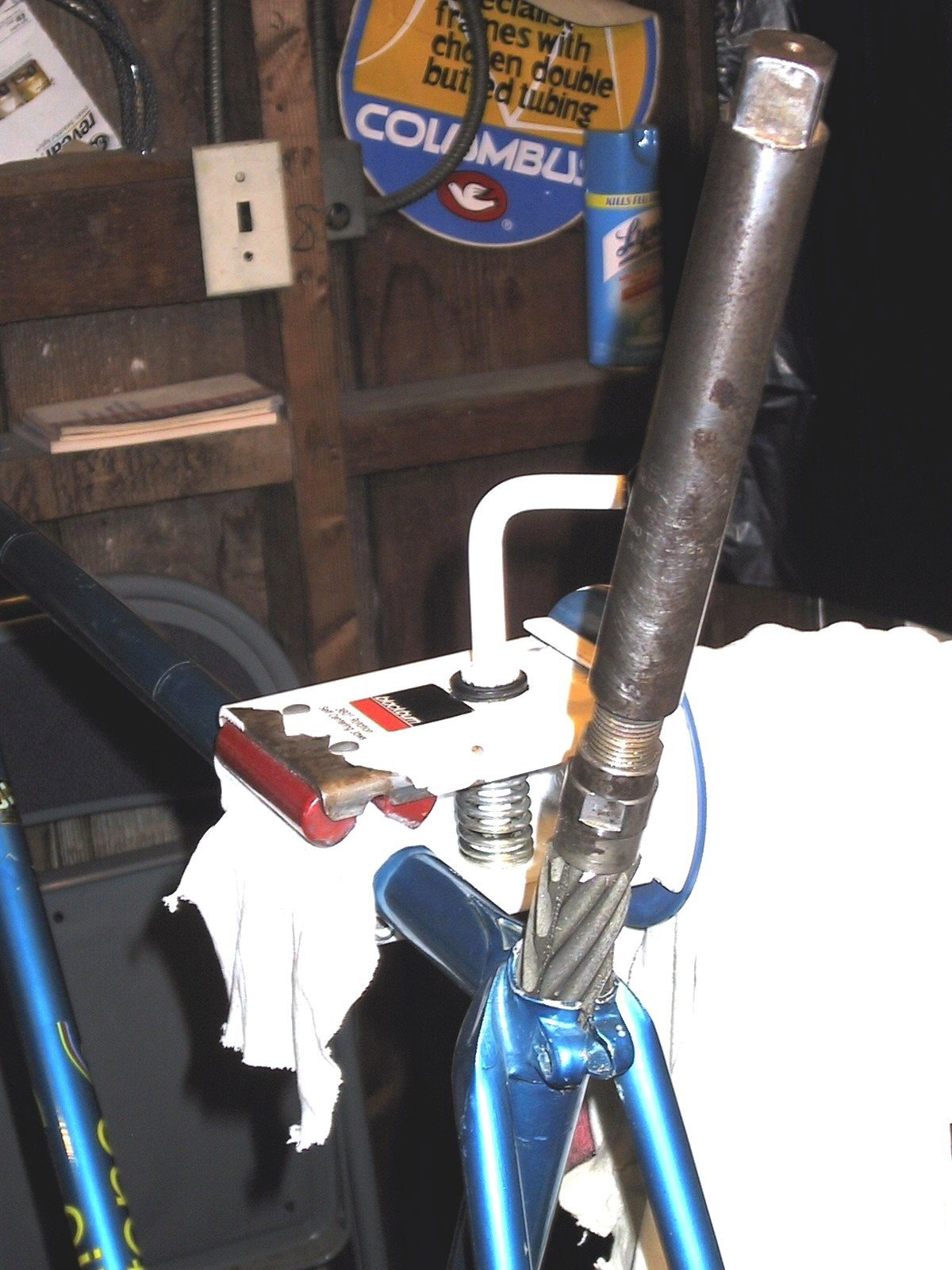
Once it's close to round, I used my adjustable reamer to smooth and round out the top of the seat tube. Not many folks have a proper reamer but there are a lot of ways around this.
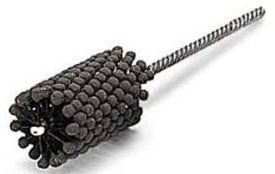
Afterwards I use a brake cylinder hone or brush hone to smooth out the inside of the seat tube and remove any burrs that will cause the zigzag scratches
Last step is to use a small file to make sure there are no burrs left in the seat tube. Note, this is a new frame and the paint overspray was never cleaned out!
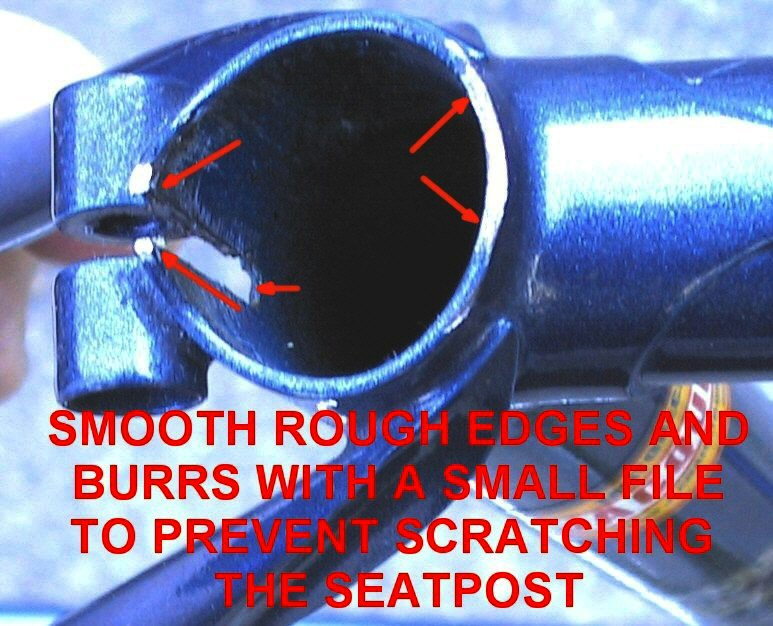
One last thing, be careful when spreading the seatpost bolt "ears". I have a very large screwdriver that works perfect. Make sure that you don't contact the seat tube itself which can cause a ding that will scratch your seatpost.
verktyg