Originally Posted by
FBinNY
When thinking about tension structures, you have to consider the line of action, rather than the actual part.
So, those spokes do cross operationally, but it happens within the shell rather than beyond, where the spokes actually are.
By example if you want to consider torque implications on a typical 3x32h wheel, you'd measure the radius at a right angle to where the spoke would pass even though it ends before that.
If i were asked (though nobody ever would) to name the pattern, I'd call them by -X crosses, based on the number of skipped holes.
Well of course. I was going by conventional labeling terms, but of course converging spokes cross at a point in space. You're talking to a vehicle dynamics and suspension engineer, we use "instant centers" in dozens of places in suspension design; Examples: For a double wishbone suspension, in the front view, the convergence of the two links forms an instant center (which moves dynamically with wheel motion), that constitutes the Front View Swing Arm length, and a line from the instant center to the tire contact point, where it crosses the vehicle centerline, is the roll center of the suspension (for a given suspension position). If the wishbones are parallel and level, the IC is at infinity, and the roll center is at ground level. In side view, if the front wishbones converge to a point aft of the axle, that IC constitutes the Side View Swing Arm length, and the IC in relation to the vehicle center of gravity, determines the amount of anti-dive in the suspension, acting about the torque produced by the brakes at the steering knuckle (different case entirely if the vehicle has inboard front brakes like an NSU Ro80). But I digress.
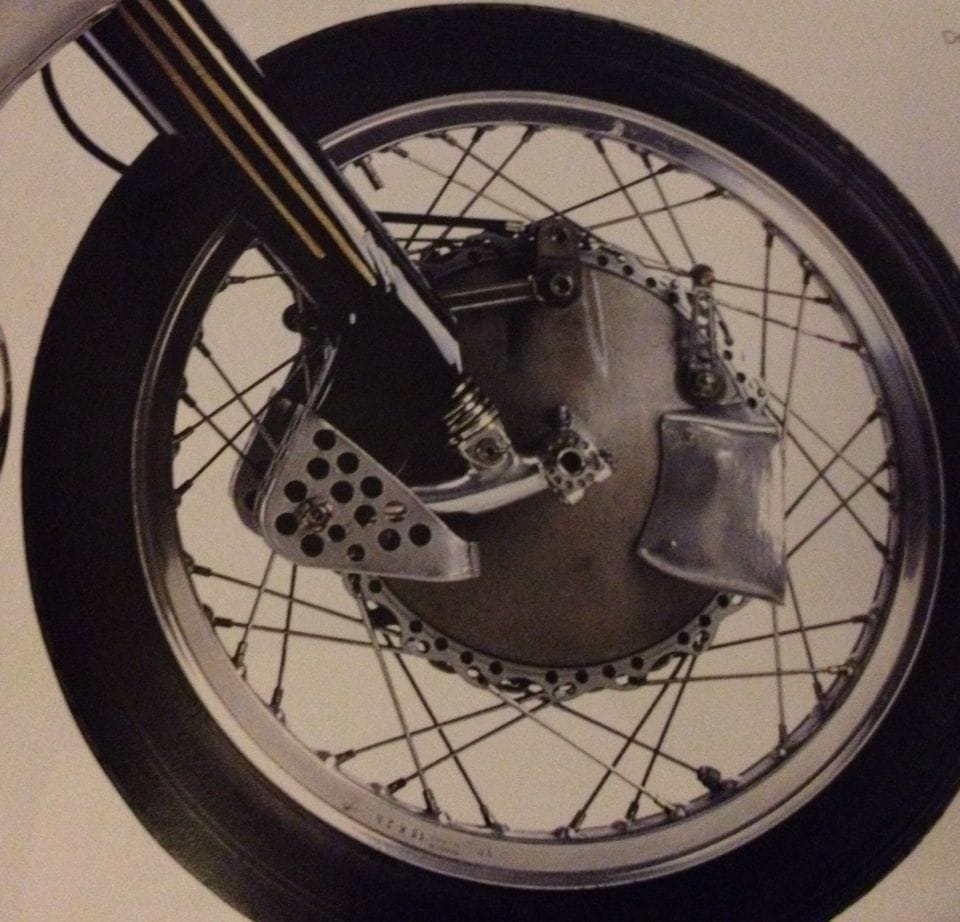
Actual physical crossed spokes are possible, with large hubs close to rim size, with the right rims with dimpled and aimed spoke holes: