Originally Posted by
cyccommute
I would expect to see much more condensation in the cold mountain conditions I encounter here in Colorado because the temperature differential is greater and the dew point is lower.
Lower dewpoint = *less* condensation (less humidity)
Higher altitude = *more* condensation (less ability to hold moisture)
Lower temperature = condensation (getting closer to the dew point)
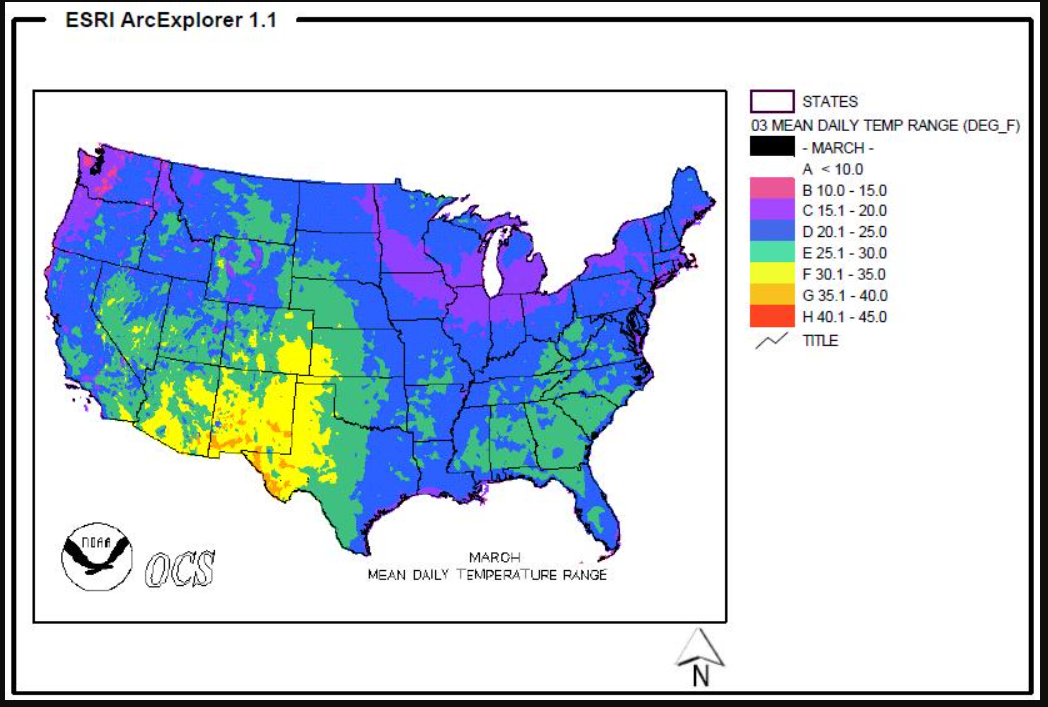
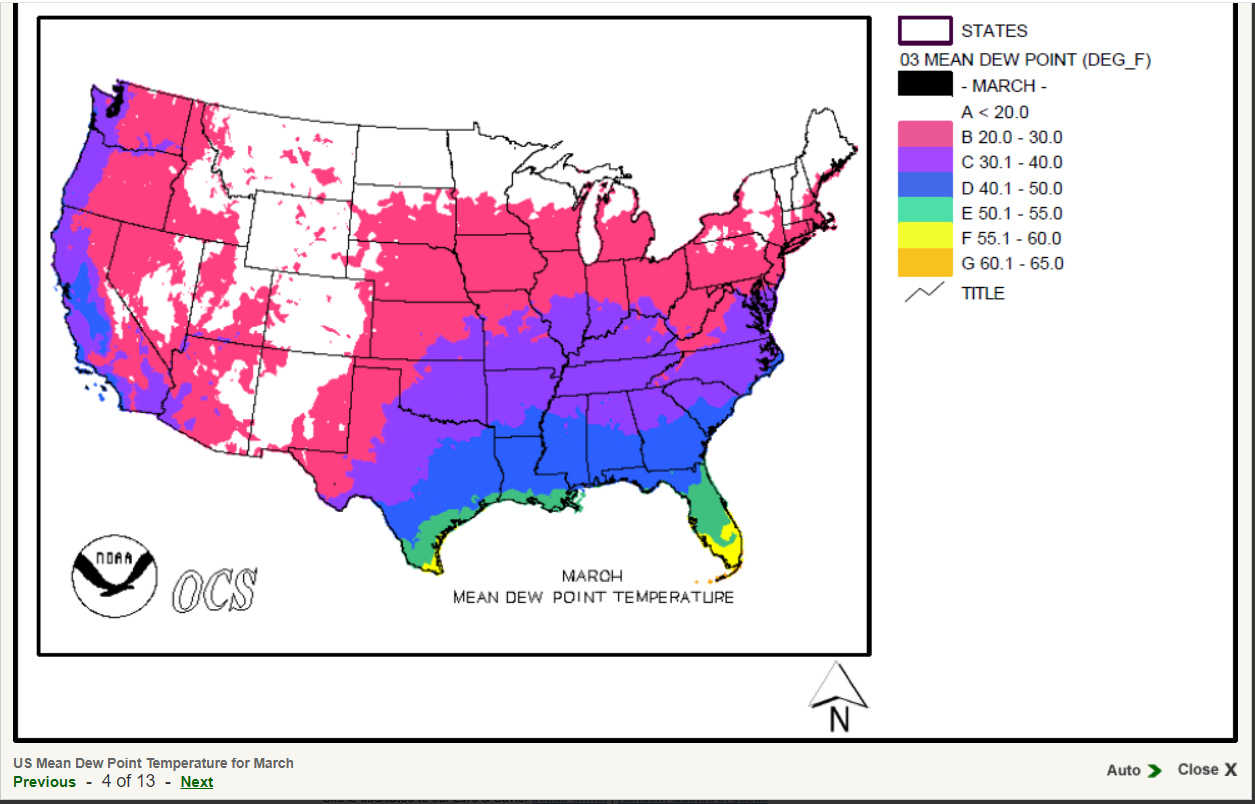
I expect a high diurnal temperature range to be correlated with lower humidity/dew points but not quite the same. For example, following is a diurnal range map for March followed by an average dew point map:
So to compare two different areas of the map: a lot of New Mexico vs say middle of Florida...
- On average New Mexico will have a larger day/night swing but also lower overall humidity as represented by the dew points.
- On average middle of Florida will have a lower day/night swing but also relatively speaking higher humidity and dew points.
So I expect the condensation in Florida to happen with higher overnight temperatures than in New Mexico - but the chance of lower overnight temperatures is much more in New Mexico.
In practice what this has meant in my touring has been (a) I've tended to carry a heavier sleeping bag and worry more about cold in New Mexico since I see the overnight temperatures (b) I've noticed dew & condensation as well as keeping my tent ventilated and packing a wet tent more in Florida.