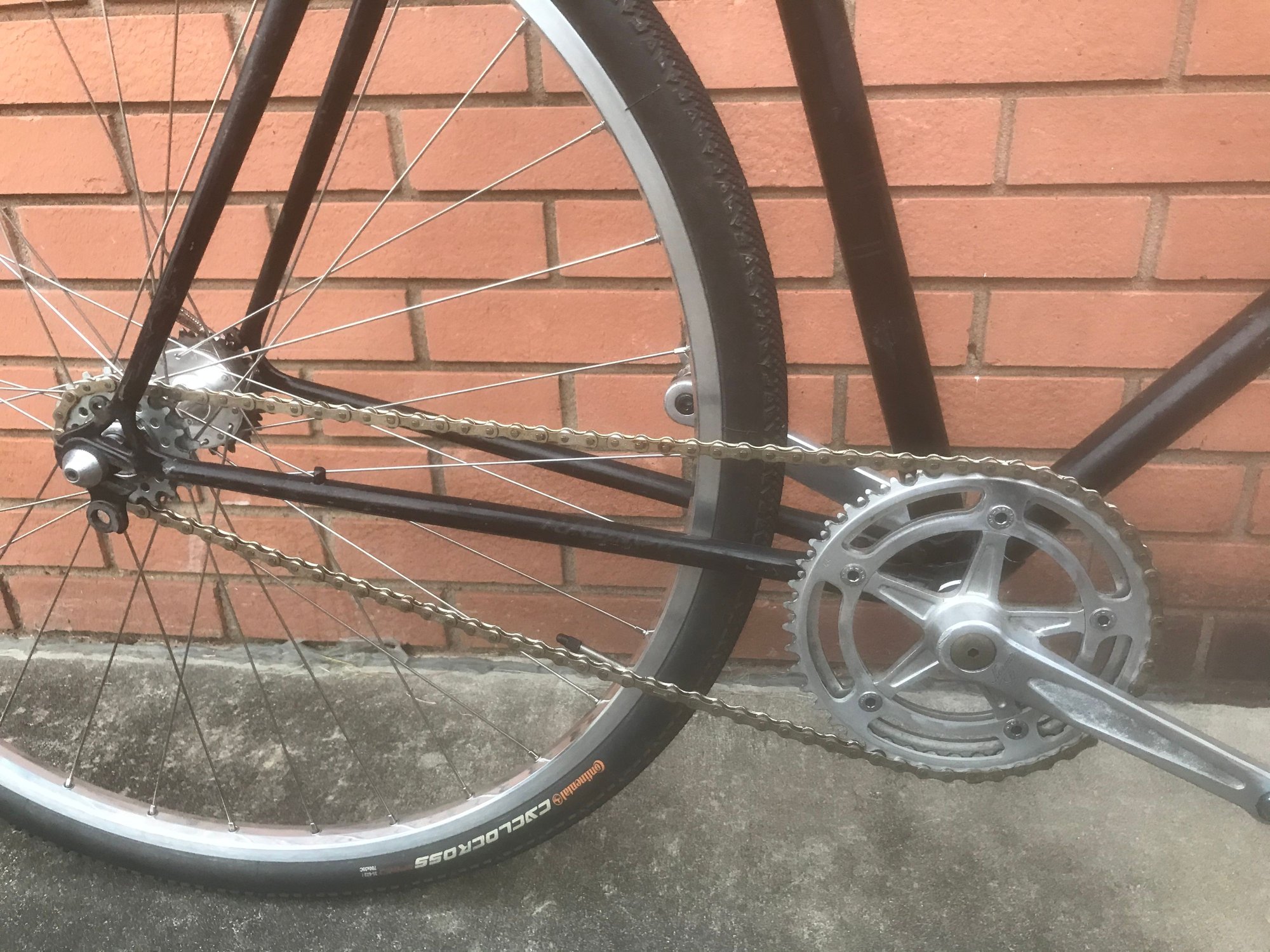
I also have a double-dingle drivetrain bike set up a little differently. The frame is a 1973 Raleigh Competition, a model known for its generous tire clearances. Mine is set up with 42/44T chainrings driving a Surly 17/19T fixed-cog on one side of the hub and a 20/22T White Industries Dos Eno freewheel on the other. On the 35mm tires I have on it, I can choose between 70-in pavement or 60-in gravel fixed-gears, or I can flip the wheel and run either general-riding-along 60-in or a gentle single-track 52-in freewheeling options. These combinations use surprisingly little real estate in the long-ish Huret dropouts - but if I wanted to I could cross-chain and STILL have enough dropout space to run the 44x22 and the 42x17 and it would all still work.
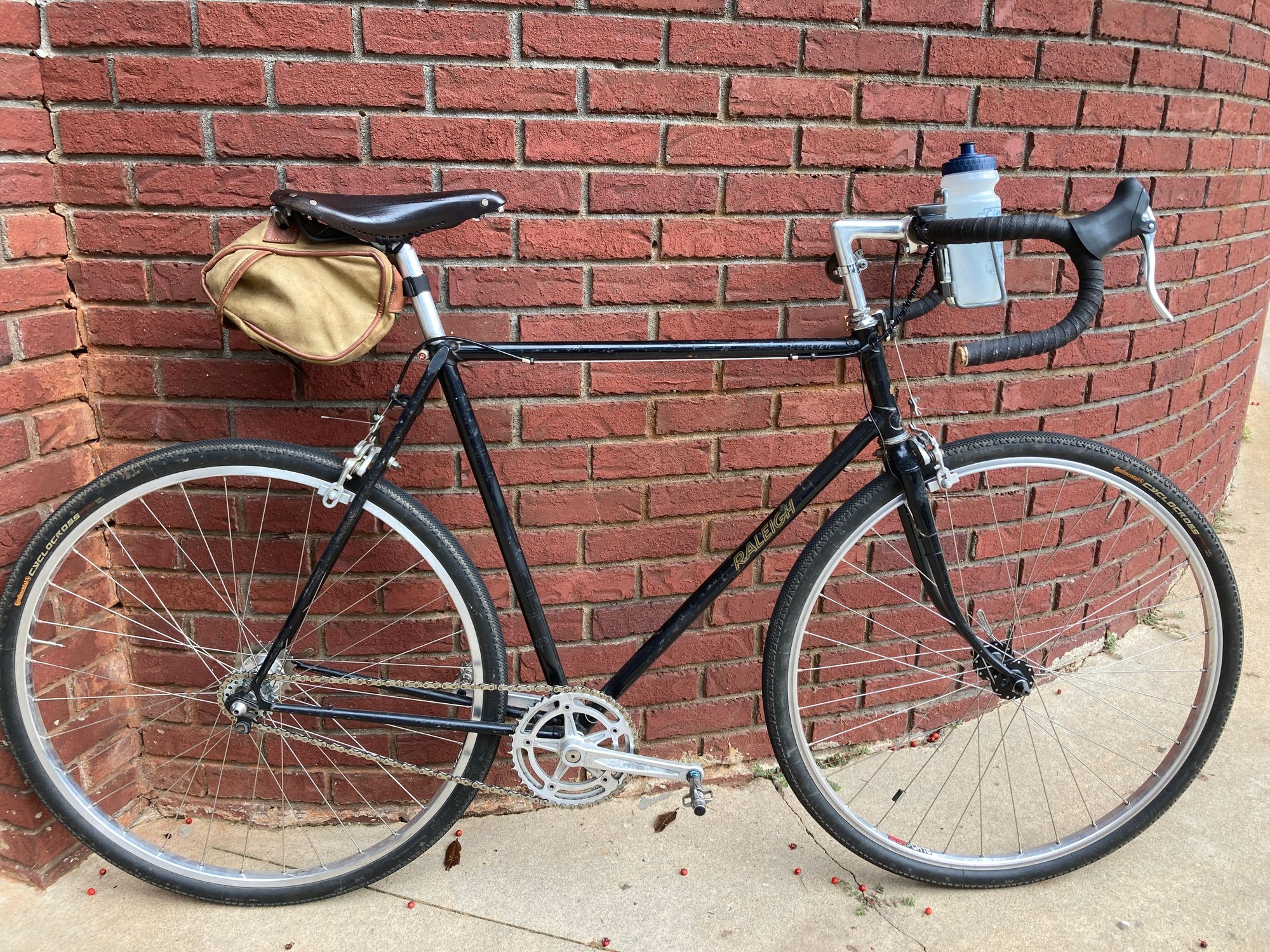
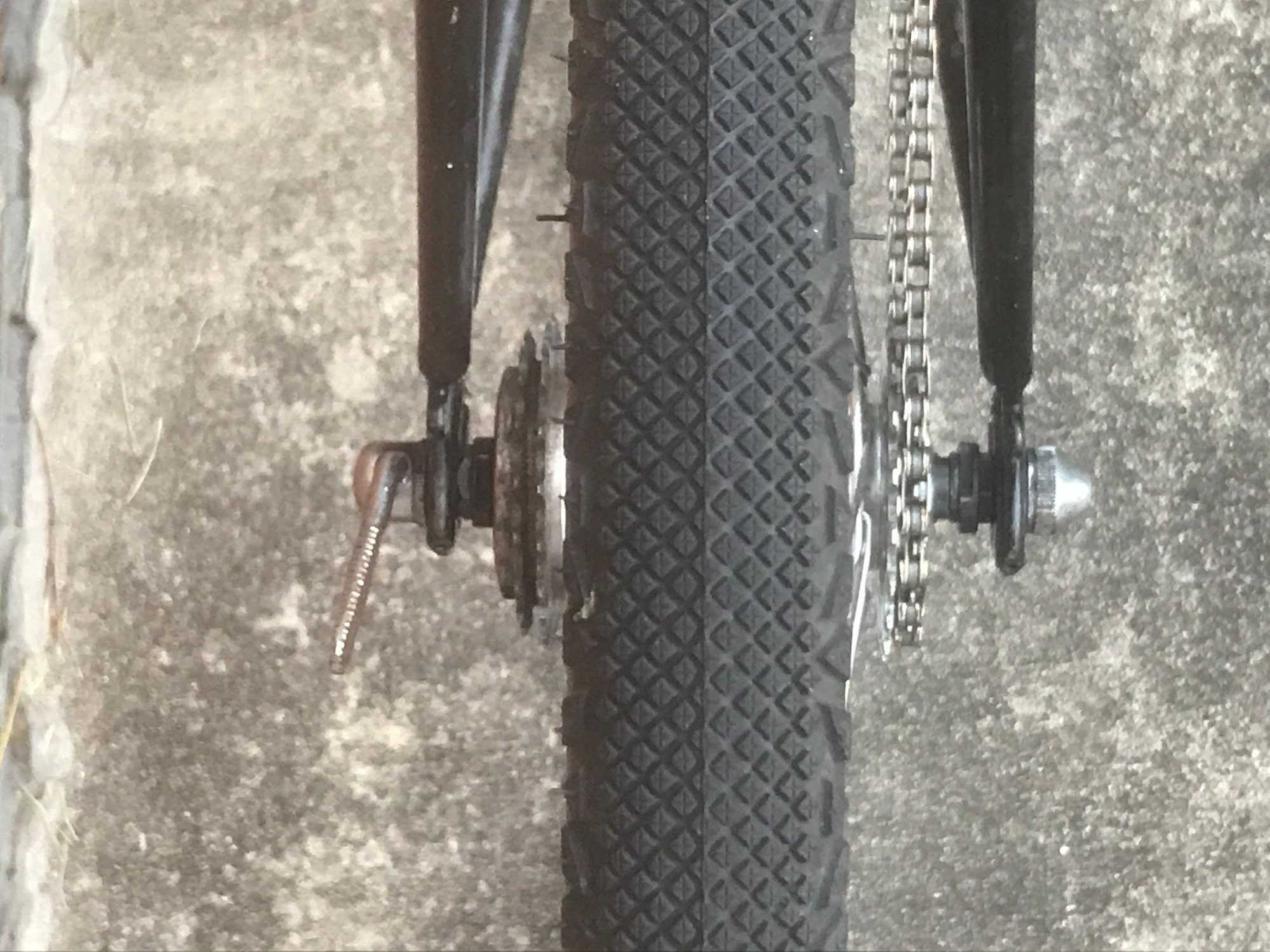
There are many who will insist that track nuts are the ONLY way to go. I respectfully disagree. I have read all of the reasons and acknowledge their validity. I have used track nuts in the past including on my Bianchi Pista with its stock track bike hubs through to the Surly rear hub on my Mercian for the first four or five years. But I have used traditional steel skewers with internal cams, the way God and Tullio Campagnolo meant for them to be made, on my fixed-gear bikes continuously since 2007 or so with no ill effects. The only fixed-gear or single speed bike I have that still has track nuts is my old Gitane, because the design of the Kogswell track hub does not lend itself to swapping out the original axle for a hollow unit.
I acknowledge that my weight has ranged between 150 and 175 pounds through the years, but I always found I could clamp down the q/r and get just as firm an engagement as I ever could with track nuts, and centering the wheel and getting the chain tension right require about the same amount of time fettling around with it no matter how the axle is locked in place. My final observation - many years ago, Campagnolo actually marketed and advertised track hubs with quick release skewers. The story is that they were banned by a number of velodrome out of fear that the releases would somehow be opened causing accidents - but I have yet to hear anyone's account of that actually happening, and I've kept my ears open on that for many years now.
I built this bike this way so that when I turn off the pavement onto a gravel road I can stop, loosen the q/r, move the rear wheel slightly forward, shift the chain from the 44x17 to the 42x19, pull the wheel back into place and find the spot, clamp it down and go. When I've been doing it regularly to be in practice, it's about a 30-second operation, much faster and less hassle than flipping the rear wheel 'round with a conventional flip-flop hub. For me the weak point is finding more Surly Dingle 17/19T fixed cogs - 79pmooney has shared with me the process of fabricating (or having fabricated) a comparable cog set involving careful machining and brazing, and that may be my solution when this one eventually wears out.