Originally Posted by
52telecaster
Just a note hear on something I recently did. I put a French freewheel, (English thread) on an early phil wood freewheel hub. Once in place I realized the two smallest cogs were skipping and worn. Let me just say removal was exceedingly difficult. The removal tool would not fit over the phil wood axle. It required complete axle removal with my makeshift tools. Fortunately I seemed to not have ruined anything and it was cool to see how it all went back together but I will never put a French freewheel on it again.
Originally Posted by
bulgie
Do you remember any details like what brand of FW, or brand of remover? Because if it was an Atom FW with the spined interface, Phil sold a remover specifically for that.

Phil hubs, as well as Campagnolo Record and Zeus, have larger diameter locknuts than many other hubs, which prevent most splined removers from seating properly unless you remove the locknut. Phil's tool was specifically desgned with this in mind, so customers could service Atom/Regina/Caimi/Zeus splined freewheels on Phil's hubs. Zeus also offered a thin-wall splined remover for their hubs and freewheels. I don't know if one was copied from the other (or which came first), or if they were independently developed, but they both work interchangeably on Atom/Regina/Caimi/Zeus splined freewheels.
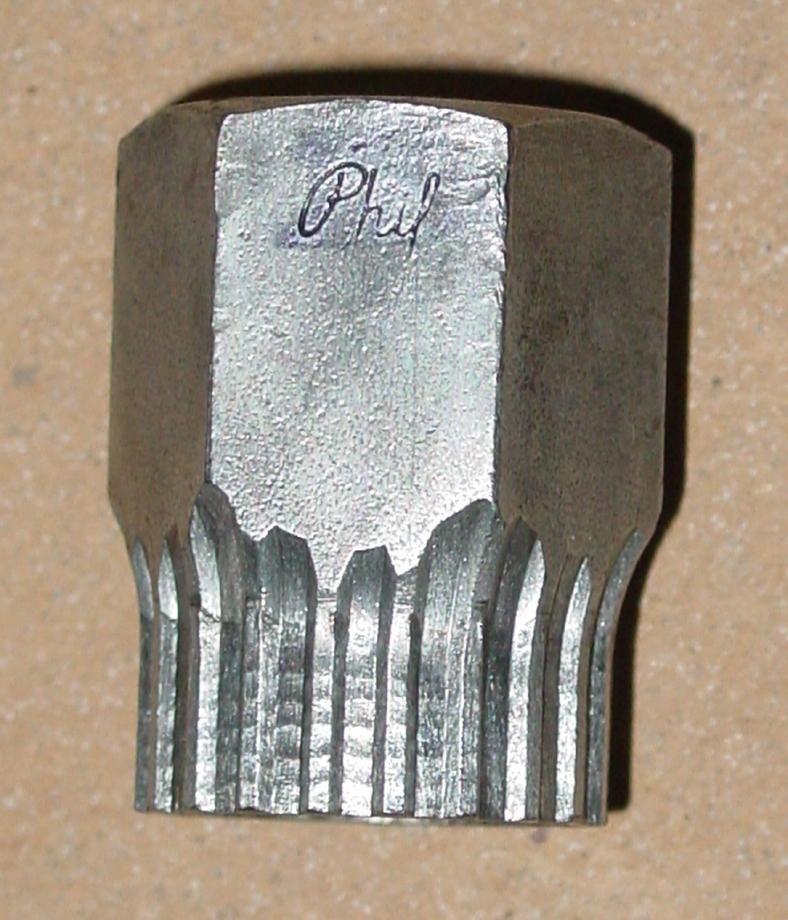
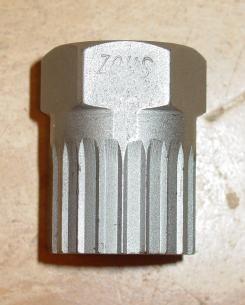
At that time, Campagnolo didn't offer a freewheel, so providing an appropriate tool apparently wasn't felt to be their problem. And when they did eventually offer a freewheel, they went with a proprietary helical two-slot design, arguably the best two-slot remover since removal torque drives the tool further into the helical slots, preventing it from camming out, as is so common with other two-slot freewheels (I still prefer splined freewheels). This is the Bicycle Research version of the Campagnolo freewheel remover:
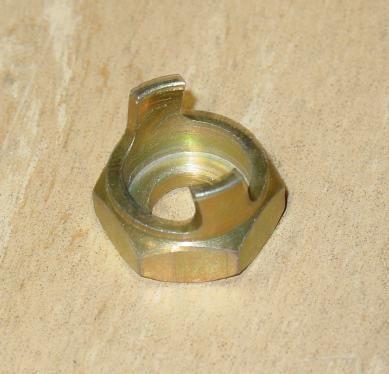
The key point is how thin the wall is on the sort-of tubular part. It must be made of strong steel, because despite how thin they are, I've never seen one fail. I use my Phil tool for any Atom (or Regina which used that same spline), regardless of whether the thin-wall is required. That thing is a life-saver.
Unfortunately, I have seen a Phil tool fail. I loaned one out, and got it back with the splines twisted.
