Originally Posted by
steelbikeguy
It can require a very close look to detect the cracks that can be a problem. No idea if there is a crack in that picture, but I've found tiny cracks, filed them out, and then discovered at a later date, that my filing hadn't gone deep enough to really get rid of it.
This is for a Sugino AT crank, but it has the same design flaw that leaves two thin edges connecting the arm to the spider.
This is the small crack that I found during routine maintenance and inspection...
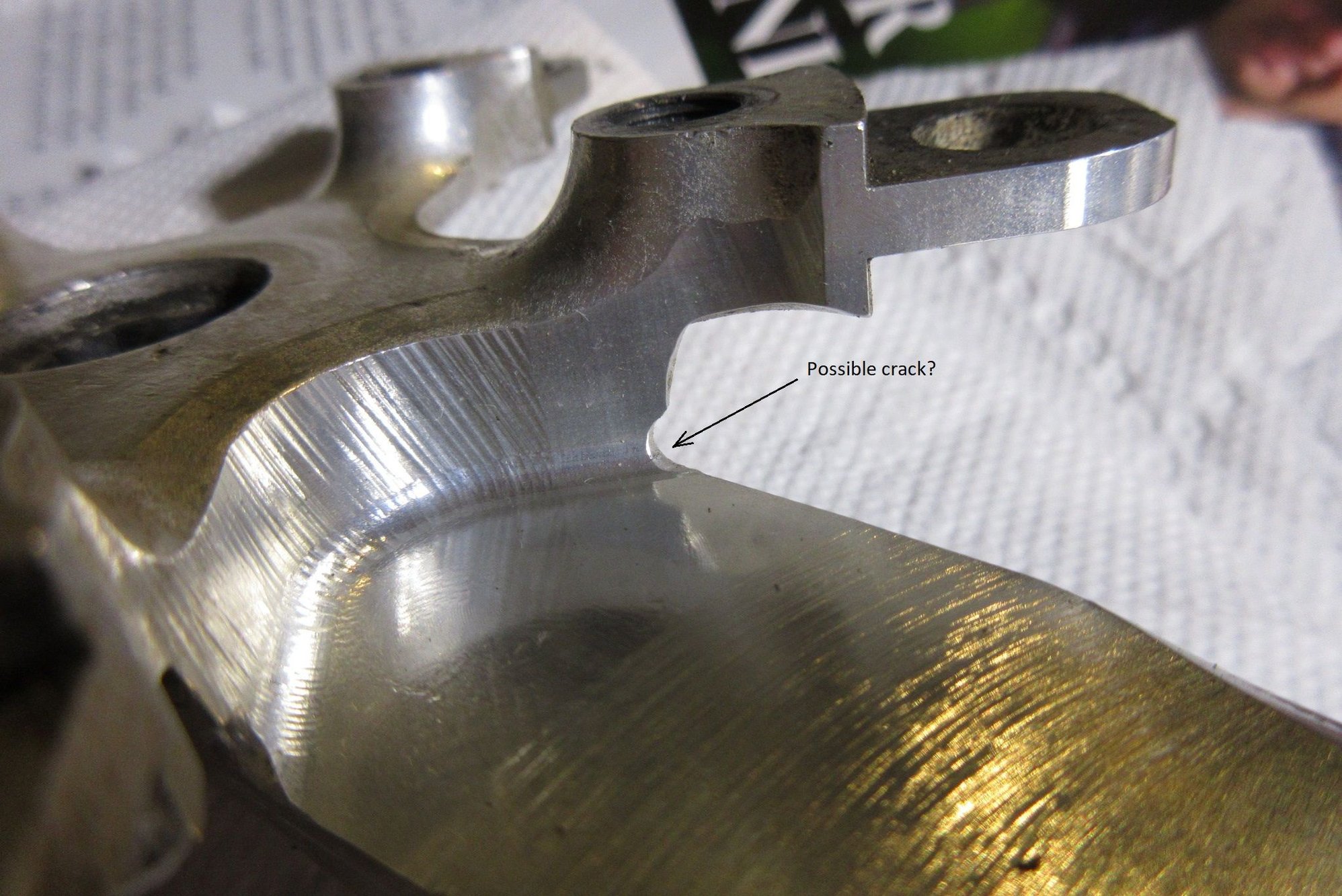
I used a chainsaw file to further round off the transition between arm and spider, and hopefully get past the end of the crack...

3 years later, when I had pulled the crank arm off (to clean the chainrings), I took a close look at that junction and found a crack again!

I've filed it out quite a bit further now and will continue to keep an eye on it (and keep taking photos).
A side note... I've begun using a bit of fine sandpaper wrapped around the chainsaw file to get a smoother surface. This reduces the stress risers a bit, but also gives me a better look at the surface. This should make it easier to see any residual crack.
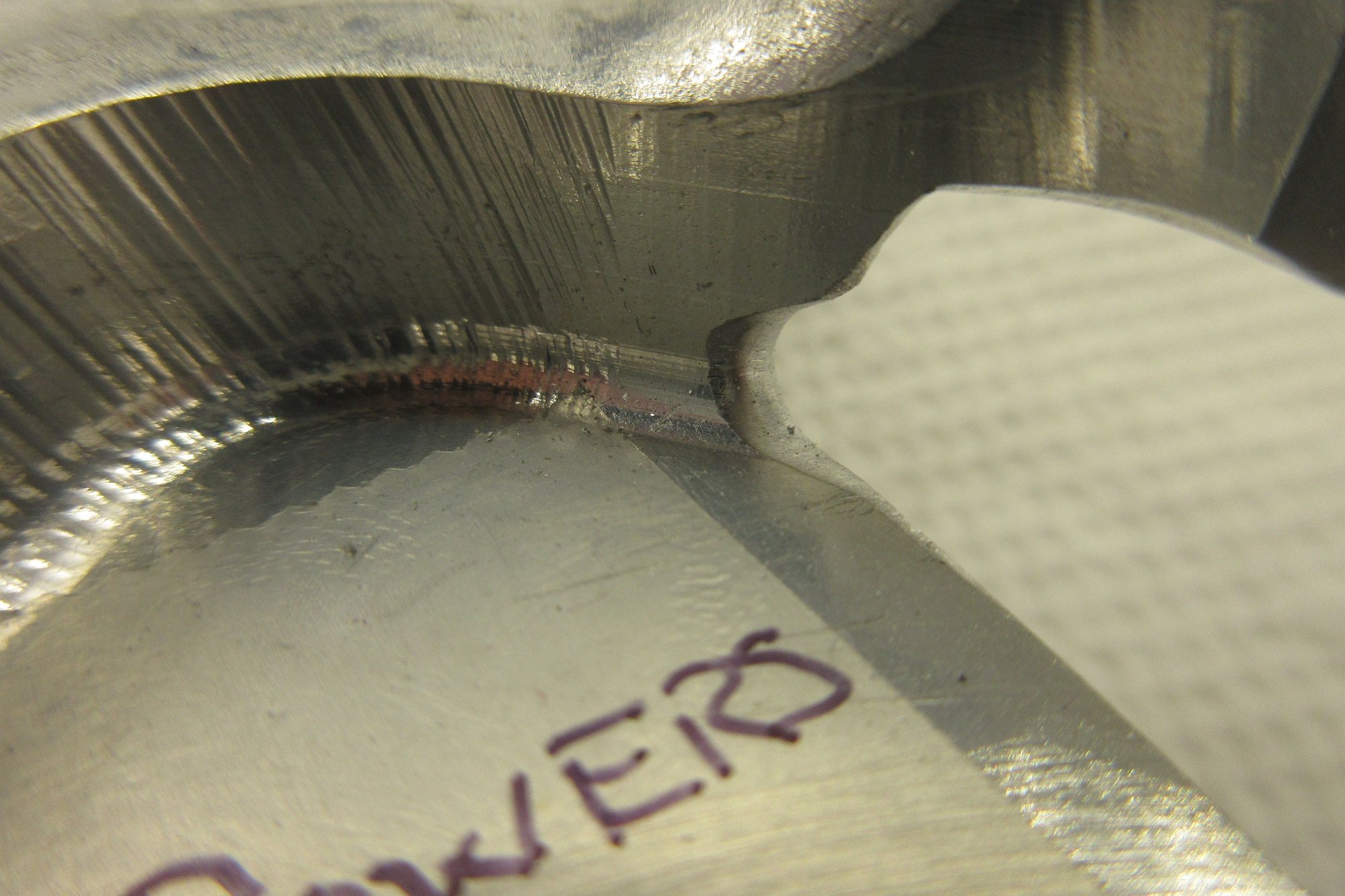
I'll note that even with a good magnifier, it's hard to see the cracks. I've had better luck using the macro capabilities of my little point and shoot camera.
It would be nice to have access to a proper magnaflux dye and inspection system to detect cracks, but that's a fair bit of money.
Steve in Peoria
aircraft spruce & specialty sells a crack check dye kit. Lasts a long time. I took some of mine down the street to a non destructive testing place and they x-rayed them. One crack.
‘truth is that while very annoying to inspect and file, I suggest file upon purchase, the take a rider down failures happen adjacent to the pedal eye or at about the shield logo stamping.
‘Not saying all, but every crank we at the shop that broke way back showed oxidizatiom at a percentage of the fracture line, so the trouble was lurking. All those cranks exhibited “polishing” or abrasion through the anodizing layer.
‘for the vast majority of owners that wear is most problem starting.