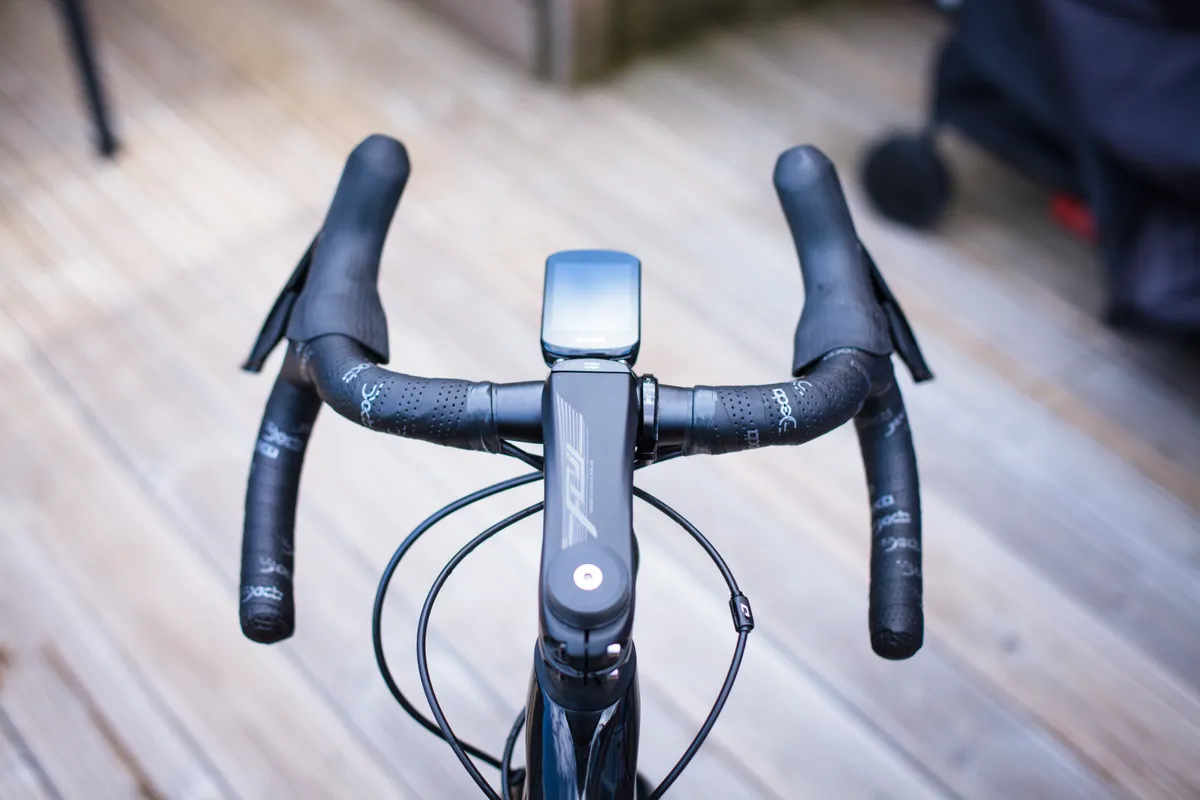
Pro road racers have been going to narrower drop bars for the last few years, prompting the UCI to revise their handlebar rules.
Clearly, pros have found that narrower is usually better, even for pushing hard while climbing and sprinting. And the combination of ultra-narrow bars plus turned-inward brake levers makes for a position that closely mimics that of an aero TT setup.
From a quick search:
The Union Cycliste International (UCI) has several rules for bicycle handlebars, including:
- Minimum width: The minimum width for the outside of traditional handlebars and base bars is 350 mm.
- Maximum width: The maximum width for the outside of handlebars is 500 mm.
- Cross-section: The maximum cross-section for handlebars is 10 mm and the minimum is 80 mm.
- Front of handlebars: The front of the handlebars cannot be more than 100 mm ahead of the vertical of the front wheel axle.
- Lever turning: The levers cannot be turned inward more than 10 degrees.
- Height difference: The height difference between the midpoint of the forearm support and the highest or lowest point of the extension cannot be more than 140 mm