Originally Posted by
13ollocks
For reference, here is my Chorus setup - 406mm chain stays, 108 link chain per Campag recommendation, 48-32 crankset, 11-29 cassette. Rear derailleur as it came out of the box (ie, I haven't touched the "B screw" - is there even a B screw?). Can confirm that, while the upper wheel looks awfully close to the sprocket in the first pic, it shifts cleanly and doesn't make any obvious noise (I don't use this small/small combination except when running through the gears on the stand). The crap all over the derailleur is wax flakes from the chain - it sheds bits everywhere when I run the freshly waxed chain through the gears - the wax is harmless, so I don't worry about it between bike washes.
Pix are (chainring/sprocket): small/small, small/large. large/large

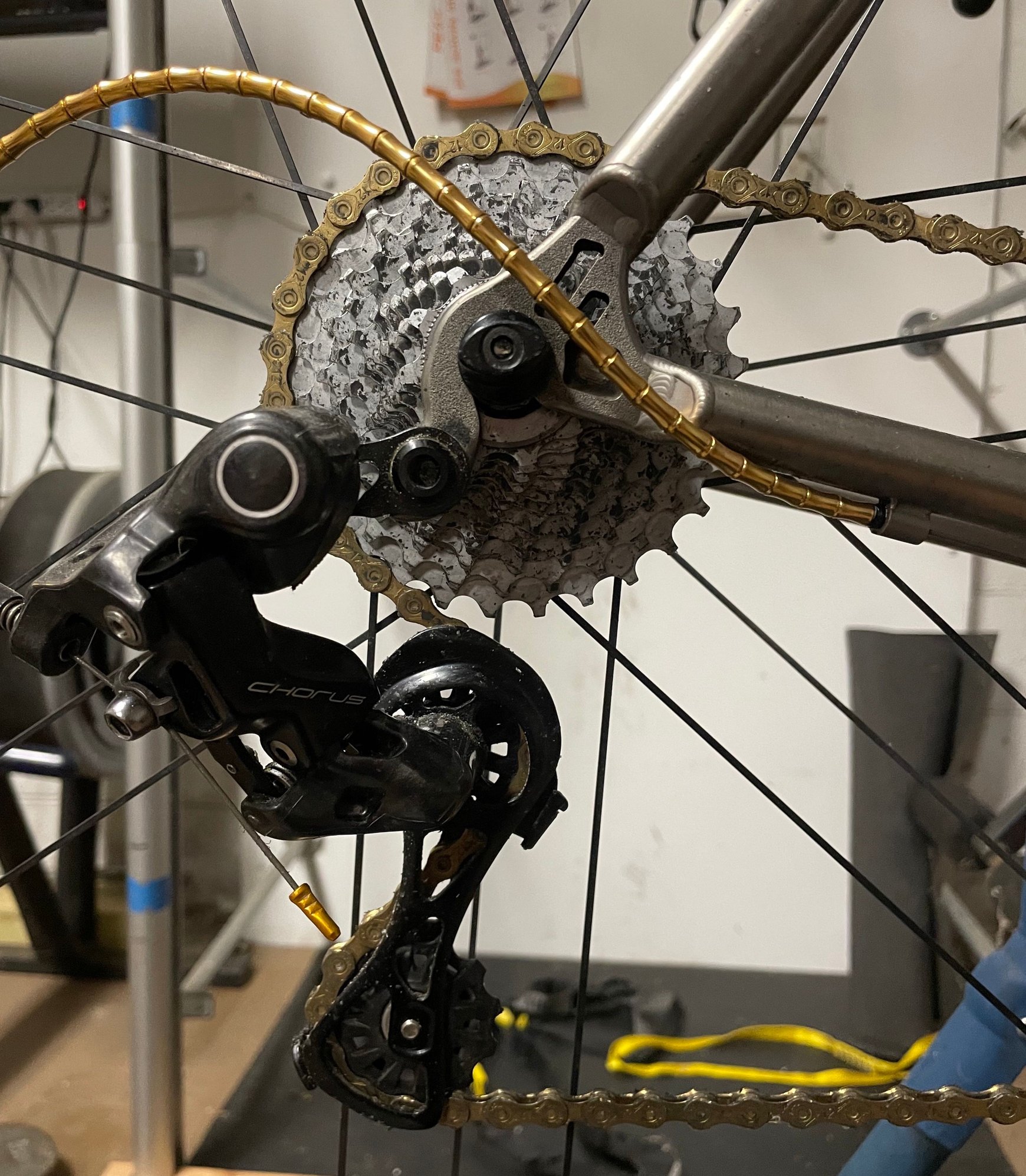
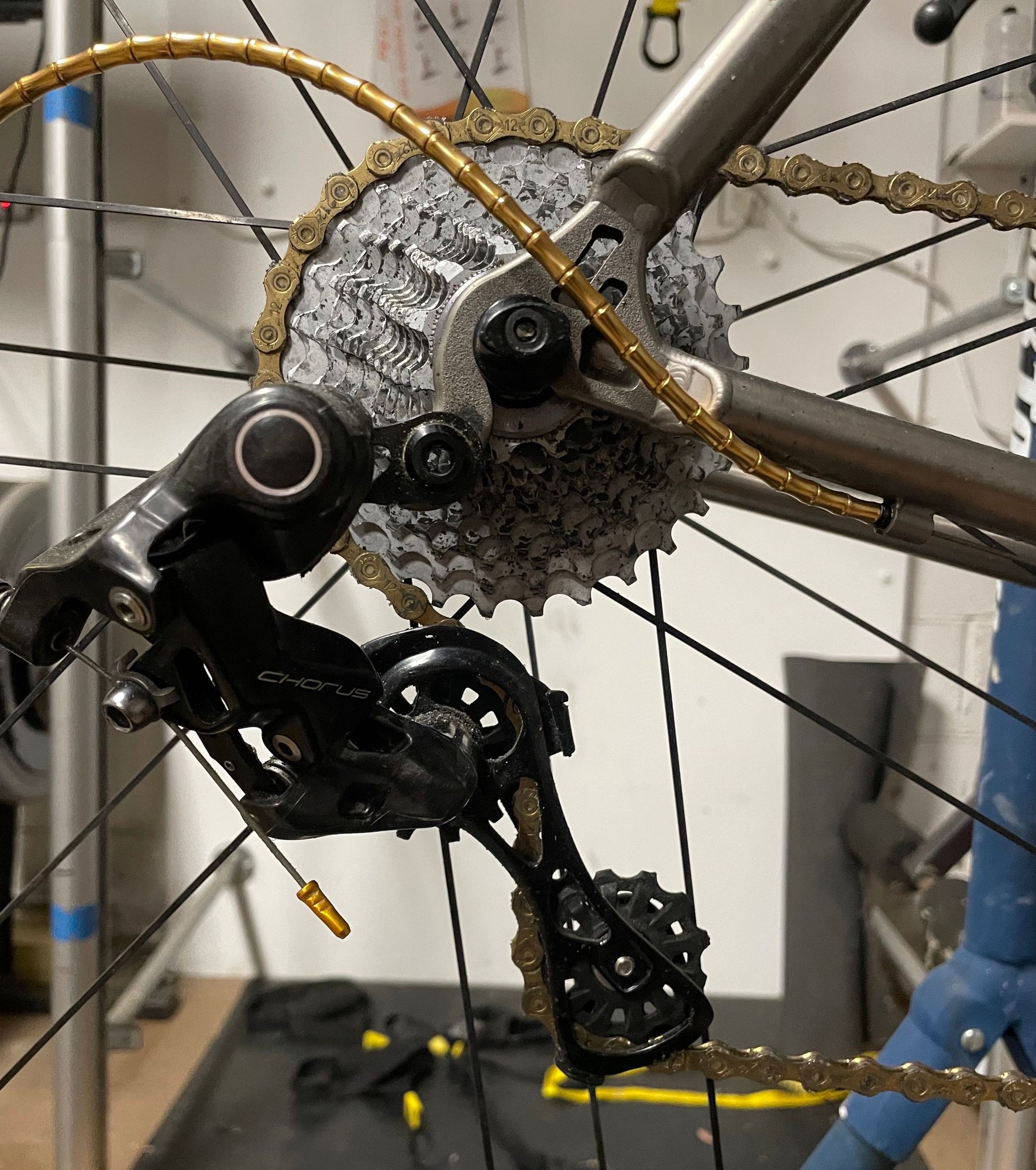
There is an H screw on the RD cage which does the same job as the B Screw - suggest reference to the set-up informationat the Campagnolo website.
12s set up is not the same as some other Campagnolo systems but in essence -
When on the smallest sprocket, the run of chain that exits the guide pulley of the RD and passes up towards the smallest sprocket should be either level with the ground or run (as looked at from the side your images are taken from) slightly diagonally, "low left to high right".
That setting has to be balanced against the ideal 5mm clearance between the largest sprocket and the tops of the teeth of the guide pulley when in the small chainring / largest sprocket position. Essentially, the former condition is more important than the latter.
The H Screw changes the tension in the jockey cage spring, relative to the fixed tension in the upper derailleur body (pivot bolt) spring, which has a comparatively very high value. This is why you will see that when you shift from big ring to small in any given gear, the parallelogram does not change it's position relative to the chainstay - all that happens is that the jockey cage rotates.
In systems with a "B" screw, the B Screw acts against a hard stop on the hanger and is a physical limiter to movement of the RD - some systems that use a B Screw don't have a sprung upper pivot, in fact.
The result of that is that once shifting is set for the small ring, only very small changes, if any, are needed to optimise shifting on the big chainring or vice versa, since one of the two variables that make such fine tuning in dearilleur systems where the paralellogram and the jockey cage both change position, is eliminated. It also drastically reduces chain bounce.