I like 2 blades on the frame. Tip, buy a stack of blades and pick through them, choose two that have their "wave set" in-phase with each other. If the set of the teeth is out of phase, kerf can get between the two blades and wedge them apart. Then they make two diverging cuts instead of one, getting further away from each other as you go, disaster if you don't notice it in time.
I like a warding file for cleaning up the hacksaw marks. It's about all I use a warding file for, so it's nice and sharp when I do need it. Of course you can just leave the hacksaw marks if you're not a princess, they don't hurt anything.
I mostly slit them on the mill with a slitting saw, but that's not faster, with setup time it's probably slower than hacksawing. So even owning a mill and a slitting saw, I might hacksaw some slits when I don't need the precision and repeatability of the mill method.
Like Andy said, you want a rigid hacksaw frame. I'm a big fan of the old Sandvik 225.
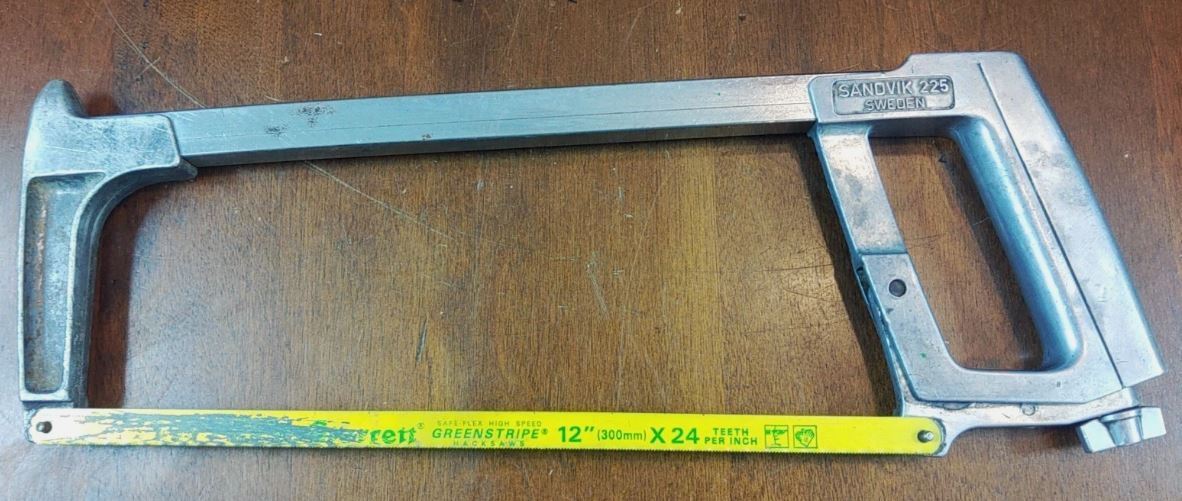
Spare blades can be stored inside the square tube of the backbone, plus you can set one in the backbone sticking out whatever amount you need, for sawing into a blind hole. Like cutting up a stuck seatpost for example.
Here's a 225 on ebay for $28 with shipping, just the first hit I got, not endorsing this seller. I recommend buying at least two so you can leave them loaded with coarse and fine blades, or one with two blades ganged up.