Originally Posted by
unterhausen
One thing to consider about using the bb face as a reference is that they are often distorted in (narrower) towards the top. Got to check from both sides. Paul Brodie has some videos about that. This is why a lot of builders use the head tube as the reference. Of course, that's not a low-cost quick method.
OP's frame appears to have a crooked brake bridge, so the dropouts not being even would not be surprising in the least. I used to tell people that it's not that hard to build a frame without a fixture. Then later I found out that the one time I build one that way, it was poorly aligned. But at least the dropouts were even and I eventually got it aligned and it's a really good frame. British builders often built by eye, and it shows.
These observations point to some cottage industry type stuff. Indeed, that is why I went to a British site for frame identification. The bikes came from a recently closed old time bicycle shop in Dundee Scotland but somehow got to Ohio by the early 1990s. The owner sold high end frames decades ago, but also had frame builders help out some customers for less money than the high end marques that they sold. Andy McNeil was a builder for Flying Scot pre and possibly post war. I have posted on Retrobikes in England and gotten info from people somewhat associated with the principals and area and timeframe. One also posted this bike:
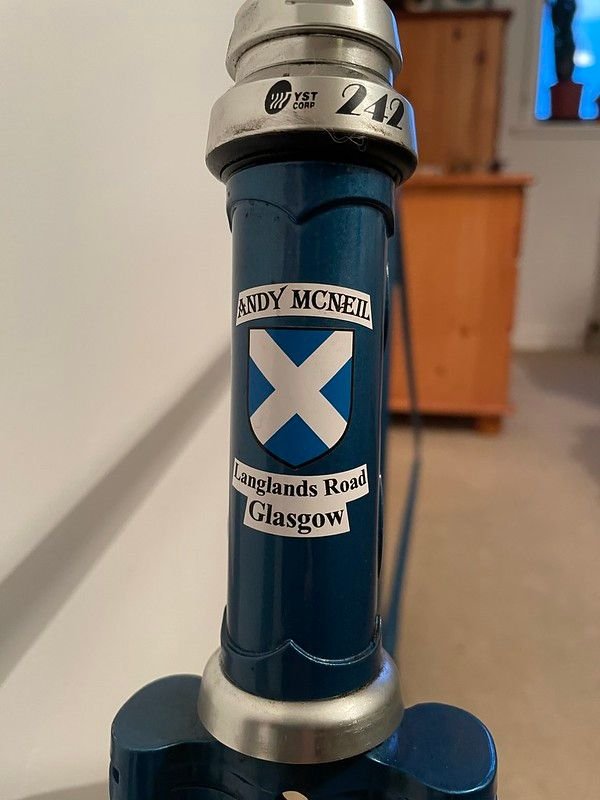
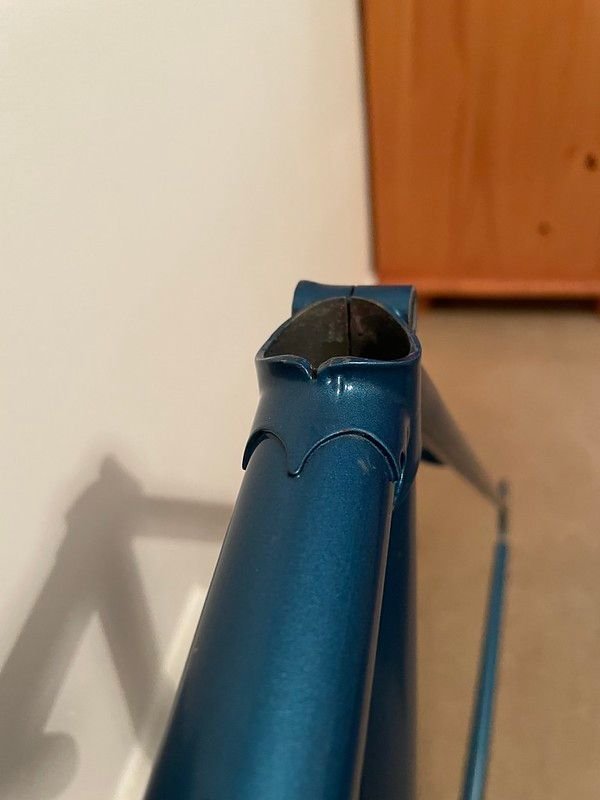
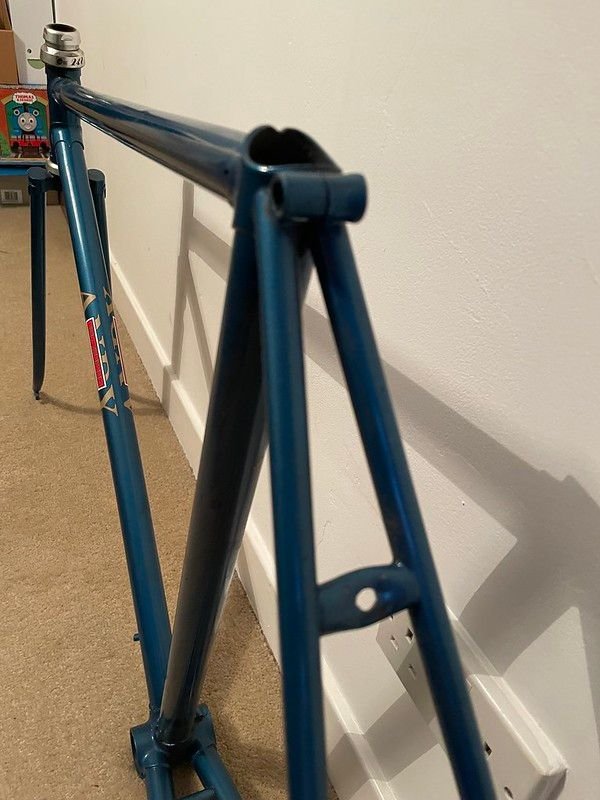
It was said as mentioned by Doug Fattic that some of the details could be lacking in some of these frames. In defense of this, this builder was doing side jobs to a price point and if this was a mid 80s frame, he wasn’t perhaps in his prime. I probably kept these frames from the scrap heap, and I bet the ride might be interesting when built up. A phone app angle finder looks as though this frame might have 72 degree head and seat tube angles with maybe around 50mm of trail and over 41” of wheelbase to the center of the dropouts. I don’t have much invested, so a tweak or two might be warranted. It’s kinda a cool history anyway.