You sure are a one trick pony, aren’t you? Saying that there is only one thing that will solve all the problems on wheels is simplistic and silly. You act like you are the only person in the world who forms the spokes to the hub. Here’s a hint: you aren’t.
By the way, I am also the “go to guy” in the co-ops I volunteer at. Even the paid mechanics consult me on lots of topics because I have an extensive knowledge of bicycles, bicycle parts, bicycle mechanics, and bicycle science. People turn to me even stuff that I’m not that familiar with like brake bleeds and suspension problems because I’m not afraid of figuring out how to do a procedure or fix a part and I’m also not afraid to explain it to others so that they can do it.
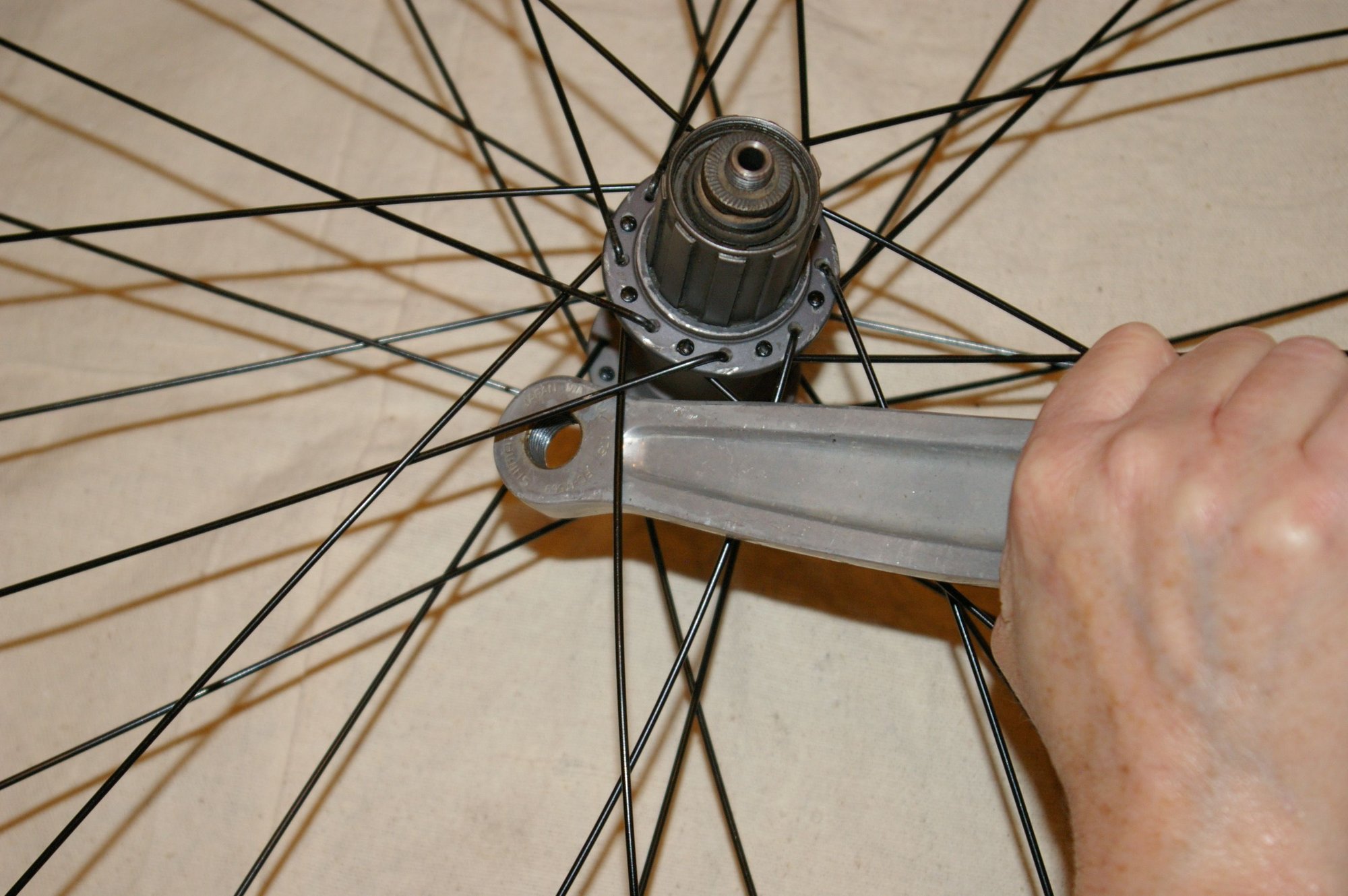
Forming the spokes to the hub like in the picture below shortens a process that will occur naturally. Tension and time will eventually bend the elbow of the spokes around the contours of the hub. However if you don’t form them during the build process, the spokes will effectively lengthen as it bends around the edges of the hub and result in a reduced tension on the spoke. Reduced tension can allow the spokes to move around in the hub during the natural detensioning/tensioning that occurs as the contact patch is loaded and unloaded. The rim, being made of a soft metal, naturally deflects upward as it is loaded and causes the tension to reduce anyway. As the contact patch is unloaded, the spoke takes up tension again and the head of the spoke flexes which eventually leads to fatigue of the head.Bending them during the building helps avoid the detensioning as the spokes bed into the hub.
Stress relieving the spokes during the build is also part of this forming process, although stress relieving is a finer adjustment than bending the spokes like in the picture below.
By the way…and I know I’ll catch hell for this…I have a hypothesis that another reason to use 2.3mm spokes is because the holes drilled in the hub are 2.5 to 2.6mm. The tighter fitting spokes allow for less movement of the spokes during the detensioning/tensioning process over 2.0mm spokes which puts less stress on the head. People used to tie and solder spokes at the cross point to give them a stiffer and, probably, more durable wheel by spreading out the stress on the head over more spokes. The 2.3mm head on the spoke seems to result a similar stiffer wheel along with the head being significantly more durable and fatigue resistant.