When I brazed the blades to the crown, I used Gasflux Type G. As discussed in an earlier thread, type G is a great flux because it has a higher active range and in my opinion may clean better than type U. Those with less experience should place flux further up the blades to act as a
reservoir if their brazing length of time exceeds their flux. Applying Gasflux flux is something most of my students don’t do well until instructed. The goal is to leave a modestly thick even layer. What tends to happen is that when they brush flux on, they are tending to wipe it off at the same time leaving too thin of a layer. Instead of brushing it on, it needs to be rolled on (if using a flux brush) leaving a glob that can be distributed more smoothly over the area.
It is also a bit of an art form or game to dry the flux with your flame before it runs onto the floor as you begin brazing. Unless you take a thoughtful approach, it all tends to run away as soon as your flame touches it. To keep as much flux as possible on the joint, keep the flame close to the work, start low and work up, point the flame up so its gas pressure tends to counter the run aways and move somewhat slowly. I go after the flux runners with my flame. Cycle Design flux was completely different but there is no need now to explain how to evaporate the water.
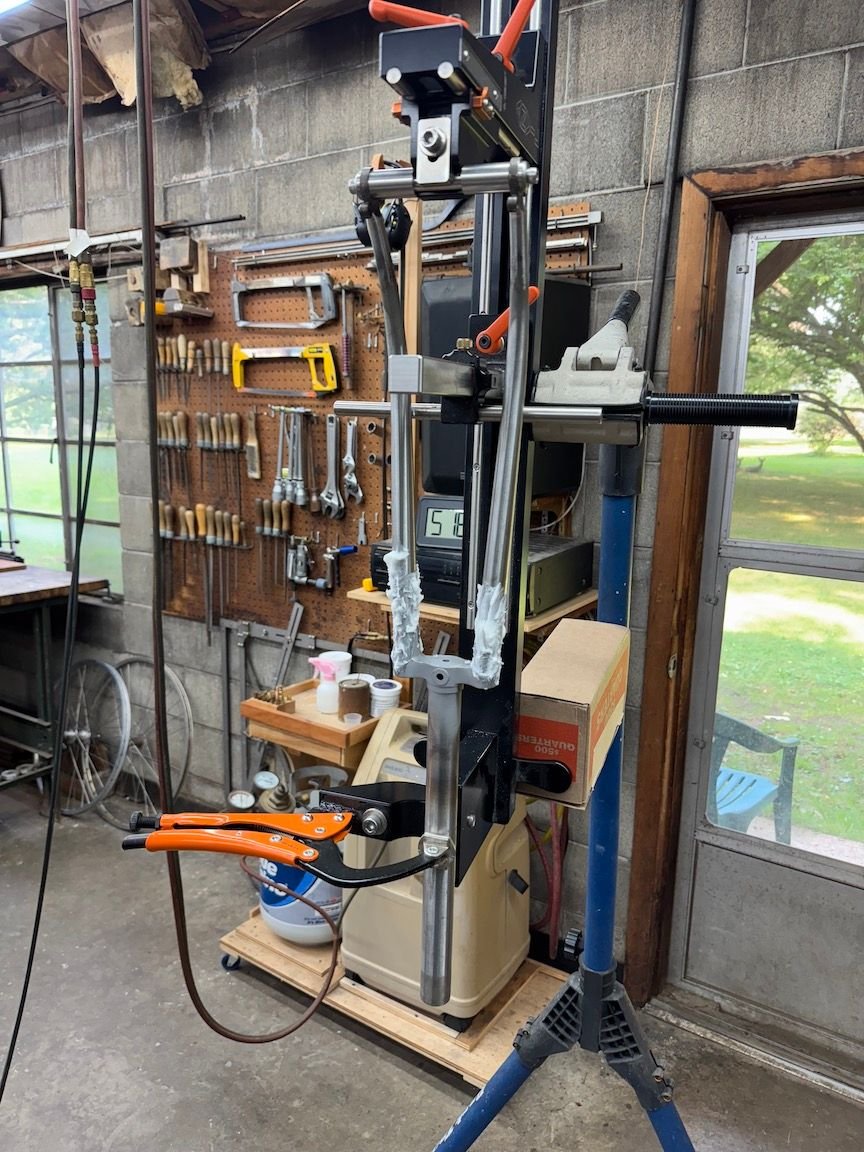 fluxed and ready for brazing