I might have agreed even a few months ago. However, nearly every flat I’ve experienced over the last year have been on the interior of the tube…i.e. the rim side. I’ve changed rim strips from cloth Velox just in case there was something in the tape. I marked the tube with direction arrows and clocked my tubes to the label. Nothing seemed to work. I still experienced internal pinhole flats.
About a month ago, I went through flat hell in Wisconsin and Michigan while on tour. I experienced 8 to 10 flats of exactly the same kind including 4 in a single day. One of them was on one of the few really nice downhills in the U.P. in Michigan. I did a quick dodge around rumble strips to get out into the lane rather than do 20+ mph on a very narrow shoulder. The picture below is typical of Michigan’s rumble strips.

I experienced a blow out…which is very scary on a loaded touring bike at normal speed and petrifying at high speed. When I took the tire off, there was a rip on the inside of the tube about an inch long. After changing my bike shorts (

), a light bulb went off. There is no way that I could have had anything inside the tire that would cause the tube to actually rip. I eventually decided that what had happened was that the quick steering to avoid the rumble strips had allowed the tube to be pulled too far in one direction. The rubber was obviously thin on the rim side and it tore due to the extra force on the rubber.
I have, in the past, been a proponent of using smaller tubes. They are lighter to carry and rubber expands to fill the space. I didn’t, however, take into account something that I’ve noticed when pumping up a tube outside of the tire. Tubes tend to expand
more on the outside of the torus that is the tube than on the inside of the torus. If the tube were a straight pipe, the pressure expansion would look a bit like this (please excuse the extremely simple drawings). The pressure would expand equally in all directions and the tube (pipe, actually) would expand equally in all directions.
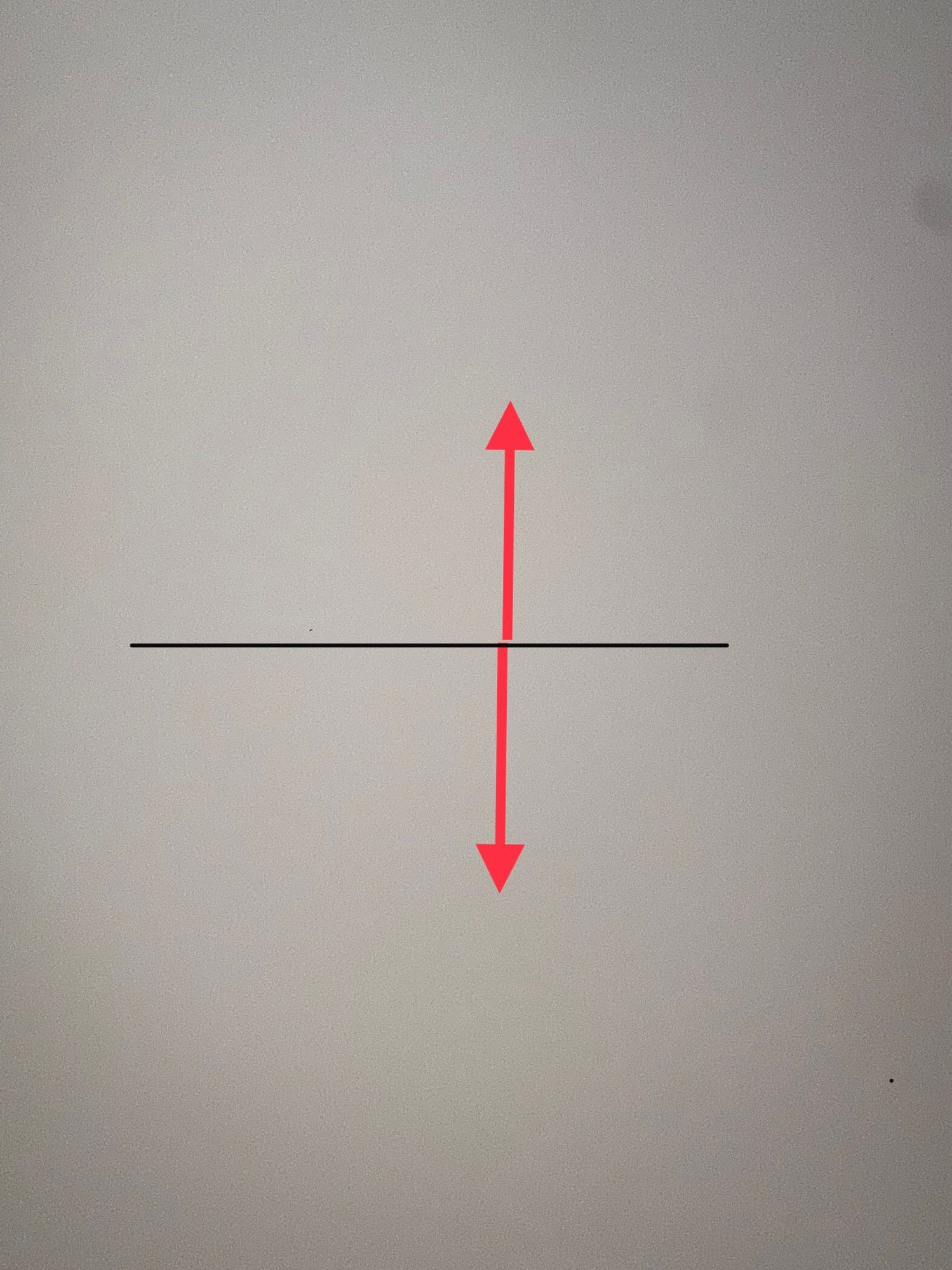
But in a torus shape, the outside edge expands slightly more than the inner edge like in the diagram below. The inner edge doesn’t have room to expand as much as the outer edge…it packs up a bit more. You can observe this when you pump up the tube outside of the tire.
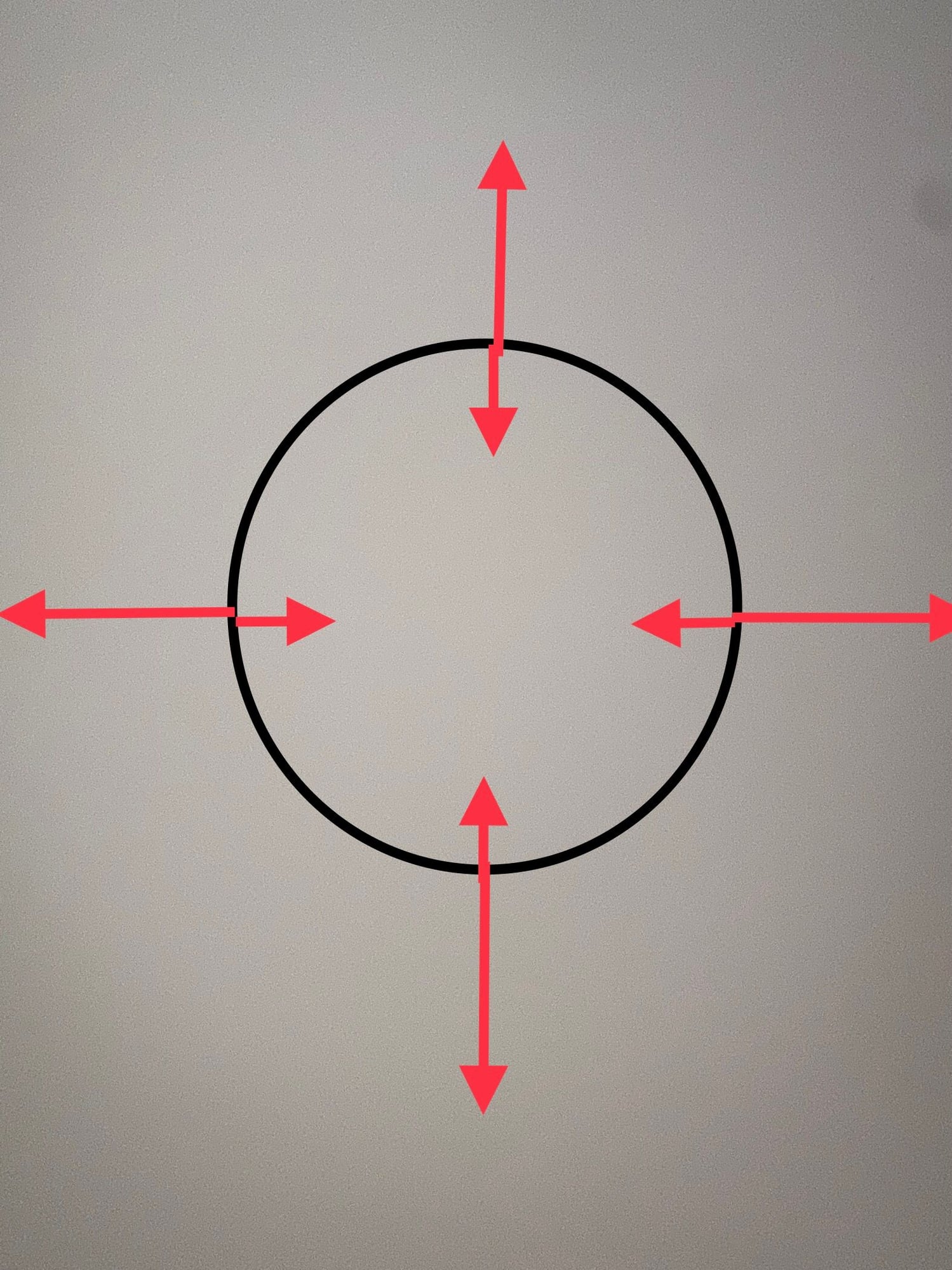
Now think of the tube in the rim, especially if the tube is a smaller sized tube. When the tube is put in the tire and filling is started, the tube expands towards the tire first. Then as the tube fills, it expands into the rim channel. The outer part of the tube is trapped against the tire and the inner part has to expand into the channel where it thins. I suspect (but can’t really prove) that the tube thins a lot and, rather than the tube being punctured, the tube tears and creates a pin hole.

My solution was to replace my 23/28mm tubes with 38/44mm tubes. The wider tubes had more material in the channel and were less prone to tearing. The proof of this idea was that my inner punctures disappeared at about the 1/2 way point of my 1200 mile tour.
Going forward, I’m going to stop using small diameter tubes and use wider ones.
Here is a better cross sectional representation of what is happening

When the tube is filled, the tube expands in the direction of the red arrows first. Once the tube is up against the inner part of the tire on the tread side, the tube epands to back fill the rim channel. The inner part of the tube thins more than the outer part and is stress more which results in tears.