Originally Posted by
Spoonrobot
Was able to ride a Walty custom last weekend with Maxxis tires. Felt fairly sluggish on pavement and gravel but came alive as soon as I hit singletrack. Despite the protestations of 32"-fans right now I don't think the geometry is there. It needs to be different enough from 29" geometry that we're a few or several rounds of iteration away from good geometry.
Riding the bike also made it clear that the bigger wheel size is much more scalable to gravel bikes than MTB. That is, the geometry and fit can be made to work with gravel easier and for a wider range of riders than MTB. We'll see if the consumer base has the hunger for a completely new wheel size. This is clearly going to be a years-long campaign, so many things to see in the future.
I don't gravel or MTB, but understanding vehicle dynamics, that makes sense; Ever-larger wheel diameters places the axles higher, and induces more wheel torque under braking for the same ground thrust braking force; Both contribute to more tendency to go over the bars on hard braking downhill, and lifting the front end when climbing steeps.
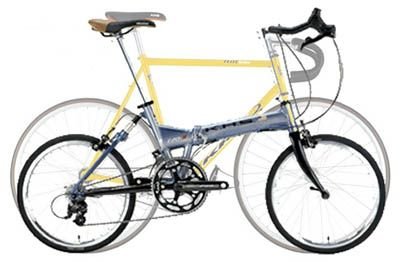
I've noticed the above dynamics are greatly improved on my 20"/406 bike, with lower axles, lower wheel torque, and longer wheelbase for the same overall length. I also have zero toe overlap when steering, unlike my 700c road race bike. This is all on pavement for me. The same benefits should acrue on dirt, and there are some off-road bikes in 406, notably the Bike Friday All-Packa, though I would imagine that where traction is critical on soft stuff, larger wheels would ultimately perform better, as well as better ride, spanning depressions better than smaller wheels. For agility under tight, low-speed steering on a narrow single-track, smaller may also be better, but I don't have MTB experience to be able to know for certain.
This visual shows a road bike, but I place it here only to help visualization of the above concepts: