Originally Posted by
rosefarts
Looking at Sapim Strong now. Same price. 7g per spoke vs 5.85 on the race. Approximately 40g on the wheel. Not concerned about that for this application.
Now I've always heard that double butted spokes stretch a little in the middle. This allows some level of shock absorption and makes the wheel last longer than straight gauge. Makes sense especially when you read the article you link about where a spoke fails.
The Strong are still double butted, but 13/14/13 instead of the more common 14/15/14.
I suppose you could make the argument that they'd ride harsher. It might not be felt. I wonder though, when we consider the bike, a hardtail that I do stupid things on, would that lack of flex transfer directly into the J bends? Could this actually compromise the wheel, since it would probably be a little bit more rigid?
Maybe it doesn't matter. My original wheel, is a Canfield Special Blend, which I believe is a Spank rim made exclusively for them - I can't find an identical hoop on their website. The only reason I damaged it was dropping off something with sharp rocks and not quite enough air in the tire. I've began running a cush core on all my back wheels since.
Funny thing about modern MTB wheels. They are sooo strong. I remember in the 90's wrecking wheels frequently. They were always out of true. No matter how we built them, they just couldn't quite hold up. Fast forward to now, the things we're doing on mtb's is so much more than it used to be. Hits are hard and frequent. And I can't remember the last time I trued a wheel. I think I checked once and it was too close to even bother. It's pretty impressive how much better they are
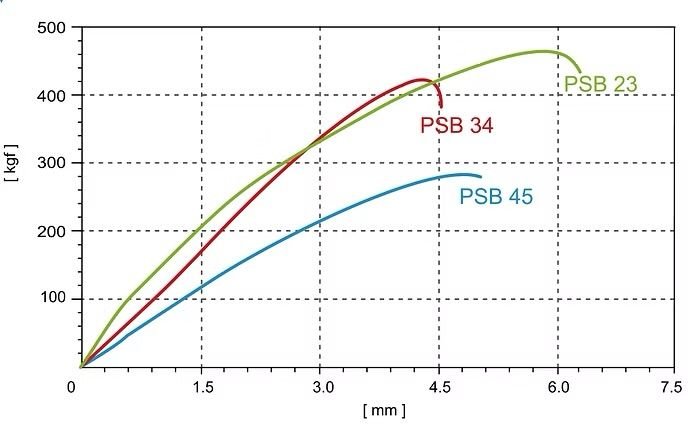
The Sapim Strongs are 2.3/2.0 while the DT Alpine III are 2.3/1.8/2.0mm. I’ve not used the Sapims (nor Wheelsmith’s version) but Pillar offers a similar spoke. Their graph shows that it is actually a bit stronger than the Alpine III (check the link in my post above for comparison).
I’ve had only one hub that had an issue with the Alpine III spokes. Most spoke holes in the hubs are drilled to 2.6mm so that the threads of the spoke can pass through. Spokes aren’t cut on but are
rolled on which increases the diameter.
Finally, I’ve always said that pinch flats are a symptom not a problem. A pinch flat says that you are running too little pressure and are risking bending the rim. Running tubeless really doesn’t let you run much lower pressure because you can still bottom out the tire and bend a rim. You end up with a several hundred dollar fix to a $0.50 problem.