


BSO: Which way does the fork go?
 11-07-17 | 05:03 PM
#1

Thread Starter
Keepin it Wheel


Joined: Aug 2011
Posts: 10,969
Likes: 5,248
From: San Diego
Bikes: Surly CrossCheck, Krampus
BSO: Which way does the fork go?
It's that time of year when hundreds of BSO show up at our facility, bought by employee donations, and destined for military kids for Christmas, and I'm "in charge" of volunteer assemblers.
I've got a bunch of SS/coaster-brake models, and I can't see any appreciable trail/rake whatever in the fork, and I'm not sure which way to rotate it.
Is it possible that for a non-performance kid's bike, the fork is actually 100% straight (incl the steerer), and the head-tube angle provides all the caster angle that is necessary for riding stability?
Is it dangerous if I (or an even more ignorant volunteer assembler) get the fork backwards?
I've got a bunch of SS/coaster-brake models, and I can't see any appreciable trail/rake whatever in the fork, and I'm not sure which way to rotate it.
Is it possible that for a non-performance kid's bike, the fork is actually 100% straight (incl the steerer), and the head-tube angle provides all the caster angle that is necessary for riding stability?
Is it dangerous if I (or an even more ignorant volunteer assembler) get the fork backwards?
 11-07-17 | 05:07 PM
#2
Banned
Joined: Jun 2010
Posts: 43,586
Likes: 1,380
From: NW,Oregon Coast
Bikes: 8
backwards it has a lot of trail, Bicycling Science MIT Professor David Gordon Wilson sent a handlebar less bike with out a rider on it
down a hill and it went straight , with all that steering trail.. a video must be on the internet somewhere.
trail is a ground plane distance between 2 lines 1) the head tube angle, to the ground, 2) the plumb line from the hub axle..
You can measure that, No?
...
down a hill and it went straight , with all that steering trail.. a video must be on the internet somewhere.
trail is a ground plane distance between 2 lines 1) the head tube angle, to the ground, 2) the plumb line from the hub axle..
You can measure that, No?
...
Last edited by fietsbob; 11-07-17 at 05:11 PM.
11-07-17 | 05:43 PM
#3
Thread Starter
Keepin it Wheel
Joined: Aug 2011
Posts: 10,969
Likes: 5,248
From: San Diego
Bikes: Surly CrossCheck, Krampus
OK, then there is trail, because the head tube is not purely vertical. I guess what I'm saying is there's no rake? The amount that the fork dropouts are forward of the extended head-tube line? Or at least I can flip the fork this way and that, and it looks to be the same angle to me either way.
11-07-17 | 07:04 PM
#4
Senior Member
Joined: Nov 2008
Posts: 7,239
Likes: 8
From: Bay Area, Calif.
You would actually get more stability by having a normal fork installed backwards (at least if the front tire would still clear the down tube). Forks are raked in order to reduce the stability and therefore make it easier to steer around turns. But if there's so little rake that you can't tell (or none at all) then it shouldn't hurt to install it either way.
11-07-17 | 07:46 PM
#5

Senior Member

Joined: Feb 2012
Posts: 19,373
Likes: 5,516
From: Rochester, NY
Bikes: Stewart S&S coupled sport tourer, Stewart Sunday light, Stewart Commuting, Stewart Touring, Co Motion Tandem, Stewart 3-Spd, Stewart Track, Fuji Finest, Mongoose Tomac ATB, GT Bravado ATB, JCP Folder, Stewart 650B ATB
One measurement is worth a thousand assumptions (or in this case two measurements)
With front wheel secured in fork and pointing straight ahead... measure from the BB to the front axle. Swing the front wheel and fork 180* and re measure. Are these dimensions the same? If not there is a rake, even if not obvious. Andy.
With front wheel secured in fork and pointing straight ahead... measure from the BB to the front axle. Swing the front wheel and fork 180* and re measure. Are these dimensions the same? If not there is a rake, even if not obvious. Andy.


 11-07-17 | 11:03 PM
#8

Senior Member
Joined: Jul 2015
Posts: 7,465
Likes: 3,281
From: NW Oregon
Bikes: 1982 Trek 930R Custom, '91 Diamondback Ascent w/ XT, XTR updates, Fuji Team Pro CF road flyer, Specialized Sirrus Gravel Convert, '09 Comencal Meta 5.5 XC, '02 Marin MBX500, '84 Gitane Criterium bike
You would actually get more stability by having a normal fork installed backwards (at least if the front tire would still clear the down tube). Forks are raked in order to reduce the stability and therefore make it easier to steer around turns. But if there's so little rake that you can't tell (or none at all) then it shouldn't hurt to install it either way.
start by studying this chart, then go research the subject further ok?
https://bikearama.com/wp-content/uplo...5912863770.png
less RAKE equals less STABILITY.... Rake is also called Caster.... MTB bikes use a 67-68 degree rake... they need stability, especially when plunging down some rocky, slippery trail....... road bikes use a 70 deg. or so rake... they need to turn into corners easier since more of the rider's weight is over the front tire...
TRAIL adjusts how much and how quickly the bike tips into the corner... trail can also be used to increase stability.... get it wrong, and the bike becomes spooky to ride, not inspiring confidence in the rider.... the front wheel might tuck in suddenly, or not want to turn in, sending the rider off a corner.... OUCH!
get the head angle, or RAKE, too shallow, and the front wheel might shake like a wet dog at speed...
the above reply is the condensed version... the nuances involved are endless...
the forks the OP mentioned are lacking OFFSET... see the chart i linked, ok? that INCREASES the TRAIL specification, making the bike... What? look it up somewhere.
Last edited by maddog34; 11-07-17 at 11:17 PM.
11-07-17 | 11:21 PM
#9
Senior Member
Joined: Jul 2015
Posts: 7,465
Likes: 3,281
From: NW Oregon
Bikes: 1982 Trek 930R Custom, '91 Diamondback Ascent w/ XT, XTR updates, Fuji Team Pro CF road flyer, Specialized Sirrus Gravel Convert, '09 Comencal Meta 5.5 XC, '02 Marin MBX500, '84 Gitane Criterium bike
RAKE AND TRAIL demystified... and let's include OFFSET into the equation...
info time....
rake and trail
info time....
rake and trail
11-08-17 | 09:37 AM
#10

Facts just confuse people

Joined: Jul 2017
Posts: 19,375
Likes: 7,082
From: Mississippi
Bikes: Tarmac Disc Comp Di2 - 2020
If there are not any components such as caliper brakes that mount on the fork/steerer tube assembly or the way the fork ends point for the axle dropout that show which way it needs to go, then it probably makes no difference. But if these are being brought in by bike shop owners, you might ask them.
Is there an assembly manual available? If not in the box maybe the mfr's website.
Is it possible for them to be 100% straight? Yes.
Is there an assembly manual available? If not in the box maybe the mfr's website.
Is it possible for them to be 100% straight? Yes.
 11-08-17 | 10:59 AM
#12
Thread Starter
Keepin it Wheel
Joined: Aug 2011
Posts: 10,969
Likes: 5,248
From: San Diego
Bikes: Surly CrossCheck, Krampus
Got my terms straight, with the help of Dave Moulton.
There is trail, because the headtube angle is not 90deg. But there is no rake or offset that I can see (but I still haven't measured)
There is trail, because the headtube angle is not 90deg. But there is no rake or offset that I can see (but I still haven't measured)
11-08-17 | 11:01 AM
#13
Thread Starter
Keepin it Wheel
Joined: Aug 2011
Posts: 10,969
Likes: 5,248
From: San Diego
Bikes: Surly CrossCheck, Krampus
If there are not any components such as caliper brakes that mount on the fork/steerer tube assembly or the way the fork ends point for the axle dropout that show which way it needs to go, then it probably makes no difference. But if these are being brought in by bike shop owners, you might ask them.
Is there an assembly manual available? If not in the box maybe the mfr's website.
Is it possible for them to be 100% straight? Yes.
Is there an assembly manual available? If not in the box maybe the mfr's website.
Is it possible for them to be 100% straight? Yes.
On these simplest SS/coaster brake bikes the forks are completely bare and the fork ends are stamped tubes with dropout slots in line with the fork arms.
These are not being brought in by anybody, we have a mess of boxed bikes all shipped straight from mfr/distributor, which we will be donating to military families for xmas, and some of them we need to assemble, some we just give in the box (per family preference)
Last edited by RubeRad; 11-08-17 at 11:04 AM.
11-08-17 | 11:03 AM
#14
Thread Starter
Keepin it Wheel
Joined: Aug 2011
Posts: 10,969
Likes: 5,248
From: San Diego
Bikes: Surly CrossCheck, Krampus
That's kind of what surprised me as well. And in previous years the 20" bikes had (superfluous, nearly non-functional) caliper brakes on the front wheel. Those brakes might have been totally straight as well, but I wouldn't have noticed because the brake would tell me which way the fork should go.
11-08-17 | 11:04 AM
#15
Senior Member
Joined: Nov 2008
Posts: 7,239
Likes: 8
From: Bay Area, Calif.
Wrong. Just. Wrong.
start by studying this chart, then go research the subject further ok?
https://bikearama.com/wp-content/uplo...5912863770.png
the forks the OP mentioned are lacking OFFSET... see the chart i linked, ok? that INCREASES the TRAIL specification, making the bike... What? look it up somewhere.
start by studying this chart, then go research the subject further ok?
https://bikearama.com/wp-content/uplo...5912863770.png
the forks the OP mentioned are lacking OFFSET... see the chart i linked, ok? that INCREASES the TRAIL specification, making the bike... What? look it up somewhere.
From Wikipedia:
"Fork offset
The fork offset is the perpendicular distance from the steering axis to the center of the front wheel.
In bicycles, fork offset is also called fork rake. Road racing bicycle forks have an offset of 40–50 mm (1.6–2.0 in).[6]
The offset may be implemented by curving the forks, adding a perpendicular tab at their lower ends, offseting the fork blade sockets of the fork crown ahead of the steerer, or by mounting the forks into the crown at an angle to the steer tube."
The forks mentioned by the OP apparently have either a 0 or very small fork rake which results in a relatively large trail and correspondingly high stability which would be good for beginning young riders.
11-08-17 | 11:51 AM
#17

Senior Member
Joined: Aug 2011
Posts: 22,676
Likes: 2,643
From: CID
Bikes: 1991 Bianchi Eros, 1964 Armstrong, 1988 Diamondback Ascent, 1988 Bianchi Premio, 1987 Bianchi Sport SX, 1980s Raleigh mixte (hers), All-City Space Horse (hers)
It's that time of year when hundreds of BSO show up at our facility, bought by employee donations, and destined for military kids for Christmas, and I'm "in charge" of volunteer assemblers.
I've got a bunch of SS/coaster-brake models, and I can't see any appreciable trail/rake whatever in the fork, and I'm not sure which way to rotate it.
Is it possible that for a non-performance kid's bike, the fork is actually 100% straight (incl the steerer), and the head-tube angle provides all the caster angle that is necessary for riding stability?
Is it dangerous if I (or an even more ignorant volunteer assembler) get the fork backwards?
I've got a bunch of SS/coaster-brake models, and I can't see any appreciable trail/rake whatever in the fork, and I'm not sure which way to rotate it.
Is it possible that for a non-performance kid's bike, the fork is actually 100% straight (incl the steerer), and the head-tube angle provides all the caster angle that is necessary for riding stability?
Is it dangerous if I (or an even more ignorant volunteer assembler) get the fork backwards?
 11-08-17 | 12:02 PM
#18

The space coyote lied.

Joined: Sep 2008
Posts: 48,841
Likes: 11,033
From: dusk 'til dawn.
Bikes: everywhere
 11-08-17 | 12:03 PM
#19
Senior Member
Joined: Aug 2009
Posts: 3,168
Likes: 1,688
just spin the wheel around and check the clearance to the downtube. Install fork with the lower (or the one that doesn't clear) forward. Most bikes other than kiddy bikes will have an offset. The fork blades may be straight with an offset at the crown and or dropouts attached on the front of the fork.
11-08-17 | 12:05 PM
#20
Senior Member
Joined: Jul 2015
Posts: 7,465
Likes: 3,281
From: NW Oregon
Bikes: 1982 Trek 930R Custom, '91 Diamondback Ascent w/ XT, XTR updates, Fuji Team Pro CF road flyer, Specialized Sirrus Gravel Convert, '09 Comencal Meta 5.5 XC, '02 Marin MBX500, '84 Gitane Criterium bike
Maybe you should do some studying yourself. What motorcyclists refer to as 'fork offset' is called 'fork rake' by bicyclists and is measured in mm (typ. about 45 mm) rather than angular degrees.
From Wikipedia:
"Fork offset
The fork offset is the perpendicular distance from the steering axis to the center of the front wheel.
In bicycles, fork offset is also called fork rake. Road racing bicycle forks have an offset of 40–50 mm (1.6–2.0 in).[6]
The offset may be implemented by curving the forks, adding a perpendicular tab at their lower ends, offseting the fork blade sockets of the fork crown ahead of the steerer, or by mounting the forks into the crown at an angle to the steer tube."
The forks mentioned by the OP apparently have either a 0 or very small fork rake which results in a relatively large trail and correspondingly high stability which would be good for beginning young riders.
From Wikipedia:
"Fork offset
The fork offset is the perpendicular distance from the steering axis to the center of the front wheel.
In bicycles, fork offset is also called fork rake. Road racing bicycle forks have an offset of 40–50 mm (1.6–2.0 in).[6]
The offset may be implemented by curving the forks, adding a perpendicular tab at their lower ends, offseting the fork blade sockets of the fork crown ahead of the steerer, or by mounting the forks into the crown at an angle to the steer tube."
The forks mentioned by the OP apparently have either a 0 or very small fork rake which results in a relatively large trail and correspondingly high stability which would be good for beginning young riders.
that wiki needs corrected, and that passage was written by an ignorant fool.
or maybe we should all rewrite the english language some more, and call inclines "flat land"
... or begin calling pressure "flow".
a long standing error is still an error.
Last edited by maddog34; 11-08-17 at 12:13 PM.
11-08-17 | 12:12 PM
#21
Senior Member
Joined: Aug 2011
Posts: 22,676
Likes: 2,643
From: CID
Bikes: 1991 Bianchi Eros, 1964 Armstrong, 1988 Diamondback Ascent, 1988 Bianchi Premio, 1987 Bianchi Sport SX, 1980s Raleigh mixte (hers), All-City Space Horse (hers)
11-08-17 | 12:22 PM
#23
Senior Member
Joined: Aug 2011
Posts: 22,676
Likes: 2,643
From: CID
Bikes: 1991 Bianchi Eros, 1964 Armstrong, 1988 Diamondback Ascent, 1988 Bianchi Premio, 1987 Bianchi Sport SX, 1980s Raleigh mixte (hers), All-City Space Horse (hers)
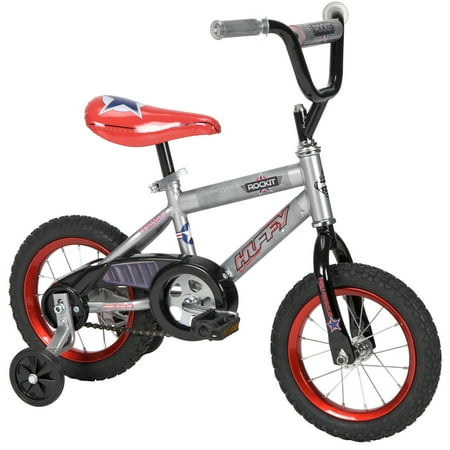
Aha. Boy, that sure looks like a fork that would work either way.
Plugging the numbers into Jim G's tool, it looks like the small wheels on kid's bikes allow you to use zero-offset forks without sending the trail number through the roof. Pretty fortuitous for designing simple and inexpensive bikes like this.
Plugging the numbers into Jim G's tool, it looks like the small wheels on kid's bikes allow you to use zero-offset forks without sending the trail number through the roof. Pretty fortuitous for designing simple and inexpensive bikes like this.
11-08-17 | 12:32 PM
#24
Thread Starter
Keepin it Wheel
Joined: Aug 2011
Posts: 10,969
Likes: 5,248
From: San Diego
Bikes: Surly CrossCheck, Krampus
I think this might be the 20" boys model Looking carefully at that straight-on pic, there might be a tiny bit of rake in that fork, it's hard to tell. This black one looks 100% straight, but that's not the one we have.
11-08-17 | 12:34 PM
#25
Thread Starter
Keepin it Wheel
Joined: Aug 2011
Posts: 10,969
Likes: 5,248
From: San Diego
Bikes: Surly CrossCheck, Krampus
There seems to be some confusion over the term “Fork rake,” which I can understand. The dictionary definition for rake is “The angle of inclination from the vertical.” However, when referring to bicycles, rake and offset are different terms for the same thing. Both are the term for the distance the wheel center is set from the steering axis, regardless of the head angle.