


Punctures due to leaky patches: Am I doing it wrong?
 07-01-19 | 09:34 AM
#1

Thread Starter
Senior Member

Joined: Aug 2011
Posts: 2,777
Likes: 142
From: Paris, France
Punctures due to leaky patches: Am I doing it wrong?
Hello,
I've already had my share of pseudo-punctures that were actually due to leaky patches To make matters worse, Marathon Plus tires are a bit of a pain to remove/fit back on a Brompton.
So I was wondering if…
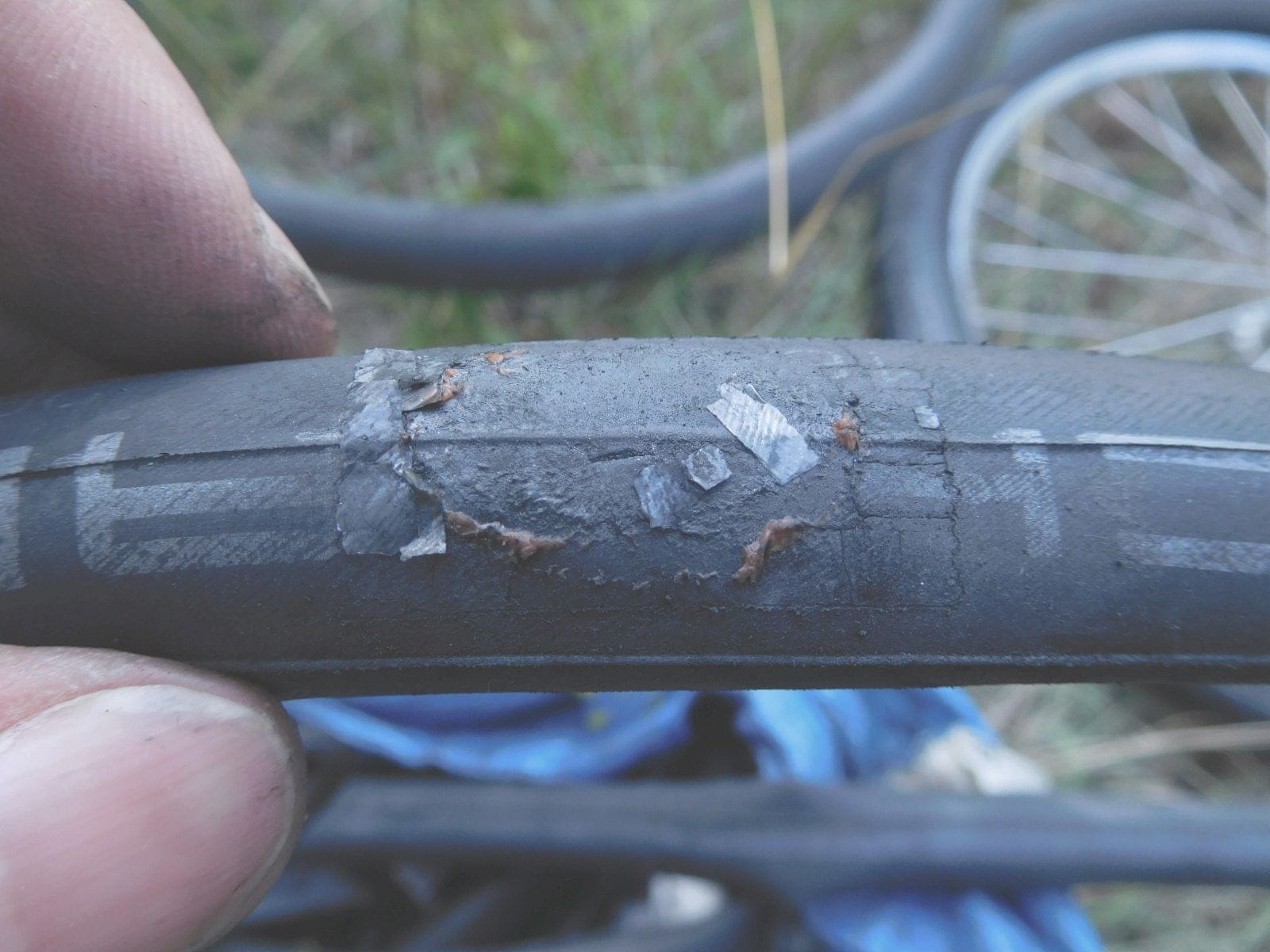
I've already had my share of pseudo-punctures that were actually due to leaky patches
To make matters worse, Marathon Plus tires are a bit of a pain to remove/fit back on a Brompton.So I was wondering if…
- I'm doing it wrong,
- I should get a better brand of patches
- Like life and parties, patches weren't made to last.
 07-01-19 | 09:41 AM
#2

Facts just confuse people


Joined: Jul 2017
Posts: 19,425
Likes: 7,116
From: Mississippi
Bikes: Tarmac Disc Comp Di2 - 2020
At less than five dollars a tube, I just replace the tube.
But yes, you are doing something wrong. What are you doing? Then maybe someone can tell you what you lack. Cleaning, scuffing, self-stick patch, waiting for glue to dry somewhat before putting patch on, and etc.
But yes, you are doing something wrong. What are you doing? Then maybe someone can tell you what you lack. Cleaning, scuffing, self-stick patch, waiting for glue to dry somewhat before putting patch on, and etc.
 07-01-19 | 09:56 AM
#3

Senior Member

Joined: Nov 2014
Posts: 27,576
Likes: 5,485
From: Eugene, Oregon, USA
That looks like a mighty large hole, which is always harder to patch.
Inevitably holes right on seams are difficult to patch. A couple of solutions include taking a single edge razor blade and gently trimming the rubber along the seam, or spending a lot of time sanding it down with the provided sand paper.
With the red around the edges, I'm assuming some kind of glue-on patch which should be good.
Oh, are you letting the glue dry until tacky before attaching the patch (no glue on patch).
Inevitably holes right on seams are difficult to patch. A couple of solutions include taking a single edge razor blade and gently trimming the rubber along the seam, or spending a lot of time sanding it down with the provided sand paper.
With the red around the edges, I'm assuming some kind of glue-on patch which should be good.
Oh, are you letting the glue dry until tacky before attaching the patch (no glue on patch).
 07-01-19 | 10:10 AM
#4
Thread Starter
Senior Member
Joined: Aug 2011
Posts: 2,777
Likes: 142
From: Paris, France
The puncture is actually the small slit in the center; The rest is the patch I removed to see how things looked (and, yes, I did put a new patch and it's holding so far.)
It was a regular patch, that requires its separate glue.
I'll pack a razor blade, wait longer for the glue to dry up, and see how it goes.
Thank you.
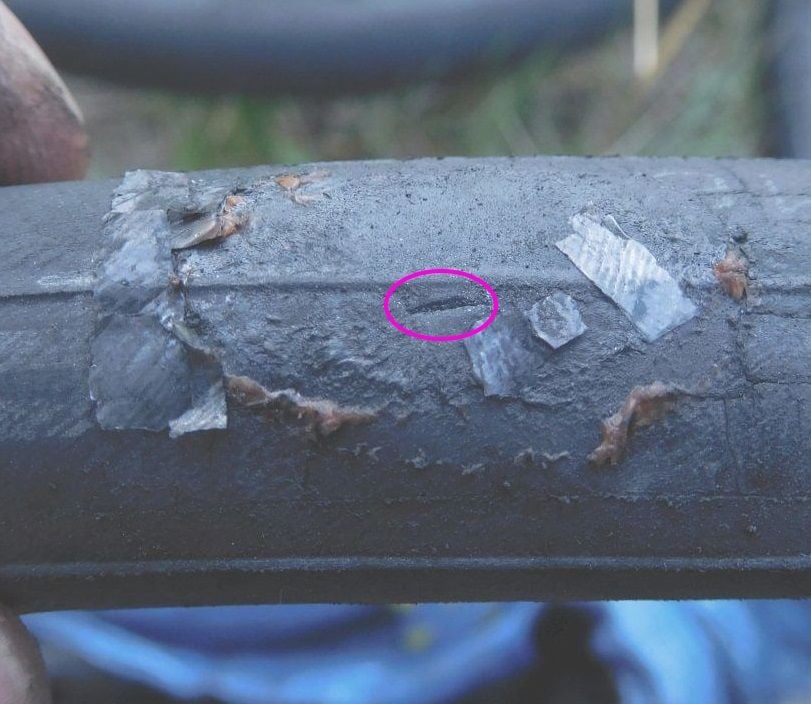
It was a regular patch, that requires its separate glue.
I'll pack a razor blade, wait longer for the glue to dry up, and see how it goes.
Thank you.
07-01-19 | 10:15 AM
#5

aka Tom Reingold

Joined: Jan 2009
Posts: 44,338
Likes: 6,637
From: New York, NY, and High Falls, NY, USA
Bikes: 1962 Rudge Sports, 1971 Raleigh Super Course, 1971 Raleigh Pro Track, 1974 Raleigh International, 1975 Viscount Fixie, 1982 McLean, 1996 Lemond (Ti), 2002 Burley Zydeco tandem
1. You are doing it wrong.
2. You should get better patches and glue.
3. No, patches can last indefinitely.
Let the glue dry! Err on the side of too long. I once forgot I was in the middle of patching (at home), and hours later, I applied the patch. It worked great. You shouldn't need more than five minutes, but if you're in doubt, wait longer.
Rema patches are the best, though I am usually successful with other brands, including no-names.
Rema vulcanizing fluid is MUCH better than the others because it makes a chemical bond that makes the patch and tube intertwine at a microscopic level. Other glues are just sticky.
When the patch is dry, the edges should not show any gaps. At that point, it is tempting to add glue to finish the job. This is guaranteed not to work. Peel the patch, clean the tube, and start again with a new patch.
You can do this. I've taught dozens of kids to do it.
2. You should get better patches and glue.
3. No, patches can last indefinitely.
Let the glue dry! Err on the side of too long. I once forgot I was in the middle of patching (at home), and hours later, I applied the patch. It worked great. You shouldn't need more than five minutes, but if you're in doubt, wait longer.
Rema patches are the best, though I am usually successful with other brands, including no-names.
Rema vulcanizing fluid is MUCH better than the others because it makes a chemical bond that makes the patch and tube intertwine at a microscopic level. Other glues are just sticky.
When the patch is dry, the edges should not show any gaps. At that point, it is tempting to add glue to finish the job. This is guaranteed not to work. Peel the patch, clean the tube, and start again with a new patch.
You can do this. I've taught dozens of kids to do it.
__________________
Tom Reingold, tom@noglider.com
New York City and High Falls, NY
Blogs: The Experienced Cyclist; noglider's ride blog
“When man invented the bicycle he reached the peak of his attainments.” — Elizabeth West, US author
Please email me rather than PM'ing me. Thanks.
Tom Reingold, tom@noglider.com
New York City and High Falls, NY
Blogs: The Experienced Cyclist; noglider's ride blog
“When man invented the bicycle he reached the peak of his attainments.” — Elizabeth West, US author
Please email me rather than PM'ing me. Thanks.
 07-01-19 | 10:21 AM
#6
Senior Member
Joined: Nov 2014
Posts: 27,576
Likes: 5,485
From: Eugene, Oregon, USA
However, it may be that it still was good over the area that was patched.
07-01-19 | 10:26 AM
#7

Mad bike riding scientist

Joined: Nov 2004
Posts: 29,209
Likes: 6,285
From: Denver, CO
Bikes: Some silver ones, a red one, a black and orange one, and a few titanium ones
Hello,
I've already had my share of pseudo-punctures that were actually due to leaky patches To make matters worse, Marathon Plus tires are a bit of a pain to remove/fit back on a Brompton.
So I was wondering if…
I've already had my share of pseudo-punctures that were actually due to leaky patches
To make matters worse, Marathon Plus tires are a bit of a pain to remove/fit back on a Brompton.So I was wondering if…
- I'm doing it wrong,
- I should get a better brand of patches
- Like life and parties, patches weren't made to last.
Patches will last just fine...as long as you start with a good one. Most every patch kit you can by that isn’t packed in a green box with a red and green label is not a good patch kit.
Get Rema Tip Tops or you are just wasting your time. People will argue the point but Rema’s have chemistry on their side. Where the other patch kits use rubber cement, Rema has a two part system on their patches that makes new rubber when the two parts are combined. The vulcanizing fluid of Rema contains an accelerant and the patch contains a crosslinking agent. The bond is much more permanent than with just plain rubber cement.
You also have to prepare the surface properly. Sand it well so that there is fresh rubber showing. Sanding...even with instant patches...is important since the tube is coated with a release compound that will interfere with any kind of bonding system. The release compound is used to release the tube from a mold.
Perhaps most importantly, the fluid has to dry completely. You can’t wait too long. If you are on the road and need the patch to work, 5 minutes is the minimum. If you are at home, let it sit. I’ve forgotten patching jobs and let the fluid “dry” for weeks. They still work and work well.
Finally, sure tubes can cost less then $5 each. But a patch costs pennies. I could replace a tube every time I get a flat but some of my tubes have up to 30 patches apiece. That $150 vs maybe $15 for 30 patches. And I’ve kept 30 tubes out of the landfill. Carry an extra tube with you, replace it (after carefully checking the tire for any other punctures), and fix the puncture at home.
__________________
Stuart Black
Dreamin' of Bemidji Down the Mississippi (in part)
Plan Epsilon Around Lake Michigan in the era of Covid
Gold Fever Three days of dirt in Colorado
Pokin' around the Poconos A cold ride around Lake Erie
Dinosaurs in Colorado A mountain bike guide to the Purgatory Canyon dinosaur trackway
Solo Without Pie. The search for pie in the Midwest.
Picking the Scablands. Washington and Oregon, 2005. Pie and spiders on the Columbia River!
Stuart Black
Dreamin' of Bemidji Down the Mississippi (in part)
Plan Epsilon Around Lake Michigan in the era of Covid
Gold Fever Three days of dirt in Colorado
Pokin' around the Poconos A cold ride around Lake Erie
Dinosaurs in Colorado A mountain bike guide to the Purgatory Canyon dinosaur trackway
Solo Without Pie. The search for pie in the Midwest.
Picking the Scablands. Washington and Oregon, 2005. Pie and spiders on the Columbia River!
 07-01-19 | 10:28 AM
#8

Senior Member
Joined: Oct 2014
Posts: 14,190
Likes: 5,326
From: Portland, OR
Bikes: (2) ti TiCycles, 2007 w/ triple and 2011 fixed, 1979 Peter Mooney, ~1983 Trek 420 now fixed and ~1973 Raleigh Carlton Competition gravel grinder
1. You are doing it wrong.
2. You should get better patches and glue.
3. No, patches can last indefinitely.
Let the glue dry! Err on the side of too long. I once forgot I was in the middle of patching (at home), and hours later, I applied the patch. It worked great. You shouldn't need more than five minutes, but if you're in doubt, wait longer.
Rema patches are the best, though I am usually successful with other brands, including no-names.
Rema vulcanizing fluid is MUCH better than the others because it makes a chemical bond that makes the patch and tube intertwine at a microscopic level. Other glues are just sticky.
When the patch is dry, the edges should not show any gaps. At that point, it is tempting to add glue to finish the job. This is guaranteed not to work. Peel the patch, clean the tube, and start again with a new patch.
You can do this. I've taught dozens of kids to do it.
2. You should get better patches and glue.
3. No, patches can last indefinitely.
Let the glue dry! Err on the side of too long. I once forgot I was in the middle of patching (at home), and hours later, I applied the patch. It worked great. You shouldn't need more than five minutes, but if you're in doubt, wait longer.
Rema patches are the best, though I am usually successful with other brands, including no-names.
Rema vulcanizing fluid is MUCH better than the others because it makes a chemical bond that makes the patch and tube intertwine at a microscopic level. Other glues are just sticky.
When the patch is dry, the edges should not show any gaps. At that point, it is tempting to add glue to finish the job. This is guaranteed not to work. Peel the patch, clean the tube, and start again with a new patch.
You can do this. I've taught dozens of kids to do it.
To follow up on cycoccommute's comments, yeah my tubes get a few patches. Not 30 but 5-6 typically. Even at the high local price of 25 cents/patch, that's coming out well ahead. I patch on the road almost always. I ride on radial tire steel wire roads. So I get a lot of flats from wires barely thicker than hairs and only an 1/8" long. Very hard to find in the tire tread. But when you install the patched tire, you know exactly where the problem is; at the patch or exactly the same distance from the valve in the other direction. (And that tiny wire WILL, if not removed, cause another flat. Or two. Or three.)
Last edited by 79pmooney; 07-01-19 at 10:40 AM.
07-01-19 | 11:09 AM
#10
aka Tom Reingold
Joined: Jan 2009
Posts: 44,338
Likes: 6,637
From: New York, NY, and High Falls, NY, USA
Bikes: 1962 Rudge Sports, 1971 Raleigh Super Course, 1971 Raleigh Pro Track, 1974 Raleigh International, 1975 Viscount Fixie, 1982 McLean, 1996 Lemond (Ti), 2002 Burley Zydeco tandem
Ben's suggestion of using two coats of glue is also a good one.
__________________
Tom Reingold, tom@noglider.com
New York City and High Falls, NY
Blogs: The Experienced Cyclist; noglider's ride blog
“When man invented the bicycle he reached the peak of his attainments.” — Elizabeth West, US author
Please email me rather than PM'ing me. Thanks.
Tom Reingold, tom@noglider.com
New York City and High Falls, NY
Blogs: The Experienced Cyclist; noglider's ride blog
“When man invented the bicycle he reached the peak of his attainments.” — Elizabeth West, US author
Please email me rather than PM'ing me. Thanks.
07-01-19 | 12:30 PM
#11
Senior Member
Joined: Jan 2016
Posts: 1,531
Likes: 655
Rema is mentioned as the preferred system. Couple of questions that comes to mind.
The new Rema that is supposed to be quicker. Are these the same? Just as good as the older Rema?
Park VP-1, how do these compare? Are these as good as the old Rema?
Thanks for any input or experience you can share.
The new Rema that is supposed to be quicker. Are these the same? Just as good as the older Rema?
Park VP-1, how do these compare? Are these as good as the old Rema?
Thanks for any input or experience you can share.
07-01-19 | 02:08 PM
#12
aka Tom Reingold
Joined: Jan 2009
Posts: 44,338
Likes: 6,637
From: New York, NY, and High Falls, NY, USA
Bikes: 1962 Rudge Sports, 1971 Raleigh Super Course, 1971 Raleigh Pro Track, 1974 Raleigh International, 1975 Viscount Fixie, 1982 McLean, 1996 Lemond (Ti), 2002 Burley Zydeco tandem
I don't know the new Rema patches. The Park VP-1 looks like it's just as good. But Park also makes glueless patches. Stay away.
__________________
Tom Reingold, tom@noglider.com
New York City and High Falls, NY
Blogs: The Experienced Cyclist; noglider's ride blog
“When man invented the bicycle he reached the peak of his attainments.” — Elizabeth West, US author
Please email me rather than PM'ing me. Thanks.
Tom Reingold, tom@noglider.com
New York City and High Falls, NY
Blogs: The Experienced Cyclist; noglider's ride blog
“When man invented the bicycle he reached the peak of his attainments.” — Elizabeth West, US author
Please email me rather than PM'ing me. Thanks.
07-01-19 | 02:13 PM
#13
Senior Member
Joined: Jul 2010
Posts: 13,928
Likes: 1,243
From: Montreal Canada
from my decades of patching, Ive only ever put one layer of glue on , and never an issue.
as said, proper sanding, enough glue to cover patch size, let dry, roll on patch to eliminate air or bumps, hold firm with thumb for a few minutes, and bingo.
as said, proper sanding, enough glue to cover patch size, let dry, roll on patch to eliminate air or bumps, hold firm with thumb for a few minutes, and bingo.
07-01-19 | 08:07 PM
#14

Passista
Joined: Jul 2005
Posts: 8,262
Likes: 1,234
Bikes: 1998 Pinarello Asolo, 1992 KHS Montaña pro, 1980 Raleigh DL-1, IGH Hybrid, IGH Utility
I too used to apply 1 layer, but once had a hard time patching a stubborn tube and fixed it with 2 layers. Been patching that way since then, it's not much more work.
07-01-19 | 08:24 PM
#15
Senior Member
Joined: Jul 2010
Posts: 13,928
Likes: 1,243
From: Montreal Canada
Im genuinely curious and wondering how a second layer of glue would help things.
07-01-19 | 09:12 PM
#16
Passista
Joined: Jul 2005
Posts: 8,262
Likes: 1,234
Bikes: 1998 Pinarello Asolo, 1992 KHS Montaña pro, 1980 Raleigh DL-1, IGH Hybrid, IGH Utility
The material was a strange shiny rubber, I sanded it but the patch didn't adhere well. I was told to apply a 2nd layer and it just worked, don't know why.
07-01-19 | 09:45 PM
#18
Senior Member
Joined: Aug 2018
Posts: 458
Likes: 102
From: Rt 12 Washington USA
Bikes: 2013 Ridley Helium, 2017 Blue Pro-Secco EX, 1987 Schwinn Super Sport
Check the tire to make sure what flatted your wheel isnt still stuck in the tire.
Throw in a new tube.
When you get home, throw on some GCN episodes and take the time to sand the flatted tube, glue it up, let it dry and then patch it.
Then you have a good spare for the next ride out.
Throw in a new tube.
When you get home, throw on some GCN episodes and take the time to sand the flatted tube, glue it up, let it dry and then patch it.
Then you have a good spare for the next ride out.
07-02-19 | 08:31 AM
#19

Señor Member
Joined: Feb 2013
Posts: 5,070
Likes: 306
Maybe it is debris left behind after removing the failed patch, but there seems to be some junk on the tube that would have been under the patch. I'm not saying this is why the patch failed, but having visible foreign objects under a patch certainly can't help.
As above:
1. Ensure whatever caused the puncture is removed
ii. Clean and lightly sand area around puncture
c. Apply a generous amount of patch cement and spread it thin over an area larger than the patch
IV. Allow the cement to dry, 5 minutes should be enough
5. Peel the foil backing off the patch and press firmly onto the dried cement on the tube, generally working from the centre of the patch out. You can use a rounded corner of the patch kit box to press the tube on extra hard.
If for some reason the patch does not work, you must be extra thorough in removing any leftover glue or debris before trying to re-patch.
I generally keep one or two known good tubes with me to install if I get a flat, and I patch the punctured tube when I get home and put that with my spares.
I had ~20 punctures last year (it was a bad year) and none were caused by failed patches. One was caused by a crease in a Park tire boot, though.
As above:
1. Ensure whatever caused the puncture is removed
ii. Clean and lightly sand area around puncture
c. Apply a generous amount of patch cement and spread it thin over an area larger than the patch
IV. Allow the cement to dry, 5 minutes should be enough
5. Peel the foil backing off the patch and press firmly onto the dried cement on the tube, generally working from the centre of the patch out. You can use a rounded corner of the patch kit box to press the tube on extra hard.
If for some reason the patch does not work, you must be extra thorough in removing any leftover glue or debris before trying to re-patch.
I generally keep one or two known good tubes with me to install if I get a flat, and I patch the punctured tube when I get home and put that with my spares.
I had ~20 punctures last year (it was a bad year) and none were caused by failed patches. One was caused by a crease in a Park tire boot, though.
 07-02-19 | 09:23 AM
#20

Half way there
Joined: Sep 2015
Posts: 2,967
Likes: 895
From: North Carolina
Bikes: Many, and the list changes frequently
It looks like there are pieces of cellophane where you patched. Why? Did you put the patch on with the cellophane side down and not remove all of it? You are supposed to peel the foil side off and place that against the glued surface. Cellophane (on top) gets peeled off last.
Another recommendation for Rema system. I won't use anything else unless I am forced to.
Couldn't agree more. Emphasis added. There is no down-side to patching a tube. The 10 minutes of time to patch is used up and then some in the shopping for new tubes. Then again, I guess the additional labor may be onerous for some. Properly patched tubes can last for decades. Discarded tubes will last for centuries in the landfills.
Another recommendation for Rema system. I won't use anything else unless I am forced to.
Finally, sure tubes can cost less then $5 each. But a patch costs pennies. I could replace a tube every time I get a flat but some of my tubes have up to 30 patches apiece. That $150 vs maybe $15 for 30 patches. And I’ve kept 30 tubes out of the landfill. Carry an extra tube with you, replace it (after carefully checking the tire for any other punctures), and fix the puncture at home.
07-02-19 | 12:49 PM
#22

Senior Member
Joined: Jul 2008
Posts: 30,506
Likes: 4,579
From: 25 miles northwest of Boston
Bikes: Bottecchia Sprint, GT Timberline 29r, Marin Muirwoods 29er, Trek FX Alpha 7.0
looks like he got a puncture through the patch. looks like the patch was fine, but it got punctured, in the same spot, kinda weird
07-02-19 | 01:20 PM
#23

Senior Member
Joined: Aug 2011
Posts: 22,676
Likes: 2,643
From: CID
Bikes: 1991 Bianchi Eros, 1964 Armstrong, 1988 Diamondback Ascent, 1988 Bianchi Premio, 1987 Bianchi Sport SX, 1980s Raleigh mixte (hers), All-City Space Horse (hers)
Rema is mentioned as the preferred system. Couple of questions that comes to mind.
The new Rema that is supposed to be quicker. Are these the same? Just as good as the older Rema?
Park VP-1, how do these compare? Are these as good as the old Rema?
Thanks for any input or experience you can share.
The new Rema that is supposed to be quicker. Are these the same? Just as good as the older Rema?
Park VP-1, how do these compare? Are these as good as the old Rema?
Thanks for any input or experience you can share.

 07-02-19 | 01:46 PM
#25
Senior Member
Joined: Jul 2013
Posts: 579
Likes: 285
From: Southern California
Bikes: Historical: Schwinn Speedster; Schwinn Collegiate; 1981 Ross Gran Tour; 1981 Dawes Atlantis; 1991 Specialized Rockhopper. Current: 1987 Centurion Ironman Dave Scott Master; 1992 Specialized Stumpjumper FS; 2026 Salsa Confluence.
Heh, thanks for bringing up bad memories ... of yesterday. On my way to work on a gravel path, I rode over a sharp piece of wire or a nail. It went through the tube twice. Pulling out my patch kit, I remembered that the last time I picked one up, I ended up with a "Forte Instant Patch Kit" with glueless patches. I still had some Remas in an old kit where the glue had dried out, just for emergencies. I figured I cold lend them to someone some day or something.
Boy, do I wish I had the glue. I patched up the smaller hole with a glueless patch, and then worked on the larger hole (almost a quarter-inch). Got it done, put the tire back on ... and heard a hiss.. Big patch failed. Sigh, and re-do it. Of course, the hole is right next to the seam, and was really hard to sand down. Got it patched, pumped, and rode for all of five minutes before it went flat again. Called work to say I'd be late ... and patched it again. Made it ten minutes this time, but at least close enough to walk to work.
The sad part? Modern work places apparently don't keep rubber cement on hand anymore. I'll be stopping at a bike store on my way home tonight.
So, here's a vote against glueless patches.
Boy, do I wish I had the glue. I patched up the smaller hole with a glueless patch, and then worked on the larger hole (almost a quarter-inch). Got it done, put the tire back on ... and heard a hiss.. Big patch failed. Sigh, and re-do it. Of course, the hole is right next to the seam, and was really hard to sand down. Got it patched, pumped, and rode for all of five minutes before it went flat again. Called work to say I'd be late ... and patched it again. Made it ten minutes this time, but at least close enough to walk to work.
The sad part? Modern work places apparently don't keep rubber cement on hand anymore. I'll be stopping at a bike store on my way home tonight.
So, here's a vote against glueless patches.