


Do patched road tubes last?
 05-04-22 | 10:02 PM
#1
Thread Starter
Full Member
Joined: May 2014
Posts: 355
Likes: 12
Do patched road tubes last?
I don't flat too often and have always had a stash of new tubes around, so when I would, I'd just put a new tube in and carry on, never giving patching a thought. Now that tubes are getting little pricier, I'm wondering if a patched tube will last, because I have several in a pile with a single small hole in each. A new tube is around $10, whereas a patch kit (like Park's) looks like it might cover 2-3 tubes for $10. But do patched tubes really last long? If they do, is there any specific kit you all would suggest for longevity?
 05-04-22 | 10:15 PM
#2

Senior Member

Joined: Aug 2011
Posts: 22,676
Likes: 2,643
From: CID
Bikes: 1991 Bianchi Eros, 1964 Armstrong, 1988 Diamondback Ascent, 1988 Bianchi Premio, 1987 Bianchi Sport SX, 1980s Raleigh mixte (hers), All-City Space Horse (hers)
Yes, a tube properly patched with a Rema kit is as good as new, and will last until something else takes it out.


 05-04-22 | 10:24 PM
#4

Senior Member
Joined: Nov 2014
Posts: 631
Likes: 355
From: Eastern Iowa
Bikes: 2014 Trek Allant drop bar conversion, modified Schwinn MTN commuter, 2015 Trek 520, Soma ES, Salsa Journeyman, 1980 Trek 414
A properly patched tube will serve you as reliably as a new tube would. I never throw away a tube unless it has a valve stem issue or large tear in the rubber - they get patched and put back into rotation. I typically will put in a fresh (new or previously properly patched) tube on a roadside flat repair instead of patching a tube on the side of the road, unless I have a ride with more than one puncture. I will bring the damaged tube back to the garage to assess and repair, normally waiting until I have a few tubes needing patches, and doing them all in one sitting. This gives a better chance of being able to use all of the vulcanizing fluid in the patch kit before it evaporates.
In my experience, the Park patch kits are pretty good. My preferred are the Rema Tip Top kits, but both work well. Just make sure to get a proper repair kit, and not the patches with pre-applied adhesive (like stickers). Those are no good and will fail.
In my experience, the Park patch kits are pretty good. My preferred are the Rema Tip Top kits, but both work well. Just make sure to get a proper repair kit, and not the patches with pre-applied adhesive (like stickers). Those are no good and will fail.

 05-05-22 | 04:10 AM
#5

Senior Member

Joined: Sep 2010
Posts: 8,327
Likes: 1,112
From: Roswell, GA
Bikes: '93 Trek 750, '92 Schwinn Crisscross, '93 Mongoose Alta
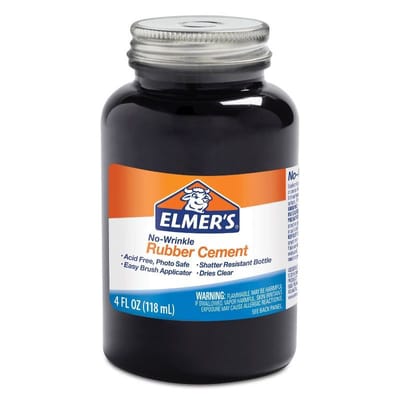
The key is to use a good vulcanizing fluid, which causes a chemical reaction that fuses the rubber pieces together, NOT ordinary rubber cement.
 05-05-22 | 04:23 AM
#6

Senior Member

Joined: Mar 2018
Posts: 1,976
Likes: 1,970
I’ve patched lots of tubes, and patches work perfectly well. Park patches and cement do a good job, just make sure that you prep the tube (roughen up the rubber around the puncture) with the included sandpaper or scraper, and let glue set before putting on the patch.
05-05-22 | 05:04 AM
#7
Senior Member

Joined: Mar 2016
Posts: 3,724
Likes: 2,113
From: Sussex County, Delaware
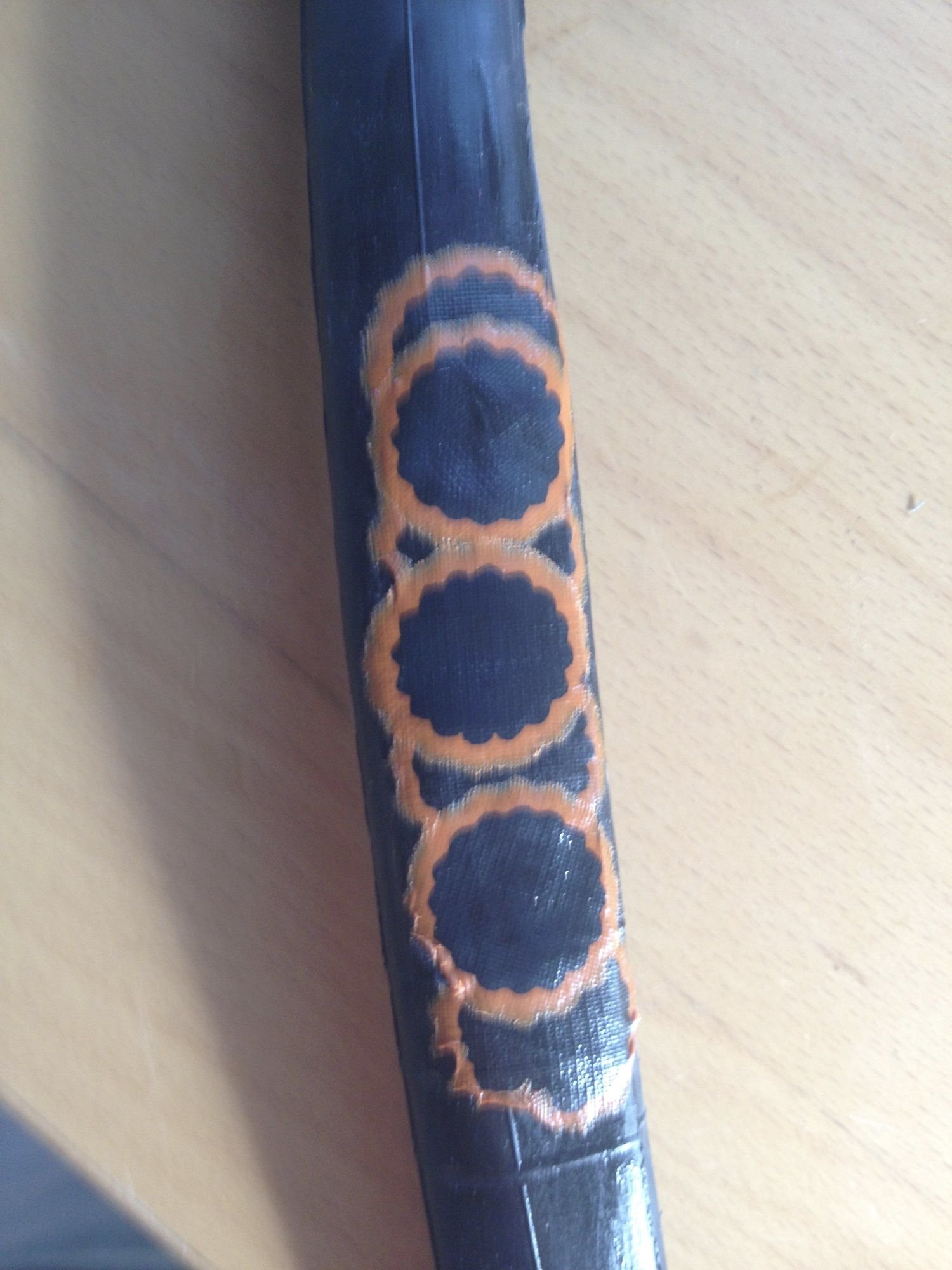
If done correctly, a long time. IME, that is true for both vulcanized and glueless patches. I have both on tubes that have lasted for a couple of years. I have one tube that has 4 patches on it.
05-05-22 | 06:35 AM
#8

Senior Member

Joined: Jun 2005
Posts: 2,920
Likes: 1,002
From: Louisville KY
Bikes: 06 Lemond Reno, 98 GT Timberline
As others have said, a patched tube-using good vulcanizing and fluid and a Rema patch will last. If it's the front tube that was patched, I'll usually move it to the rear and put a new tube in the front. That's just me though, probably not necessary. I've never had a patch go bad.
Last edited by freeranger; 05-05-22 at 02:07 PM.
05-05-22 | 06:42 AM
#9
Senior Member
Joined: Dec 2010
Posts: 9,694
Likes: 2,616
From: northern Deep South
Bikes: Fuji Touring, Novara Randonee
Yes, a well patched tube will hold air just as well as a new one.
IME preparation is more important than the specific patch kit brand. You've got to get the mold release off the tube before anything will stick to it, so use your grater or sandpaper to get all the "shiny" off around the patch. I've used Rema glue in the patch, but now I'm using Slime from the auto parts store, and I haven't seen a difference. Had to ask for another box of 100 Rema patches for Christmas last year, I finally used up the first box.
Glued-on patches, I usually have something go wrong (like a blow-out, long cut, or the stem starts leaking) before I accumulate more than a dozen or so patches. That's probably over five years of service (I don't label tubes!). Glueless patches usually last me 2-3 years before they start to leak.
I usually accumulate a half dozen leaking tubes (replacing them on the road) and patch them on a rainy weekend. Sand one, put the glue on, sand the next and put the glue on that, go back and put the patch on the first, and continue. I'll do an overnight leak test the next day. Oh, one more tip: get yourself a sliver Sharpie to mark the hole, especially if it's a small leak you need to find in a sink full of water.
IME preparation is more important than the specific patch kit brand. You've got to get the mold release off the tube before anything will stick to it, so use your grater or sandpaper to get all the "shiny" off around the patch. I've used Rema glue in the patch, but now I'm using Slime from the auto parts store, and I haven't seen a difference. Had to ask for another box of 100 Rema patches for Christmas last year, I finally used up the first box.
Glued-on patches, I usually have something go wrong (like a blow-out, long cut, or the stem starts leaking) before I accumulate more than a dozen or so patches. That's probably over five years of service (I don't label tubes!). Glueless patches usually last me 2-3 years before they start to leak.
I usually accumulate a half dozen leaking tubes (replacing them on the road) and patch them on a rainy weekend. Sand one, put the glue on, sand the next and put the glue on that, go back and put the patch on the first, and continue. I'll do an overnight leak test the next day. Oh, one more tip: get yourself a sliver Sharpie to mark the hole, especially if it's a small leak you need to find in a sink full of water.
05-05-22 | 07:13 AM
#10
Senior Member
Joined: Mar 2019
Posts: 1,606
Likes: 925
'Vulcanizing' patches (separate cement-and-patch patch kits), in my experience, are as good as a new tube when properly (tube scuffed, cement left to dry before applying patch) applied.
Also in my experience, 'glueless' patches are crap. They might work for a while but I wouldn't trust them for any bike I needed to be reliable. Others have had better experience with them, but I have tried multiple brands on different occasions and was never satisfied - the extra one step and ~3 minutes to apply a traditional patch is worth the effort a million times out of a million.
I also carry a known good (new or patched) tube as a spare when I ride, as well as a patch kit. While patching is an almost 100% reliable fix, it's no fun on the side of a busy highway or in the pouring rain.
Also in my experience, 'glueless' patches are crap. They might work for a while but I wouldn't trust them for any bike I needed to be reliable. Others have had better experience with them, but I have tried multiple brands on different occasions and was never satisfied - the extra one step and ~3 minutes to apply a traditional patch is worth the effort a million times out of a million.
I also carry a known good (new or patched) tube as a spare when I ride, as well as a patch kit. While patching is an almost 100% reliable fix, it's no fun on the side of a busy highway or in the pouring rain.
 05-05-22 | 07:24 AM
#12

Senior Member
Joined: Oct 2013
Posts: 8,290
Likes: 3,691
From: Mich
Bikes: RSO E-tire dropper fixie brifter
I consider how frequent I experience getting a flat & for where/what type of riding. Justifying the cost of patching or replacing has those areas to consider for me. Keeping the damaged tubes around until I accumulate enough to open the sticky messy patching fluid can take a while, & I don't have a good spot to store them that keeps them conveniently out of the way.
__________________
-YMMV
-YMMV
05-05-22 | 07:30 AM
#13
Senior Member
Joined: Sep 2008
Posts: 5,302
Likes: 117
I don't flat too often and have always had a stash of new tubes around, so when I would, I'd just put a new tube in and carry on, never giving patching a thought. Now that tubes are getting little pricier, I'm wondering if a patched tube will last, because I have several in a pile with a single small hole in each. A new tube is around $10, whereas a patch kit (like Park's) looks like it might cover 2-3 tubes for $10. But do patched tubes really last long? If they do, is there any specific kit you all would suggest for longevity?
Store old tubes in a zip lock bag. In my racing days I used to store and install tubes with talcum powder but in the last 30 yrs stopped using talc as I stopped racing, rode less and tires became more puncture resistant
05-05-22 | 08:07 AM
#14

Old fart

Joined: Nov 2004
Posts: 26,411
Likes: 5,350
From: Appleton WI
Bikes: Several, mostly not name brands.
A good quality patch (I prefer Rema, but there are others) properly applied can last the life of the tube. A compelling reason to replace a tube would be a blow-out too large to patch, or a leak in an unpatchable location, such as at the base of the valve stem.
05-05-22 | 08:23 AM
#15
Senior Member
Joined: Jun 2015
Posts: 5,804
Likes: 1,820
From: North Central Wisconsin
https://www.parktool.com/product/super-patch-kit-gp-2
I have used them on long road rides and they work. Had an incident last year on a 100 mile ride where I got flat and put in my spare tube then 30 miles later got another flat so had to use the patch kit I carried. The patch held up fine for the rest of the ride and few rides after until I put a new one back in.
I'm the type that thinks tubes are cheap...buy most of mine from e-bay for $5-$10...So any tube that has been punctured I eventually throw it away. Eventually just going to switch my road bike to tubeless and be done with tubes just like I am on my mountain and fat bikes.
05-05-22 | 08:25 AM
#16
Senior Member
Joined: Aug 2011
Posts: 22,676
Likes: 2,643
From: CID
Bikes: 1991 Bianchi Eros, 1964 Armstrong, 1988 Diamondback Ascent, 1988 Bianchi Premio, 1987 Bianchi Sport SX, 1980s Raleigh mixte (hers), All-City Space Horse (hers)
I consider how frequent I experience getting a flat & for where/what type of riding. Justifying the cost of patching or replacing has those areas to consider for me. Keeping the damaged tubes around until I accumulate enough to open the sticky messy patching fluid can take a while, & I don't have a good spot to store them that keeps them conveniently out of the way.
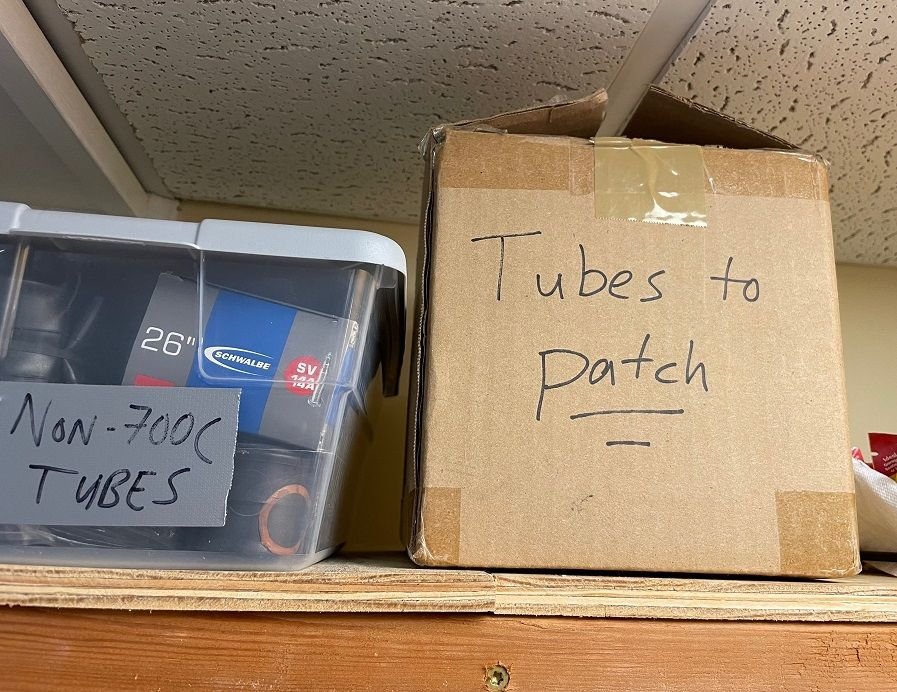
Then I crack open a 3-gram tube of glue and see how many I can patch with it.
 05-05-22 | 08:46 AM
#17

Mad bike riding scientist

Joined: Nov 2004
Posts: 29,209
Likes: 6,286
From: Denver, CO
Bikes: Some silver ones, a red one, a black and orange one, and a few titanium ones
It goes a bit further than that. Cold vulcanization is a 2 chemical process much like epoxy. The fluid has one chemical and the patch has the other. If you use vulcanizing fluid without a patch that has the matching accelerator, the vulcanizing fluid is about the same as rubber cement. Rema is the only system that I can say with certainty that uses the 2 chemical process. Most all of the others are just rubber cement.
__________________
Stuart Black
Dreamin' of Bemidji Down the Mississippi (in part)
Plan Epsilon Around Lake Michigan in the era of Covid
Gold Fever Three days of dirt in Colorado
Pokin' around the Poconos A cold ride around Lake Erie
Dinosaurs in Colorado A mountain bike guide to the Purgatory Canyon dinosaur trackway
Solo Without Pie. The search for pie in the Midwest.
Picking the Scablands. Washington and Oregon, 2005. Pie and spiders on the Columbia River!
Stuart Black
Dreamin' of Bemidji Down the Mississippi (in part)
Plan Epsilon Around Lake Michigan in the era of Covid
Gold Fever Three days of dirt in Colorado
Pokin' around the Poconos A cold ride around Lake Erie
Dinosaurs in Colorado A mountain bike guide to the Purgatory Canyon dinosaur trackway
Solo Without Pie. The search for pie in the Midwest.
Picking the Scablands. Washington and Oregon, 2005. Pie and spiders on the Columbia River!
 05-05-22 | 09:46 AM
#19

I also put punctured tubes in a box and patch them all at once, with a new tube of glue. I never keep opened tubes of glue, they just dry up eventually.
Additional tools:
a silver sharpie. I draw a 4 long lines pointing to the hole, so I know where it is if it's tiny. And it's easier to center the patch, too.
Real sandpaper! that tiny scrap in the patch box is annoying to use. I'll use a piece of 100 grit or 150, whatever I have. So much faster!
I use a corner of the the plastic patch box to press down the patch thoroughly. A screwdriver handle would be good, too.
(I clamp the finished patch with a woodworking spring clamp for a few hours. I don't know that it actually helps, but its easy to do.)
Test the patched tube on the wheel at home, then I treat it as if it's a new tube from then on.
Additional tools:
a silver sharpie. I draw a 4 long lines pointing to the hole, so I know where it is if it's tiny. And it's easier to center the patch, too.
Real sandpaper! that tiny scrap in the patch box is annoying to use. I'll use a piece of 100 grit or 150, whatever I have. So much faster!
I use a corner of the the plastic patch box to press down the patch thoroughly. A screwdriver handle would be good, too.
(I clamp the finished patch with a woodworking spring clamp for a few hours. I don't know that it actually helps, but its easy to do.)
Test the patched tube on the wheel at home, then I treat it as if it's a new tube from then on.
Last edited by rm -rf; 05-05-22 at 09:49 AM.
05-05-22 | 09:52 AM
#20
Senior Member
Joined: Jan 2009
Posts: 4,439
Likes: 1,699
From: San Diego, CA
One trick is to fold the tube so the seam is on the edge of the fold and sand away. Faster and easier than sanding a seam in the middle of a flat section of tube.
05-05-22 | 12:10 PM
#21

Senior Member

Joined: Aug 2009
Posts: 4,311
Likes: 3,747
 05-05-22 | 12:26 PM
#22
Full Member
Joined: Sep 2006
Posts: 397
Likes: 86

 05-05-22 | 03:25 PM
#25
Senior Member
Joined: Mar 2018
Posts: 1,976
Likes: 1,970
As a kid I in New Mexico I had an old Schwinn cruiser. New Mexico is infamous for “goat head” stickers or thorns, these puncture both bike tires and bare feet with ease. The tubes in my old Schwinn were covered with patches, the rear tire had 18 of them. They still held air quite well.