


Broken spokes...
 10-27-23 | 01:50 PM
#1
Thread Starter
Senior Member

Joined: Nov 2006
Posts: 1,106
Likes: 36
From: Hammonton, NJ
Bikes: Dawes Lightning sport, Trek 1220, Trek 7100
Broken spokes...
hi,
I bought a bike from bikes direct and I am having some problems with the rear wheel. it seems after a few rides (not much mileage most from 6 - 10 miles)
I break a spoke and I find it a bit frustrating....
I looked on youtube so I fixed the previous broken spoke by measuring and ordering a set from amazon. was able to fix the spoke then did what I saw on youtube for
"stressing / destressing" the spokes by stressing them laterally, then truing the wheel.
so its been about 5 rides and just today I broke another spoke...
obviously, I need to fix the spoke but what can I do to prevent this problem from re-occurring?
additional information: the spokes break at the J bend...
I bought a bike from bikes direct and I am having some problems with the rear wheel. it seems after a few rides (not much mileage most from 6 - 10 miles)
I break a spoke and I find it a bit frustrating....
I looked on youtube so I fixed the previous broken spoke by measuring and ordering a set from amazon. was able to fix the spoke then did what I saw on youtube for
"stressing / destressing" the spokes by stressing them laterally, then truing the wheel.
so its been about 5 rides and just today I broke another spoke...
obviously, I need to fix the spoke but what can I do to prevent this problem from re-occurring?
additional information: the spokes break at the J bend...
 10-27-23 | 02:22 PM
#2
Senior Member


Joined: Mar 2016
Posts: 3,724
Likes: 2,113
From: Sussex County, Delaware
Contact bikesdirect.com and see if they will replace it. If not, have the whole wheel rebuilt, probably not cost effective, depending on the wheel. Or, buy a better set of wheels. They have some pretty good deals on bikes, but there are reasons they sell at what seems to be lower cost. They have to cut costs themselves to do this, wheels are one of the big ways to save on the build cost.
You do not state what bike you, purchased or what wheels it came with. So, I am just guessing it is not one of their higher tier bikes.
You do not state what bike you, purchased or what wheels it came with. So, I am just guessing it is not one of their higher tier bikes.
10-27-23 | 02:42 PM
#3
Thread Starter
Senior Member
Joined: Nov 2006
Posts: 1,106
Likes: 36
From: Hammonton, NJ
Bikes: Dawes Lightning sport, Trek 1220, Trek 7100
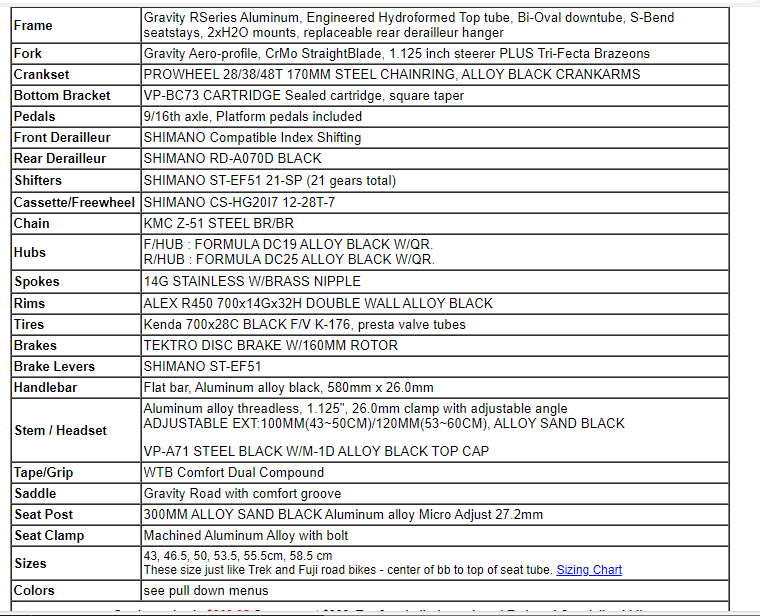
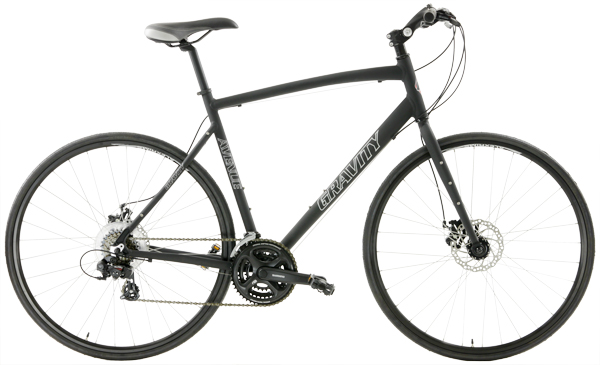
gravity flat bar road bike (not the cheapest, not the most expensive)...
it has Alex rims, 32 hole spokes with 3x pattern.. (which I have other bikes that have 32 holes and have never broken a spoke on them)
I also had a Trek 7100 multitrack that had the same problem and basically, the shop told me that the style of bike was the problem (and of course I am a clydesdale).
supposedly, because of the flat bar, I put more stress on the back wheel.
However, I like the same position on all my bikes flat or drop bar (seat and handlebars need to be even)... so I guess I really didn't think that would be the problem.
oh and one other bit of information: it has disk brakes... don't know if that would make a difference...
it has Alex rims, 32 hole spokes with 3x pattern.. (which I have other bikes that have 32 holes and have never broken a spoke on them)
I also had a Trek 7100 multitrack that had the same problem and basically, the shop told me that the style of bike was the problem (and of course I am a clydesdale).
supposedly, because of the flat bar, I put more stress on the back wheel.
However, I like the same position on all my bikes flat or drop bar (seat and handlebars need to be even)... so I guess I really didn't think that would be the problem.
oh and one other bit of information: it has disk brakes... don't know if that would make a difference...
Last edited by e0richt; 10-27-23 at 02:46 PM.
10-27-23 | 02:51 PM
#4
Senior Member
Joined: Mar 2016
Posts: 3,724
Likes: 2,113
From: Sussex County, Delaware
It is a decent bike, wheels maybe. You maybe just need to go to heavy duty wheel builds, more/stronger spokes, maybe wider rims. Stock wheels usually are for average weight riders. TBH, I am not a wheel tech guy, basic truing is it.
 10-27-23 | 02:56 PM
#6
Thread Starter
Senior Member
Joined: Nov 2006
Posts: 1,106
Likes: 36
From: Hammonton, NJ
Bikes: Dawes Lightning sport, Trek 1220, Trek 7100
I have been ambiguos about my weight...I am 260 but I have lost a bunch of weight since the trek... is that too much for a bike?
I have 2 road bikes (trek 1220, bikes direct dawes lightning sport) and have never broken a spoke on them and I have had them for (gee whiz) over 20 years...
I was heavier when I had the trek mulitrack 7100... just for clarification...
10-27-23 | 03:04 PM
#7

Really Old Senior Member

Joined: Feb 2007
Posts: 14,685
Likes: 1,921
From: Mid Willamette Valley, Orygun
Bikes: 87 RockHopper,2008 Specialized Globe. Both upgraded to 9 speeds. 2019 Giant Explore E+3
Which spoke(s)?
Front/rear
Drive side/non drive side?
IF everything is rear NDS, I'd have all those spokes replaced with double butted (14-15 or 14-16 gauge) and both wheels properly tensioned.
BTW When I weighed 250-260, I had no problem with "properly built" 32 spoke wheels on good pavement.
Front/rear
Drive side/non drive side?
IF everything is rear NDS, I'd have all those spokes replaced with double butted (14-15 or 14-16 gauge) and both wheels properly tensioned.
BTW When I weighed 250-260, I had no problem with "properly built" 32 spoke wheels on good pavement.
Last edited by Bill Kapaun; 10-27-23 at 03:10 PM.
 10-27-23 | 03:29 PM
#8
Senior Member
Joined: Apr 2009
Posts: 39,897
Likes: 3,865
From: New Rochelle, NY
Bikes: too many bikes from 1967 10s (5x2)Frejus to a Sumitomo Ti/Chorus aluminum 10s (10x2), plus one non-susp mtn bike I use as my commuter
IME, the single biggest factor causing spoke breakage or short wheel life is riding style. At your weight, it's even more important.
So, questions.
How good or bad are your roads?
Do you lift off the saddle for bumps and potholes?
Do you try to bunny hop?
Do you tend to push higher gears or spin lower gears?
How do you mount and dismount?
Do you tend to lean or rock the bike on hard climbs or otherwise, not counting turns?
You can deal with the wheel, ie. fix or replace, but looking for underlying causes will help in the long term.
So, questions.
How good or bad are your roads?
Do you lift off the saddle for bumps and potholes?
Do you try to bunny hop?
Do you tend to push higher gears or spin lower gears?
How do you mount and dismount?
Do you tend to lean or rock the bike on hard climbs or otherwise, not counting turns?
You can deal with the wheel, ie. fix or replace, but looking for underlying causes will help in the long term.
__________________
FB
Chain-L site
An ounce of diagnosis is worth a pound of cure.
Just because I'm tired of arguing, doesn't mean you're right.
“One accurate measurement is worth a thousand expert opinions” - Adm Grace Murray Hopper - USN
WARNING, I'm from New York. Thin skinned people should maintain safe distance.
FB
Chain-L site
An ounce of diagnosis is worth a pound of cure.
Just because I'm tired of arguing, doesn't mean you're right.
“One accurate measurement is worth a thousand expert opinions” - Adm Grace Murray Hopper - USN
WARNING, I'm from New York. Thin skinned people should maintain safe distance.
 10-27-23 | 04:31 PM
#9
Senior Member
Joined: Jul 2014
Posts: 1,679
Likes: 827
Broken spokes are almost always a symptom of incorrect and/or uneven spoke tension. Take your wheels to an experienced wheelbuilder and ask them to retension all the spokes in both wheels. Those would be machine-built wheels, purchased from an online dealer, so you can be sure that the wheels were not checked by a human before they shipped it. Keep in mind that just because a wheel is true does not mean the spoke tension is even and that the wheel is strong.
Be aware that not every shop has a good "wheel guy". Call around. And while some people claim they can do it by feel or by ear (plucking the spokes), they should double check with a tensiometer.
Be aware that not every shop has a good "wheel guy". Call around. And while some people claim they can do it by feel or by ear (plucking the spokes), they should double check with a tensiometer.
 10-27-23 | 05:17 PM
#10
Thread Starter
Senior Member
Joined: Nov 2006
Posts: 1,106
Likes: 36
From: Hammonton, NJ
Bikes: Dawes Lightning sport, Trek 1220, Trek 7100
Which spoke(s)?
Front/rear
Drive side/non drive side?
IF everything is rear NDS, I'd have all those spokes replaced with double butted (14-15 or 14-16 gauge) and both wheels properly tensioned.
BTW When I weighed 250-260, I had no problem with "properly built" 32 spoke wheels on good pavement.
Front/rear
Drive side/non drive side?
IF everything is rear NDS, I'd have all those spokes replaced with double butted (14-15 or 14-16 gauge) and both wheels properly tensioned.
BTW When I weighed 250-260, I had no problem with "properly built" 32 spoke wheels on good pavement.
10-27-23 | 05:25 PM
#11
Thread Starter
Senior Member
Joined: Nov 2006
Posts: 1,106
Likes: 36
From: Hammonton, NJ
Bikes: Dawes Lightning sport, Trek 1220, Trek 7100
IME, the single biggest factor causing spoke breakage or short wheel life is riding style. At your weight, it's even more important.
So, questions.
How good or bad are your roads?
Do you lift off the saddle for bumps and potholes?
Do you try to bunny hop?
Do you tend to push higher gears or spin lower gears?
How do you mount and dismount?
Do you tend to lean or rock the bike on hard climbs or otherwise, not counting turns?
You can deal with the wheel, ie. fix or replace, but looking for underlying causes will help in the long term.
So, questions.
How good or bad are your roads?
Do you lift off the saddle for bumps and potholes?
Do you try to bunny hop?
Do you tend to push higher gears or spin lower gears?
How do you mount and dismount?
Do you tend to lean or rock the bike on hard climbs or otherwise, not counting turns?
You can deal with the wheel, ie. fix or replace, but looking for underlying causes will help in the long term.
normally, I do lift off the saddle for bumps or dips in the road (smoother ride that way)
not really a bunny hop more like a tiny wheelie and only going into a parking lot that has a "concrete lip" that is raised from the road...
This would be where the most stress is put onto the rear wheel even though I do this out of the saddle
don't know why they do that for a parking lob but it is, what it is...
mount by shifting the bike with the drive side upwards, and lift my leg over the seat to the drive side pedal...
I live in new jersey where it is pretty flat... so no real rocking the bike on hard climbs.
10-27-23 | 05:48 PM
#12
Senior Member
Joined: Apr 2009
Posts: 39,897
Likes: 3,865
From: New Rochelle, NY
Bikes: too many bikes from 1967 10s (5x2)Frejus to a Sumitomo Ti/Chorus aluminum 10s (10x2), plus one non-susp mtn bike I use as my commuter
You've provided a few clues.
1 early 2x failures
2 drive side
3 your weight
4 (assuming here) 14g plain gauge spokes on production wheel.
Tossing those in the bag and shaking well, I'd consider these to be overload vs. fatigue failures.
If I'm right, the wheels (or spokes) are fundamentally flawed and/or underbuilt. Possibly over tensioned, so the dead load on the right spokes is high, leaving no room for the dynamic loads. Or the spoke quality is poor, so the spokes are on the brittle vs. ductile side. Or the elbows weren't set or stress relieved, making them prone to premature fatigue.
ANY of these mean that you can expect a 3rd, then more spoke failures on a schedule comparable to what you've seen so far. NOTHING YOU DO NOW, WILL CHANGE THAT.
Toss this wheel, or have it rebuilt with new double butted SS spokes, by a skilled builder who will not overtighten the right side spokes. Or consider a 36h wheel, for the added 10% strength it offers.
If you live in or near Bergen County, I can recommend Alan at Westwood Cycles.
1 early 2x failures
2 drive side
3 your weight
4 (assuming here) 14g plain gauge spokes on production wheel.
Tossing those in the bag and shaking well, I'd consider these to be overload vs. fatigue failures.
If I'm right, the wheels (or spokes) are fundamentally flawed and/or underbuilt. Possibly over tensioned, so the dead load on the right spokes is high, leaving no room for the dynamic loads. Or the spoke quality is poor, so the spokes are on the brittle vs. ductile side. Or the elbows weren't set or stress relieved, making them prone to premature fatigue.
ANY of these mean that you can expect a 3rd, then more spoke failures on a schedule comparable to what you've seen so far. NOTHING YOU DO NOW, WILL CHANGE THAT.
Toss this wheel, or have it rebuilt with new double butted SS spokes, by a skilled builder who will not overtighten the right side spokes. Or consider a 36h wheel, for the added 10% strength it offers.
If you live in or near Bergen County, I can recommend Alan at Westwood Cycles.
10-28-23 | 05:37 AM
#13

Mad bike riding scientist


Joined: Nov 2004
Posts: 29,210
Likes: 6,286
From: Denver, CO
Bikes: Some silver ones, a red one, a black and orange one, and a few titanium ones
You will also get tons of people telling you that the problem is “tension”. It isn’t. Or that it’s because you don’t have strong enough rims by which they usually mean heavy rims. That’s not the problem either. The real problem is that you have spokes that aren’t up to the task. If you want to address the problem, actually address the problem and don’t go down rabbit holes that lead you nowhere.
Your spokes are breaking because your wheels are built with the least strong spokes you can buy. OEM wheels are built with 2.0mm straight spokes. It’s counterintuitive but a double butted spoke (2.0/1.8/2.0mm) with a narrower middle section is stronger than an unbutted spoke by about 15% to 20%. If you add 0.3mm to the head of the spoke…2.3/1.8/2.0mm…you increase the strength over a straight spoke by 30% to 50%. This article says that’s the equivalent of adding 10 spokes.
For big people or for little people carrying heavy loads or for big people carrying heavy loads, triple butted spokes are the solution. I suspect that your wheel has a freewheel hub as well. That’s another issue that will eventually raise its ugly head down the road…bent axle…and you might want to address that at the same time as the spokes. Having someone build you a wheel with triple butted spokes…maybe 36 hole…and a freehub will solve your problems nicely. Just about any other solution is only going to result in more broken spokes.
__________________
Stuart Black
Dreamin' of Bemidji Down the Mississippi (in part)
Plan Epsilon Around Lake Michigan in the era of Covid
Gold Fever Three days of dirt in Colorado
Pokin' around the Poconos A cold ride around Lake Erie
Dinosaurs in Colorado A mountain bike guide to the Purgatory Canyon dinosaur trackway
Solo Without Pie. The search for pie in the Midwest.
Picking the Scablands. Washington and Oregon, 2005. Pie and spiders on the Columbia River!
Stuart Black
Dreamin' of Bemidji Down the Mississippi (in part)
Plan Epsilon Around Lake Michigan in the era of Covid
Gold Fever Three days of dirt in Colorado
Pokin' around the Poconos A cold ride around Lake Erie
Dinosaurs in Colorado A mountain bike guide to the Purgatory Canyon dinosaur trackway
Solo Without Pie. The search for pie in the Midwest.
Picking the Scablands. Washington and Oregon, 2005. Pie and spiders on the Columbia River!
 10-28-23 | 09:52 AM
#14
Senior Member
Joined: Apr 2010
Posts: 2,970
Likes: 521
From: Elevation 666m Edmonton Canada
Bikes: 2013 Custom SA5w / Rohloff Tourster
The only thing lower than that bike is bigbox stuff. So you can't expect much. Even less with a big rider.
If 2.3 bend DS spokes don't help, then you need a better bike.
My Sturmey Archer heavy drum brake IGH hubs all have 2.3/ 2.0 spokes. Impossible to break.
My Rohloff14 tour bike is 120 lbs loaded. Nothing broke but the first skinny fork.
If 2.3 bend DS spokes don't help, then you need a better bike.
My Sturmey Archer heavy drum brake IGH hubs all have 2.3/ 2.0 spokes. Impossible to break.
My Rohloff14 tour bike is 120 lbs loaded. Nothing broke but the first skinny fork.
 10-28-23 | 09:54 AM
#15
Thread Starter
Senior Member
Joined: Nov 2006
Posts: 1,106
Likes: 36
From: Hammonton, NJ
Bikes: Dawes Lightning sport, Trek 1220, Trek 7100
As would be expected. It really is a red herring to ask “which wheel” or even “which side” when it comes to spoke breakage. Front wheels very rarely break spokes and rear drive side spokes are almost always where spoke breakage occurs.
You will also get tons of people telling you that the problem is “tension”. It isn’t. Or that it’s because you don’t have strong enough rims by which they usually mean heavy rims. That’s not the problem either. The real problem is that you have spokes that aren’t up to the task. If you want to address the problem, actually address the problem and don’t go down rabbit holes that lead you nowhere.
Your spokes are breaking because your wheels are built with the least strong spokes you can buy. OEM wheels are built with 2.0mm straight spokes. It’s counterintuitive but a double butted spoke (2.0/1.8/2.0mm) with a narrower middle section is stronger than an unbutted spoke by about 15% to 20%. If you add 0.3mm to the head of the spoke…2.3/1.8/2.0mm…you increase the strength over a straight spoke by 30% to 50%. This article says that’s the equivalent of adding 10 spokes.
For big people or for little people carrying heavy loads or for big people carrying heavy loads, triple butted spokes are the solution. I suspect that your wheel has a freewheel hub as well. That’s another issue that will eventually raise its ugly head down the road…bent axle…and you might want to address that at the same time as the spokes. Having someone build you a wheel with triple butted spokes…maybe 36 hole…and a freehub will solve your problems nicely. Just about any other solution is only going to result in more broken spokes.
You will also get tons of people telling you that the problem is “tension”. It isn’t. Or that it’s because you don’t have strong enough rims by which they usually mean heavy rims. That’s not the problem either. The real problem is that you have spokes that aren’t up to the task. If you want to address the problem, actually address the problem and don’t go down rabbit holes that lead you nowhere.
Your spokes are breaking because your wheels are built with the least strong spokes you can buy. OEM wheels are built with 2.0mm straight spokes. It’s counterintuitive but a double butted spoke (2.0/1.8/2.0mm) with a narrower middle section is stronger than an unbutted spoke by about 15% to 20%. If you add 0.3mm to the head of the spoke…2.3/1.8/2.0mm…you increase the strength over a straight spoke by 30% to 50%. This article says that’s the equivalent of adding 10 spokes.
For big people or for little people carrying heavy loads or for big people carrying heavy loads, triple butted spokes are the solution. I suspect that your wheel has a freewheel hub as well. That’s another issue that will eventually raise its ugly head down the road…bent axle…and you might want to address that at the same time as the spokes. Having someone build you a wheel with triple butted spokes…maybe 36 hole…and a freehub will solve your problems nicely. Just about any other solution is only going to result in more broken spokes.
10-28-23 | 10:01 AM
#16
Thread Starter
Senior Member
Joined: Nov 2006
Posts: 1,106
Likes: 36
From: Hammonton, NJ
Bikes: Dawes Lightning sport, Trek 1220, Trek 7100
Thinking a bit... I did buy a road bike that had problems with the rear wheel in terms spoke breakage... it was an entry level c'dale synapse and I finally paid a bike mechanic to relace using better spokes.... unfortunately that guy is long gone as the Beacon closed last year

 10-28-23 | 11:39 AM
#18
Thread Starter
Senior Member
Joined: Nov 2006
Posts: 1,106
Likes: 36
From: Hammonton, NJ
Bikes: Dawes Lightning sport, Trek 1220, Trek 7100
the broken spoke was straigh... j
so just at the bend is where it broke...
10-28-23 | 11:41 AM
#19
Thread Starter
Senior Member
Joined: Nov 2006
Posts: 1,106
Likes: 36
From: Hammonton, NJ
Bikes: Dawes Lightning sport, Trek 1220, Trek 7100
10-28-23 | 11:47 AM
#20
Thread Starter
Senior Member
Joined: Nov 2006
Posts: 1,106
Likes: 36
From: Hammonton, NJ
Bikes: Dawes Lightning sport, Trek 1220, Trek 7100
The only thing lower than that bike is bigbox stuff. So you can't expect much. Even less with a big rider.
If 2.3 bend DS spokes don't help, then you need a better bike.
My Sturmey Archer heavy drum brake IGH hubs all have 2.3/ 2.0 spokes. Impossible to break.
My Rohloff14 tour bike is 120 lbs loaded. Nothing broke but the first skinny fork.
If 2.3 bend DS spokes don't help, then you need a better bike.
My Sturmey Archer heavy drum brake IGH hubs all have 2.3/ 2.0 spokes. Impossible to break.
My Rohloff14 tour bike is 120 lbs loaded. Nothing broke but the first skinny fork.
10-28-23 | 11:52 AM
#21

Mostly harmless ™
Joined: Nov 2010
Posts: 4,463
Likes: 244
From: Novi Sad
Bikes: Heavy, with friction shifters
As would be expected. It really is a red herring to ask “which wheel” or even “which side” when it comes to spoke breakage. Front wheels very rarely break spokes and rear drive side spokes are almost always where spoke breakage occurs.
You will also get tons of people telling you that the problem is “tension”. It isn’t. Or that it’s because you don’t have strong enough rims by which they usually mean heavy rims. That’s not the problem either. The real problem is that you have spokes that aren’t up to the task. If you want to address the problem, actually address the problem and don’t go down rabbit holes that lead you nowhere.
Your spokes are breaking because your wheels are built with the least strong spokes you can buy. OEM wheels are built with 2.0mm straight spokes. It’s counterintuitive but a double butted spoke (2.0/1.8/2.0mm) with a narrower middle section is stronger than an unbutted spoke by about 15% to 20%. If you add 0.3mm to the head of the spoke…2.3/1.8/2.0mm…you increase the strength over a straight spoke by 30% to 50%. This article says that’s the equivalent of adding 10 spokes.
For big people or for little people carrying heavy loads or for big people carrying heavy loads, triple butted spokes are the solution. I suspect that your wheel has a freewheel hub as well. That’s another issue that will eventually raise its ugly head down the road…bent axle…and you might want to address that at the same time as the spokes. Having someone build you a wheel with triple butted spokes…maybe 36 hole…and a freehub will solve your problems nicely. Just about any other solution is only going to result in more broken spokes.
You will also get tons of people telling you that the problem is “tension”. It isn’t. Or that it’s because you don’t have strong enough rims by which they usually mean heavy rims. That’s not the problem either. The real problem is that you have spokes that aren’t up to the task. If you want to address the problem, actually address the problem and don’t go down rabbit holes that lead you nowhere.
Your spokes are breaking because your wheels are built with the least strong spokes you can buy. OEM wheels are built with 2.0mm straight spokes. It’s counterintuitive but a double butted spoke (2.0/1.8/2.0mm) with a narrower middle section is stronger than an unbutted spoke by about 15% to 20%. If you add 0.3mm to the head of the spoke…2.3/1.8/2.0mm…you increase the strength over a straight spoke by 30% to 50%. This article says that’s the equivalent of adding 10 spokes.
For big people or for little people carrying heavy loads or for big people carrying heavy loads, triple butted spokes are the solution. I suspect that your wheel has a freewheel hub as well. That’s another issue that will eventually raise its ugly head down the road…bent axle…and you might want to address that at the same time as the spokes. Having someone build you a wheel with triple butted spokes…maybe 36 hole…and a freehub will solve your problems nicely. Just about any other solution is only going to result in more broken spokes.
Of course, if I could choose, I'd rather go with good-quality swagged spokes and a "weaker" rim, than the vice-versa.
But, in my experience, stronger rims do help (and higher tension, up to a point, does make for a stronger wheel).
Relja
10-28-23 | 12:59 PM
#22
Thread Starter
Senior Member
Joined: Nov 2006
Posts: 1,106
Likes: 36
From: Hammonton, NJ
Bikes: Dawes Lightning sport, Trek 1220, Trek 7100
When I use the cheap, poor quality spokes, stronger rims and higher tension help a lot, especially for the strong, heavy, high-mileage riders.
Of course, if I could choose, I'd rather go with good-quality swagged spokes and a "weaker" rim, than the vice-versa.
But, in my experience, stronger rims do help (and higher tension, up to a point, does make for a stronger wheel).
Relja
Of course, if I could choose, I'd rather go with good-quality swagged spokes and a "weaker" rim, than the vice-versa.
But, in my experience, stronger rims do help (and higher tension, up to a point, does make for a stronger wheel).
Relja
10-28-23 | 01:10 PM
#23
Mostly harmless ™
Joined: Nov 2010
Posts: 4,463
Likes: 244
From: Novi Sad
Bikes: Heavy, with friction shifters
DT Swiss calls those "Competition," and Sapim calls theirs "Race."
If your budget allows (and if you can source them), DT Swiss makes some 2.34 - 1.8 - 2 mm spokes (thicker at the elbow) which are even stronger and fit nicely into most modern hubs (DT Swiss Alpine III is what they call them).
For nipples, I like 2x12 mm "DT Swiss Standard" nipples.
Relja SwissSapim Novović
Last edited by Bike Gremlin; 10-28-23 at 11:25 PM. Reason: fixed an error - thanks to Bill Kapaun for pointing it out! :)
10-28-23 | 11:02 PM
#24
Really Old Senior Member
Joined: Feb 2007
Posts: 14,685
Likes: 1,921
From: Mid Willamette Valley, Orygun
Bikes: 87 RockHopper,2008 Specialized Globe. Both upgraded to 9 speeds. 2019 Giant Explore E+3
I've had good experience with DT Swiss and Sapim spokes (when possible, I prefer 2 - 1.8 - 2 mm swagged/"double-butted" spokes).
DT Swiss calls those "Champion," and Sapim calls theirs "Race."
If your budget allows (and if you can source them), DT Swiss makes some 2.34 - 1.8 - 2 mm spokes (thicker at the elbow) which are even stronger and fit nicely into most modern hubs (DT Swiss Alpine III is what they call them).
For nipples, I like 2x12 mm "DT Swiss Standard" nipples.
Relja SwissSapim Novović
DT Swiss calls those "Champion," and Sapim calls theirs "Race."
If your budget allows (and if you can source them), DT Swiss makes some 2.34 - 1.8 - 2 mm spokes (thicker at the elbow) which are even stronger and fit nicely into most modern hubs (DT Swiss Alpine III is what they call them).
For nipples, I like 2x12 mm "DT Swiss Standard" nipples.
Relja SwissSapim Novović
Their straight gauge is Champion.
(caught you
 )
)https://www.dtswiss.com/en/component...dt-competition
10-29-23 | 08:44 AM
#25
Senior Member
Joined: Jul 2014
Posts: 1,679
Likes: 827
If you're thinking of rebuilding the wheels yourself, here are some links. The first one is a somewhat detailed explanation, and the second one is a Park video about the same thing. Also, if you watch any videos on wheelbuilding, you'll see them go through the process. You'll need a tensiometer, and the the Park Tool seems to be the one that people favor.
You bought a bike online and most wheels these days are machine-built, which can be hit or miss. Replace all the spokes if you must, but you could probably save yourself a lot of money by just making sure your existing wheels are properly built. Personally I never just install and ride on "out of the box" wheels - they need to be put on a stand and checked for true and tension. That's the part that didn't happen with your bike.
The Complete Guide To Wheel Spokes Tension
Spoke Tension Measurement and Adjustment