


Most common compatability issues?
 06-17-24 | 07:49 PM
#1

Thread Starter
Junior Member
Joined: Jan 2016
Posts: 168
Likes: 55
From: Denver, Colorado
Bikes: Specialized Hardrock - 2009 | Specialized Roll
Most common compatability issues?
Thinking about buying a frame(set even) and building it up as stuff goes on sale.
Curious what the most common compatability issues are. I'm from the tech world and expect a lot of stuff like that with computers etc, curious how much of it there is with bike building and whether im likely to end up ordering a lot of **** that just.. doesn't work.
Frames going to be a lynskey if it matters.
Curious what the most common compatability issues are. I'm from the tech world and expect a lot of stuff like that with computers etc, curious how much of it there is with bike building and whether im likely to end up ordering a lot of **** that just.. doesn't work.
Frames going to be a lynskey if it matters.
 06-17-24 | 08:26 PM
#2

SE Wis

Joined: Apr 2005
Posts: 11,556
Likes: 4,334
From: Milwaukee, WI
Bikes: '68 Raleigh Sprite, '02 Raleigh C500, '84 Raleigh Gran Prix, '91 Trek 400, 2013 Novara Randonee, 1990 Trek 970
compatibility varies between all manufacturers . First figure out what you want to accomplish with your gearing and riding style.
06-17-24 | 08:26 PM
#3

Senior Member


Joined: Apr 2011
Posts: 12,781
Likes: 4,886
That's a big topic. If you stick to a fairly well defined kind of bike (road racing or gravel) and the most current version of it, and you buy the fork/headset with the frame, your main compatibility issues come from bottom bracket type. Which may or may not be an impediment (some BB types can be adapted to any kind of crank). Then the other issue are bikes set up for electronic shifting only, vs either mechanical or electronic.
But if you get an older frame, or one of the many less defined kinds of bikes, then you'll run into issues with brake mount type, chainline/bb width/hub width etc.
So before this thread gets out of hand, why not narrow down what you're thinking of getting.
But if you get an older frame, or one of the many less defined kinds of bikes, then you'll run into issues with brake mount type, chainline/bb width/hub width etc.
So before this thread gets out of hand, why not narrow down what you're thinking of getting.
06-17-24 | 08:27 PM
#4
SE Wis
Joined: Apr 2005
Posts: 11,556
Likes: 4,334
From: Milwaukee, WI
Bikes: '68 Raleigh Sprite, '02 Raleigh C500, '84 Raleigh Gran Prix, '91 Trek 400, 2013 Novara Randonee, 1990 Trek 970
06-17-24 | 08:49 PM
#5
Banned
Joined: Jun 2007
Posts: 12,585
Likes: 6,538
From: TN
Asking the question is a good indication that you'll be best served buying a complete bike. Buying a frame and building it up from parts sourced separately requires both knowledge and mechanical ability. Even then it only makes financial sense if you need something not available off the shelf. Specifically, if you are buying a Lynskey their complete bike prices are not out of line and you usually have group choices.
06-17-24 | 09:51 PM
#6
Thread Starter
Junior Member
Joined: Jan 2016
Posts: 168
Likes: 55
From: Denver, Colorado
Bikes: Specialized Hardrock - 2009 | Specialized Roll
That's a big topic. If you stick to a fairly well defined kind of bike (road racing or gravel) and the most current version of it, and you buy the fork/headset with the frame, your main compatibility issues come from bottom bracket type. Which may or may not be an impediment (some BB types can be adapted to any kind of crank). Then the other issue are bikes set up for electronic shifting only, vs either mechanical or electronic.
But if you get an older frame, or one of the many less defined kinds of bikes, then you'll run into issues with brake mount type, chainline/bb width/hub width etc.
So before this thread gets out of hand, why not narrow down what you're thinking of getting.
But if you get an older frame, or one of the many less defined kinds of bikes, then you'll run into issues with brake mount type, chainline/bb width/hub width etc.
So before this thread gets out of hand, why not narrow down what you're thinking of getting.
Gearing is part of what made me ask this question 1x vs 2x.. I've pretty much already set my sights on SRAM rival AXS for a groupset. But I'm still pretty short along deciding whether I want to go the eagle mullet route, or a 2x with slightly more road oriented gearing, or straight up 1x12 xplr.
I've heard a lot that mullet or 1x is often preferred the more off the path you go whereas 2x gives you more gear range especially on flats to find the right cadence.
Part of what made me start thinking in the build direction is lynskey offers 2x but with more traditional road ratios instead of xplr. So I'm not sure if 2x is just unnecessary for gravel or if I'm just misunderstanding gearing, but in a perfect world I'd like to have incremental range 2x offers with the extra climbing from gravel gearing.
Hopefully that makes sense and isn't just.. wildly uninformed.
Asking the question is a good indication that you'll be best served buying a complete bike. Buying a frame and building it up from parts sourced separately requires both knowledge and mechanical ability. Even then it only makes financial sense if you need something not available off the shelf. Specifically, if you are buying a Lynskey their complete bike prices are not out of line and you usually have group choices.
Last edited by TheBlackPumpkin; 06-17-24 at 09:55 PM.
06-18-24 | 10:59 AM
#7
Senior Member
Joined: Oct 2023
Posts: 1,144
Likes: 1,024
Bikes: *'00 LS Vortex/Chorus 12/Campag Zondas*98 LS Classic - S&S couplers/Chorus 12/Rolf Vector Pros*'95 DeBernardi Cromor S/S, Mavic Open Pros on Phil Wood track hubs*
Thinking about buying a frame(set even) and building it up as stuff goes on sale.
Curious what the most common compatability issues are. I'm from the tech world and expect a lot of stuff like that with computers etc, curious how much of it there is with bike building and whether im likely to end up ordering a lot of **** that just.. doesn't work.
Frames going to be a lynskey if it matters.
Curious what the most common compatability issues are. I'm from the tech world and expect a lot of stuff like that with computers etc, curious how much of it there is with bike building and whether im likely to end up ordering a lot of **** that just.. doesn't work.
Frames going to be a lynskey if it matters.
Disk vs Rim brakes (affects frame and fork)
Tire width capacity (frame and fork)
Setup for mechanical, semi wireless, wireless
Internal cable routing
BB standard (of which there are many)
*Steerer diameter (determines fork compatibility)
*Fork dimensions (affects geometry/handling)
*Headset bearing compatibility
One-piece cockpit (ie stem + bars: may limit reach and width options)
Seat tube width (also, round vs proprietary)
(*less important if the frame comes with a fork)
I would spend a little time doing some reading and learning what all of these options actually mean and how they matter.
06-18-24 | 11:43 AM
#8
Banned
Joined: Jun 2007
Posts: 12,585
Likes: 6,538
From: TN
Backing up a little to a previous thread, though I think the Lynskey complete is a better choice for you than frame and fork, even better would be a bike from a local shop. Bumping up against the weight limits, you may well need their help keeping your wheels true and who knows what else. The Trek Checkpoint you mentioned is now available with the SRAM options you want. 
06-18-24 | 11:54 AM
#9

Senior Member

Joined: Dec 2004
Posts: 15,427
Likes: 8,345
From: Seattle area
Bikes: Bikes??? Thought this was social media?!?
There are so many choices in the cycling world, especially if building your own from a frameset, that to undertake the task requires knowing exactly what capabilities you need (maybe not the same as 'want') and components to get the job done - on budget. Frame style & components choices, but also internal/external routing, fenders?, attachment points? On the road maintenance concerns?
When faced with specific desires in a road bike - I went with a custom builder. Left it to an expert to talk with me, hear my desires, tell me what was possible, make recommendations, educate me, etc....
Compatibility can only be considered after the frameset is initially designed and components selected.
Generally speaking: Stick with one component manufacturer (probably best Shimano or SRAM) and avoid proprietary parts (seatpost, stem, BB).
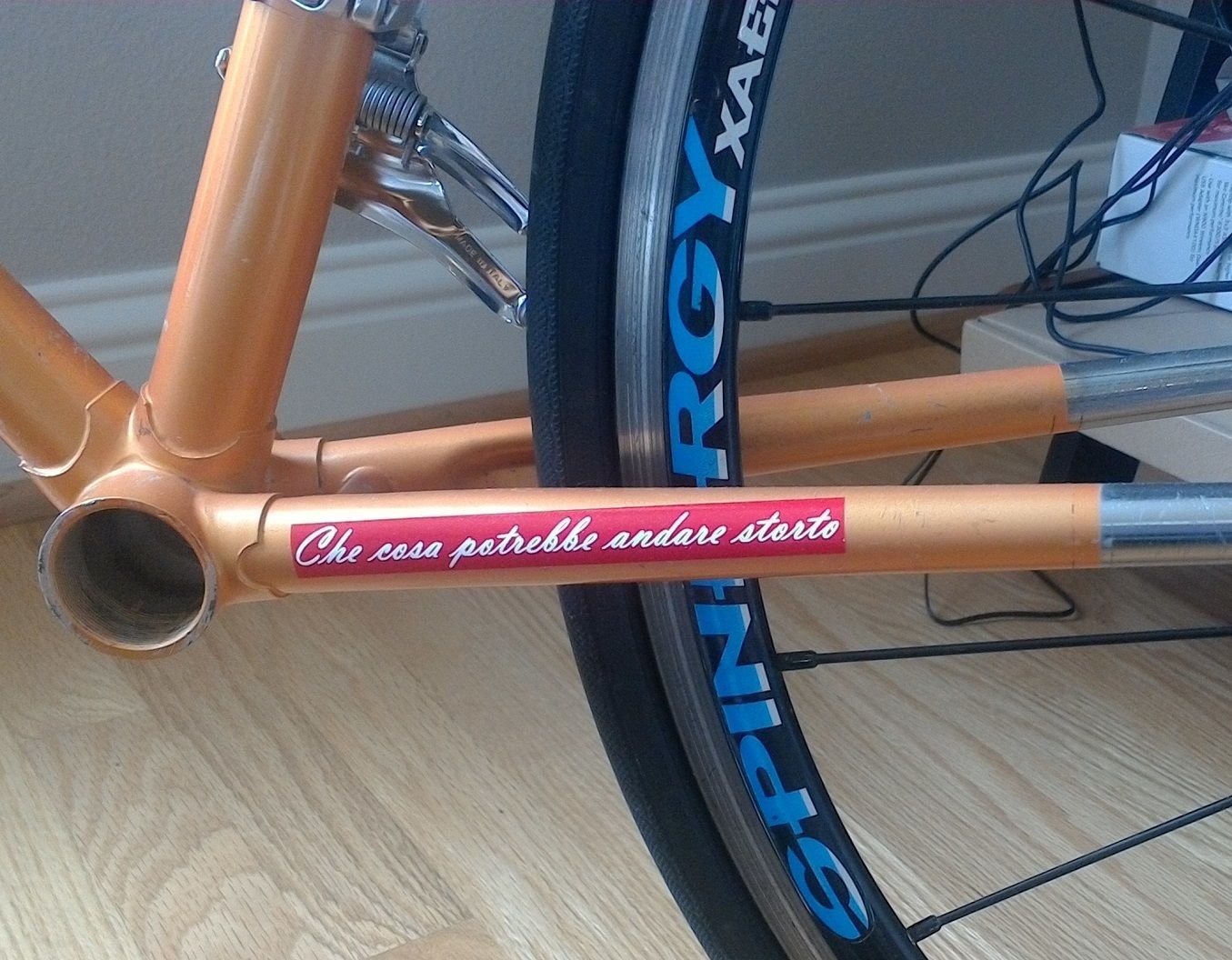
What else could possibly go wrong
When faced with specific desires in a road bike - I went with a custom builder. Left it to an expert to talk with me, hear my desires, tell me what was possible, make recommendations, educate me, etc....
Compatibility can only be considered after the frameset is initially designed and components selected.
Generally speaking: Stick with one component manufacturer (probably best Shimano or SRAM) and avoid proprietary parts (seatpost, stem, BB).
What else could possibly go wrong
__________________
Vintage, modern, e-road. It is a big cycling universe.
Vintage, modern, e-road. It is a big cycling universe.
Last edited by Wildwood; 06-18-24 at 11:58 AM.
 06-18-24 | 12:47 PM
#10
Thread Starter
Junior Member
Joined: Jan 2016
Posts: 168
Likes: 55
From: Denver, Colorado
Bikes: Specialized Hardrock - 2009 | Specialized Roll
So sounds like building up a bike has even more detail and knowledge required than computers which, isn't surprising and is what I suspected.
PC parts tend to have compatibility information in the product documentation. i know some bike parts do too but it definitely seems like things are far more contextual.
Anyway thanks for the info guys.
PC parts tend to have compatibility information in the product documentation. i know some bike parts do too but it definitely seems like things are far more contextual.
Anyway thanks for the info guys.
06-18-24 | 01:06 PM
#11

Full Member
Joined: Jul 2023
Posts: 456
Likes: 272
From: Montréal
Bikes: Hardrock touring bike

 06-18-24 | 02:23 PM
#13

Senior Member

Joined: Jul 2015
Posts: 7,495
Likes: 3,297
From: NW Oregon
Bikes: 1982 Trek 930R Custom, '91 Diamondback Ascent w/ XT, XTR updates, Fuji Team Pro CF road flyer, Specialized Sirrus Gravel Convert, '09 Comencal Meta 5.5 XC, '02 Marin MBX500, '84 Gitane Criterium bike
one thing i'm not seeing mentioned.. Axle/wheel/frame Compatibility... there are several options in that area...Wheel size, Hub/axle widths, Axle Types, etc... all "options" are typically dictated by the frame, and changing the frame is not a cost effective option....adapters can be located for converting hubs from Thru-axle to std. QR, but that makes for a "pieced together" build, IMO...
1x12 setups can demand a different frame than a 2x10-11-12, etc...
front derailleurs can be tricky to decide upon too... seat tube diameter, pull ratio, pull direction, cage size, mount type, etc... all can be specific to a frame and to a groupset choice.
best advice... get the assembled bike.
second option: compile a desired end build, get a frame, take frame and list to your favorite bike shop, and have them prescribe a groupset that meets your wants, then build on your schedule.
1x12 setups can demand a different frame than a 2x10-11-12, etc...
front derailleurs can be tricky to decide upon too... seat tube diameter, pull ratio, pull direction, cage size, mount type, etc... all can be specific to a frame and to a groupset choice.
best advice... get the assembled bike.
second option: compile a desired end build, get a frame, take frame and list to your favorite bike shop, and have them prescribe a groupset that meets your wants, then build on your schedule.
 06-18-24 | 05:53 PM
#14

Senior Member
Joined: Feb 2015
Posts: 6,006
Likes: 2,286
From: Mission Viejo
Bikes: 1986 Cannondale SR400 (Flat bar commuter), 1988 Cannondale Criterium XTR, 1992 Serotta T-Max, 1995 Trek 970
Generally building a bike will cost more. No matter how well you plan things rarely go so smooth that no redundant parts are needed.
But building a bike can be a lot of fun and will make maintaining it easier, since you already went through the tough part. And it is better way to go if you want something you can’t buy without significant mods to get there.
For gravel a 1x is probably the best way to go. A 40t ring with a 10/11-50 cassette should cover most anything you need including bikepacking.
Things do tend to not work out with a 1x if you need pedestrian low gearing and without sacrificing top end.
John
But building a bike can be a lot of fun and will make maintaining it easier, since you already went through the tough part. And it is better way to go if you want something you can’t buy without significant mods to get there.
For gravel a 1x is probably the best way to go. A 40t ring with a 10/11-50 cassette should cover most anything you need including bikepacking.
Things do tend to not work out with a 1x if you need pedestrian low gearing and without sacrificing top end.
John
