


Threaded stem run like a threadless
 03-15-25 | 02:18 PM
#26

Senior Member


Joined: Apr 2009
Posts: 2,896
Likes: 1,918
From: NorCal
 03-15-25 | 02:21 PM
#27
Clark W. Griswold


Joined: Mar 2014
Posts: 18,265
Likes: 6,631
From: ,location, location
Bikes: Foundry Chilkoot Ti W/Ultegra Di2, Salsa Timberjack Ti, Cinelli Mash Work RandoCross Fun Time Machine, 1x9 XT Parts Hybrid, Co-Motion Cascadia, Specialized Langster, Phil Wood Apple VeloXS Frame (w/DA 7400), R+M Supercharger2 Rohloff, Habanero Ti 26
No bearing is set it and forget it, that is how you run into problems down the road, every bearing ever made needs some sort of check and lubrication and replacement at some point maybe no lubrication for the solid lubrication bearings but any bike I have ever seen will need bearing service at some point. It is just the nature of moving parts bearings are finite. Maybe someone has an application where they could last forever but not for a bicycle realistically unless you don't ever use it.
03-15-25 | 02:46 PM
#28

Senior member


Joined: Oct 2004
Posts: 8,368
Likes: 888
From: Oakville Ontario
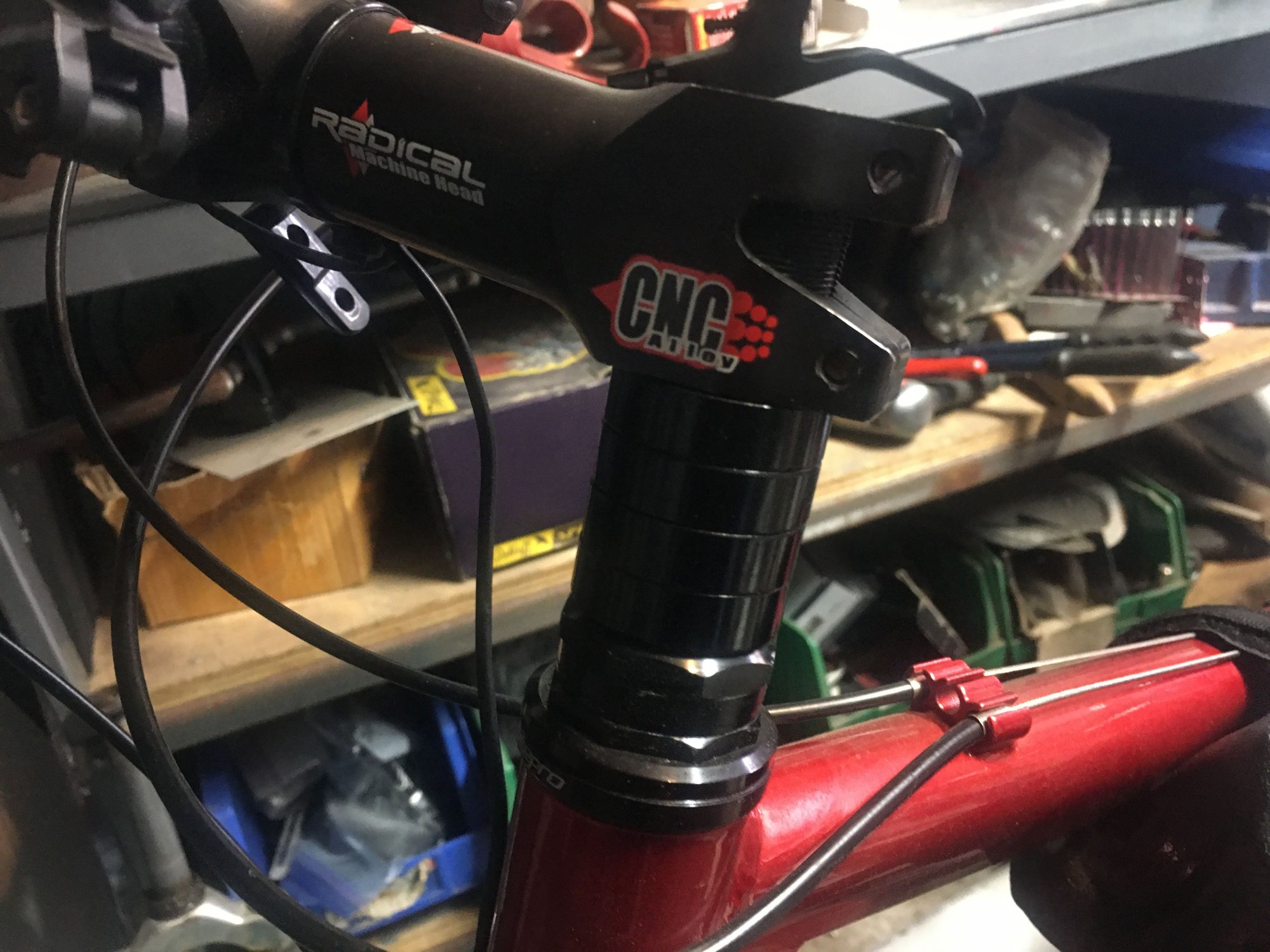
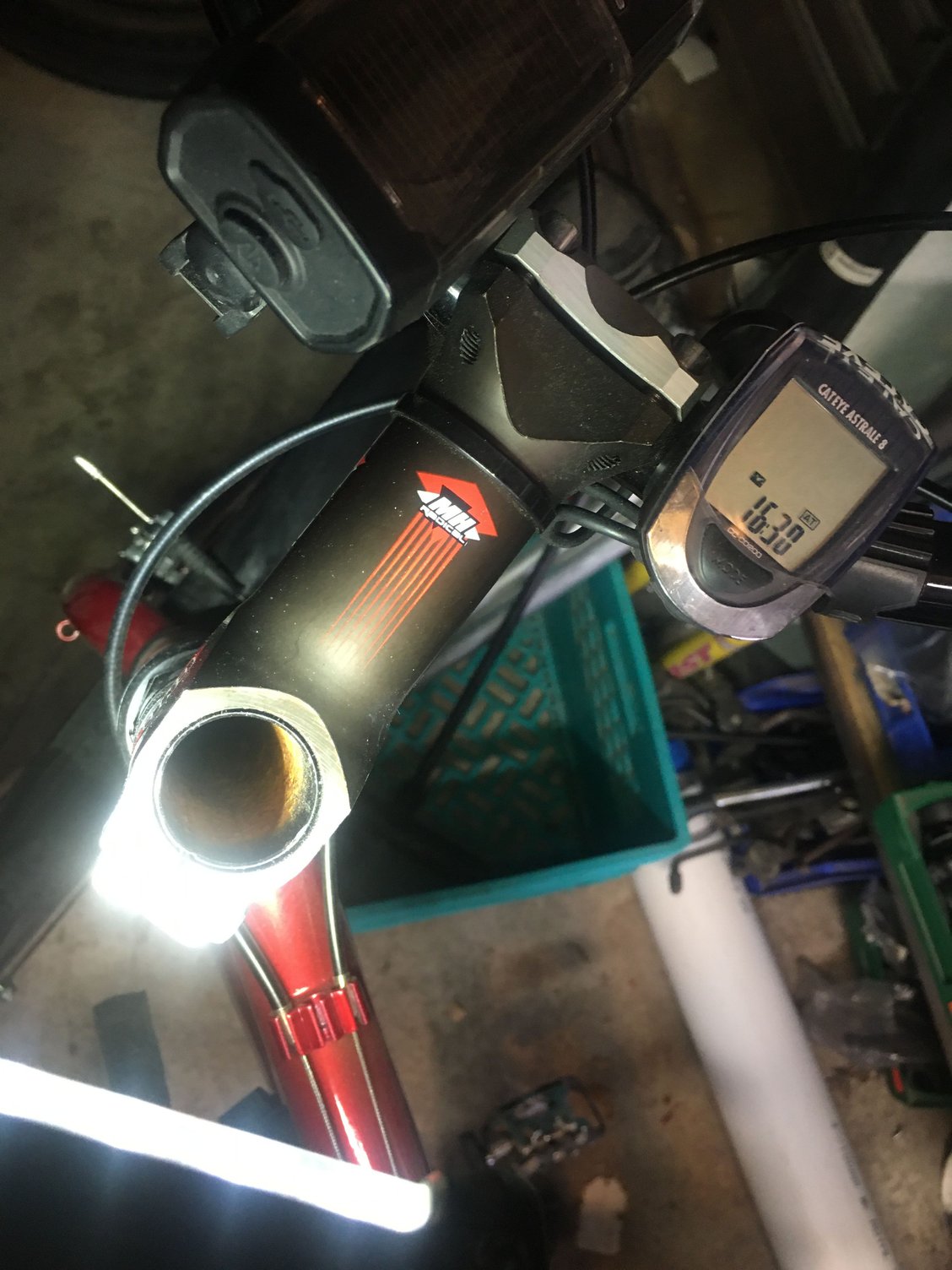
I did this very thing when I was building a bike for myself during the Covid shortages and threadless forks and headsets were unobtatium.
I left the steer tube full length and clamped on a threadless stem.
I understand the concern about the minor diameter of the thread possibly compromising the strength of the steer tube but I regularly inspect the inside of the tube with a borescope and no sign of failure so far,
 03-15-25 | 03:32 PM
#29
Thread Starter
Full Member
Joined: Jan 2016
Posts: 216
Likes: 0
OMG, every motorcycle made after 1975 is like that Or threaded outside or threaded inside etc etc.3 ways to secure that area. Bearing, then dust seal, then lockring #1. Then lockring #2 then triple clamp. Then nut/bolt locking top triple clamp to the steering stem (yes that's what motorcycle terminology is). Here.

03-15-25 | 03:36 PM
#30

Senior Member
Joined: Apr 2016
Posts: 3,838
Likes: 1,772
03-15-25 | 03:47 PM
#31
Thread Starter
Full Member
Joined: Jan 2016
Posts: 216
Likes: 0
I think you are being just a little bit alarmist here.
I did this very thing when I was building a bike for myself during the Covid shortages and threadless forks and headsets were unobtatium.
I left the steer tube full length and clamped on a threadless stem.
I understand the concern about the minor diameter of the thread possibly compromising the strength of the steer tube but I regularly inspect the inside of the tube with a borescope and no sign of failure so far,
I did this very thing when I was building a bike for myself during the Covid shortages and threadless forks and headsets were unobtatium.
I left the steer tube full length and clamped on a threadless stem.
I understand the concern about the minor diameter of the thread possibly compromising the strength of the steer tube but I regularly inspect the inside of the tube with a borescope and no sign of failure so far,

Remember this is on a motorcycle raked at the triples. So scale it to the right size. The idea is to bypass the shear force on the threads of the steerer tube. Run a long bolt that instead of going to the star that is pressed in to the steerer tube - there is no steerer tube and the bolt runs through a big washer and nut under the lower side of the neck tube.
03-15-25 | 05:25 PM
#32
Senior Member
Joined: Apr 2009
Posts: 2,896
Likes: 1,918
From: NorCal
OMG, every motorcycle made after 1975 is like that Or threaded outside or threaded inside etc etc.3 ways to secure that area. Bearing, then dust seal, then lockring #1. Then lockring #2 then triple clamp. Then nut/bolt locking top triple clamp to the steering stem (yes that's what motorcycle terminology is). Here.
BTW I was racing motorcycles probably before your father was born. Worked as a mechanic for years.
03-15-25 | 05:36 PM
#33

Senior Member
Joined: Apr 2011
Posts: 12,650
Likes: 4,792
I think you are being just a little bit alarmist here.
I did this very thing when I was building a bike for myself during the Covid shortages and threadless forks and headsets were unobtatium.
I left the steer tube full length and clamped on a threadless stem.
I understand the concern about the minor diameter of the thread possibly compromising the strength of the steer tube but I regularly inspect the inside of the tube with a borescope and no sign of failure so far,
I did this very thing when I was building a bike for myself during the Covid shortages and threadless forks and headsets were unobtatium.
I left the steer tube full length and clamped on a threadless stem.
I understand the concern about the minor diameter of the thread possibly compromising the strength of the steer tube but I regularly inspect the inside of the tube with a borescope and no sign of failure so far,
People always seem pretty pleased to report the super dangerous mechanical things they've done, but maybe you should hide this sort of bad decision and just thank God it didn't end badly.
 03-15-25 | 08:57 PM
#34

Senior Member
Joined: Feb 2012
Posts: 19,353
Likes: 5,471
From: Rochester, NY
Bikes: Stewart S&S coupled sport tourer, Stewart Sunday light, Stewart Commuting, Stewart Touring, Co Motion Tandem, Stewart 3-Spd, Stewart Track, Fuji Finest, Mongoose Tomac ATB, GT Bravado ATB, JCP Folder, Stewart 650B ATB
Motorcycles don't use a quill stem.
Threadless bicycle headset adjustment is secured by the top cap bolt AND the stem clamping on the steerer. No, If the stem pinch bolts are tightened the cap and its draw bolt can be completely removed with no issues (but for dirt getting down in the steerer). The cap's draw bolt only serves to preload the headset bearings, unless those stem pinch bolts are not properly tightened.
Bicycles and motorcycles front end assemblies of any kind have practically nothing in common. And motorcycles switched to tapered bearings a few decades ago. Again I take some issue with this. The basic forces and principles are very much the same. The details have evolved to better fit the demands either bikes or motorcycles place of the rider/vehicle system.
Threadless bicycle headset adjustment is secured by the top cap bolt AND the stem clamping on the steerer. No, If the stem pinch bolts are tightened the cap and its draw bolt can be completely removed with no issues (but for dirt getting down in the steerer). The cap's draw bolt only serves to preload the headset bearings, unless those stem pinch bolts are not properly tightened.
Bicycles and motorcycles front end assemblies of any kind have practically nothing in common. And motorcycles switched to tapered bearings a few decades ago. Again I take some issue with this. The basic forces and principles are very much the same. The details have evolved to better fit the demands either bikes or motorcycles place of the rider/vehicle system.
 Andy
Andy
__________________
AndrewRStewart
AndrewRStewart
03-15-25 | 09:41 PM
#35
Senior Member
Joined: Apr 2007
Posts: 7,745
Likes: 1,734
I assumed that based on his continued use of the term stem when there was no way he was referring to a stem. I had asked him to clarify that earlier (#3) which he didn't do and was just expressing my continuing confusion.
Last edited by Camilo; 03-15-25 at 09:47 PM.
03-15-25 | 09:49 PM
#36
Thread Starter
Full Member
Joined: Jan 2016
Posts: 216
Likes: 0

That is a suzuki savage. A bike that handled like crap with ~9"shorter wheel base and 9 degree+ less rake. This bike when I was done with it handled like a well ... schwinn. Eas it heavier - yes. However it would completely convince you otherwise if you were to ride it. You'd swear it lost 100lb, when it likely gained 10-15.
I will say 1 thing. I am not likely to build a light weight bicycle that does anything better than the original. Because I didn't do that on motorcycles either. But I will be able to build one that works for my liking.
As for being welded - a Suzuki GS500 as well as many other bikes have welded top triple clamp thread bosses into the steering stem.
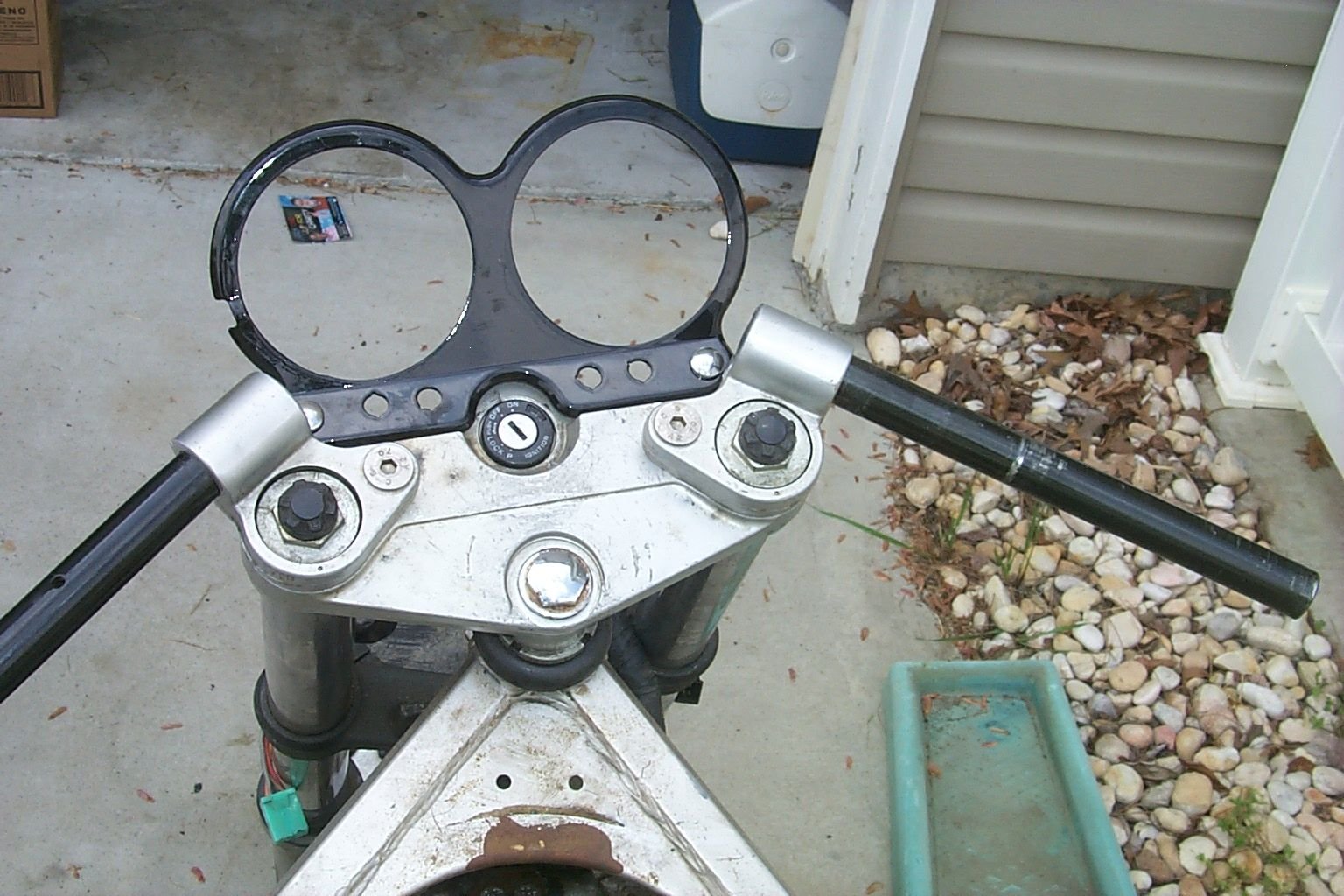
And that same bike is still standing in my driveway now, 15 yrs and 15K+ hard miles later.
Last edited by srinath.the.man; 03-15-25 at 10:00 PM.
03-15-25 | 09:51 PM
#37
Thread Starter
Full Member
Joined: Jan 2016
Posts: 216
Likes: 0
Steerer tube to a bicycle is called stem in motorcycles. It's called steering stem to be precise.
03-15-25 | 09:55 PM
#38
Thread Starter
Full Member
Joined: Jan 2016
Posts: 216
Likes: 0
I also once famously said ... Bicycle tools are the same as any other set of tools if you ground all of the tools in 1/2.
03-15-25 | 10:08 PM
#39
Highly Enriched Driftium

Joined: Apr 2017
Posts: 6,724
Likes: 2,180
The quill stem has the advantage of "set it, lube it and forget it" on the bearings. Atleast it is on motorcycles.
Or, I am thinking one lock nut locked by the other locknut is better. The threadless has 1 much smaller nut/bolt, sitting much further away. But I guess in small light duty applications its the same. I infact like motorcycles that have a grease fitting in the steering neck and swingarm pivot too. That hasn't been on motorcycles since the 70's.
Or, I am thinking one lock nut locked by the other locknut is better. The threadless has 1 much smaller nut/bolt, sitting much further away. But I guess in small light duty applications its the same. I infact like motorcycles that have a grease fitting in the steering neck and swingarm pivot too. That hasn't been on motorcycles since the 70's.
With a modern threadless headset, you assemble everything but leave the clamp for the stem around the steer tube slightly loose. You tighten the top bolt (connected to a star nut inside the steer tube) to torque spec for the headset, then tighten the stem clamp bolts around the steer tube. Perfectly adjusted. Done. You can also adjust the headset in the field (like on a long tour) without the need to carry two threaded headset wrenches, I think 32mm across flats, bulky and heavy.
03-15-25 | 10:17 PM
#40
Highly Enriched Driftium
Joined: Apr 2017
Posts: 6,724
Likes: 2,180
I would say you were optimistic and cavalier with your safety. Steerer threads are normally reinforced on the outside by the locked portions of the upper headset and the quill inserted into them. You have managed to take a steerer - which is essentially full of spiral cut, sharp bottomed stress risers, create two compression edges on them at the top of the HS and bottom of the stem, removed any internal reinforcement a quill brings, and then put extra forces on the part being pinched by the stem.
People always seem pretty pleased to report the super dangerous mechanical things they've done, but maybe you should hide this sort of bad decision and just thank God it didn't end badly.
People always seem pretty pleased to report the super dangerous mechanical things they've done, but maybe you should hide this sort of bad decision and just thank God it didn't end badly.
With a threaded steer tube and headset, normally, very little threaded portion is left sticking above the headset (which is why it's usually a "cap nut" there), the rest is the smooth quill. So primarily, moderate tension loads in the area of the threads on the steer tube, which it is designed for.
Using a threaded steer tube that sticks way above the headset, with threads just above the headset, imparts *greatly* increased bending moment on that steer tube, with the threads acting as stress risers. High probability for fatigue crack with *rapid* progression to what is known as "catastrophic failure", meaning total and without warning.
With an unthreaded steer tube sticking way above the headset, not a problem, within design limits; No threads to act as stress risers, and a steel steer tube can take some bending loads. Within limits. The fork maker typically specifies the maximum length of steer tube allowed above the headset.
Last edited by Duragrouch; 03-15-25 at 10:28 PM.
03-15-25 | 10:27 PM
#41
Senior Member
Joined: Apr 2011
Posts: 12,650
Likes: 4,792
He's right. Danger Will Robinson. The difference is this:
With a threaded steer tube and headset, normally, very little threaded portion is left sticking above the headset (which is why it's usually a "cap nut" there), the rest is the smooth quill. So primarily tension loads in the area of the threads on the steer tube.
Using a threaded steer tube that sticks way above the headset, with threads just above the headset, imparts *greatly* increased bending moment on that steer tube, with the threads acting as stress risers. High probability for fatigue crack with *rapid* progression to what is known as "catastrophic failure", meaning total and without warning.
With an unthreaded steer tube sticking way above the headset, not a problem, within design limits; No threads to act as stress risers, and a steel steer tube can take some bending loads. Within limits. The fork maker typically specifies the maximum length of steer tube allowed above the headset.
With a threaded steer tube and headset, normally, very little threaded portion is left sticking above the headset (which is why it's usually a "cap nut" there), the rest is the smooth quill. So primarily tension loads in the area of the threads on the steer tube.
Using a threaded steer tube that sticks way above the headset, with threads just above the headset, imparts *greatly* increased bending moment on that steer tube, with the threads acting as stress risers. High probability for fatigue crack with *rapid* progression to what is known as "catastrophic failure", meaning total and without warning.
With an unthreaded steer tube sticking way above the headset, not a problem, within design limits; No threads to act as stress risers, and a steel steer tube can take some bending loads. Within limits. The fork maker typically specifies the maximum length of steer tube allowed above the headset.
03-15-25 | 10:30 PM
#42
Highly Enriched Driftium
Joined: Apr 2017
Posts: 6,724
Likes: 2,180
It's not, at all. I was just trying to put it in terms they might understand, with a few specific examples, especially how what they want to do is different from the intended load conditions of a threaded stem. But you are 100% correct in your warning, well done.
 03-15-25 | 10:43 PM
#44
Highly Enriched Driftium
Joined: Apr 2017
Posts: 6,724
Likes: 2,180
03-15-25 | 11:46 PM
#45
Thread Starter
Full Member
Joined: Jan 2016
Posts: 216
Likes: 0
The more I think about this, the better option is to do what I have done before on my cheater chopper (motorcycle).
There is enough room between the treaded part and the stem for me to run an inner tube as a spacer. Then I'll use a long bolt ~8mm and 2 large washers and bolt it top to bottom. That serves the same purpose as a quill type insert, but instead of friction load transfer to the steerer tube and then the neck it actually bolts them together. That way even if the steerer tube cracks at the threads the bolt will keep it from coming apart. Rubber will avoid loading 1 spot hard too. Not gonna win any beauty contests, but I'll post the result if I ever get around to that way. I have various parts I dont even know about lying here and there. Lets see.
There is enough room between the treaded part and the stem for me to run an inner tube as a spacer. Then I'll use a long bolt ~8mm and 2 large washers and bolt it top to bottom. That serves the same purpose as a quill type insert, but instead of friction load transfer to the steerer tube and then the neck it actually bolts them together. That way even if the steerer tube cracks at the threads the bolt will keep it from coming apart. Rubber will avoid loading 1 spot hard too. Not gonna win any beauty contests, but I'll post the result if I ever get around to that way. I have various parts I dont even know about lying here and there. Lets see.
03-16-25 | 01:40 AM
#46
Highly Enriched Driftium
Joined: Apr 2017
Posts: 6,724
Likes: 2,180
The more I think about this, the better option is to do what I have done before on my cheater chopper (motorcycle).
There is enough room between the treaded part and the stem for me to run an inner tube as a spacer. Then I'll use a long bolt ~8mm and 2 large washers and bolt it top to bottom. That serves the same purpose as a quill type insert, but instead of friction load transfer to the steerer tube and then the neck it actually bolts them together. That way even if the steerer tube cracks at the threads the bolt will keep it from coming apart. Rubber will avoid loading 1 spot hard too. Not gonna win any beauty contests, but I'll post the result if I ever get around to that way. I have various parts I dont even know about lying here and there. Lets see.
There is enough room between the treaded part and the stem for me to run an inner tube as a spacer. Then I'll use a long bolt ~8mm and 2 large washers and bolt it top to bottom. That serves the same purpose as a quill type insert, but instead of friction load transfer to the steerer tube and then the neck it actually bolts them together. That way even if the steerer tube cracks at the threads the bolt will keep it from coming apart. Rubber will avoid loading 1 spot hard too. Not gonna win any beauty contests, but I'll post the result if I ever get around to that way. I have various parts I dont even know about lying here and there. Lets see.
If the long steel tube is loaded only in axial compression at the ends, it may slip sideways or fore/aft on the washers. Or slip in torsion on the washers. Each could cause steering loss.
The long steel tube will be much stiffer in bending than the long bolt, but all bending load on it (like when climbing standing, pulling hard on the handlebar) will be transmitted via the narrow top and bottom end of the tube, into the washers, which is a much smaller load area, versus clamping to the side of the tube like a threadless stem normally does. If that slips, or the threaded stem cracks, and all load from the handlebars goes instantly into that very long 8mm bolt, the bolt will probably bend, perhaps not enough to break, given that steel is very malleable provided it is not brittle-hard high strength steel.
It would sure seem more sound, as well as dirt cheap, to buy a threaded-to-unthreaded converter as someone noted above (post #3), with expanding quill on the bottom to go into the threaded steer tube, and a stepped-larger diameter on top to clamp the threadless stem to. The holy trinity of design, "Lighter than air, stronger than steel, cheaper than dirt."
Again, I may not fully understand your intentions. But those converters are so cheap, plus will look nice.
At least, if you assemble what I think, any drawbacks of it should be self-evident the moment you try to put any serious steering torque or climbing hand moment into the bars. I've heard people make money off these sort of videos.
Last edited by Duragrouch; 03-16-25 at 02:02 AM.
03-16-25 | 02:05 AM
#47
Thread Starter
Full Member
Joined: Jan 2016
Posts: 216
Likes: 0
Inner tube is a bicycle or motorcycle inner tube that I will stuff between the stem and the threaded part of the steerer tube.
Then a long bolt secures the stem to the frame with a nut and washer under the neck.
Then a long bolt secures the stem to the frame with a nut and washer under the neck.
03-16-25 | 02:08 AM
#48
Highly Enriched Driftium
Joined: Apr 2017
Posts: 6,724
Likes: 2,180
I had entertained the thought for a micro-second, that you meant a tire tube, given that you used the word rubber in your text, but dismissed that as my being mistaken. OK, I withdraw, I'm gonna just have to sit back and watch on this.
Last edited by Duragrouch; 03-16-25 at 02:20 AM.
03-16-25 | 03:11 AM
#49
Thread Starter
Full Member
Joined: Jan 2016
Posts: 216
Likes: 0
I'm not saying I'm doing that. Mainly because my parts bins are largely now unknown to me. Where will I find a long 8mm bolt ? But I am saying its a way of bypassing the hard impact loads on the thin threaded steerer tube.
03-16-25 | 04:33 AM
#50
Highly Enriched Driftium
Joined: Apr 2017
Posts: 6,724
Likes: 2,180
Hard impact ("shock") loads are important, but I think the most significant loads in this case, will be when you are climbing hard standing on the pedals, and alternately pulling upward on each handgrip on the bar, so fully reversing bending loads at the stem. A wide flat bar will be worst in this regard, greater moment for the same pull. Shock loads I think will happen with downward force on the bars when pedaling seated, with the front wheel hitting a pothole in the road. The rubber between the threads and the stem clamp (if I understand correctly), that will act to cushion the tops ("points") of the threads, but do nothing to lessen the stresses at the bottom of the thread valleys, for the threads exposed between the stem clamp and the headset cup. Again, that's if I understand this all correctly. I'll watch what you build.