


Drillin' handlebars!
 07-12-25 | 12:10 PM
#1

Thread Starter
Senior Member


Joined: Apr 2011
Posts: 12,627
Likes: 4,781
Drillin' handlebars!
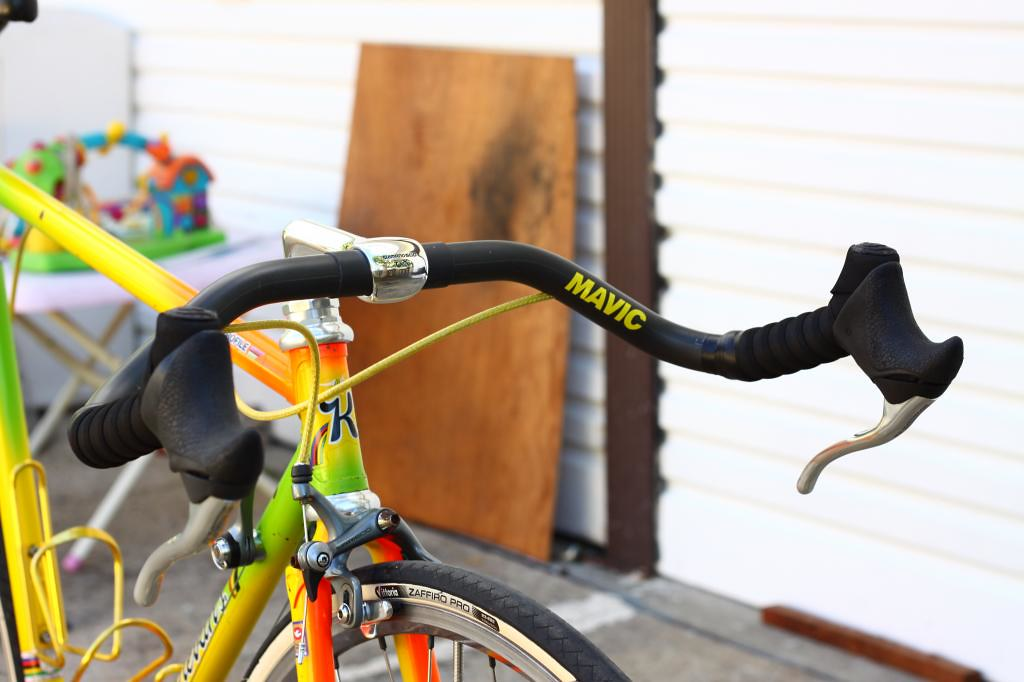
Drilled handlebars for aero cable routing used to be somewhat common, and some even came pre-drilled. Like the Mavic bullhorn bars Lemond used in the 89 TdF.
So I have a very similar set of Profile bullhorn "base bars" that I'd like to use without clip ons. Drilling them for internal cables would be the nicest way to do it because it keeps the aero cables aero without running the brake levers upside down.
Pros:
1. It was designed for clip ons, so the tops should be reasonably reinforced for clamping and also for a small oval hole.
2. I can drill a tidy angled hole without any sharp edges or corners.
3. I could epoxy a fiberglass gusset around the hole (but that might just hide a crack from inspection).
Cons:
1. Wasn't designed for drilling per se, and maybe those old bars were thicker or less brittle.
2. I like my teeth.
So I have a very similar set of Profile bullhorn "base bars" that I'd like to use without clip ons. Drilling them for internal cables would be the nicest way to do it because it keeps the aero cables aero without running the brake levers upside down.
Pros:
1. It was designed for clip ons, so the tops should be reasonably reinforced for clamping and also for a small oval hole.
2. I can drill a tidy angled hole without any sharp edges or corners.
3. I could epoxy a fiberglass gusset around the hole (but that might just hide a crack from inspection).
Cons:
1. Wasn't designed for drilling per se, and maybe those old bars were thicker or less brittle.
2. I like my teeth.
 07-12-25 | 06:10 PM
#2

Senior Member

Joined: Apr 2016
Posts: 3,811
Likes: 1,755
07-12-25 | 07:11 PM
#3

Senior Member
Joined: Oct 2014
Posts: 14,150
Likes: 5,273
From: Portland, OR
Bikes: (2) ti TiCycles, 2007 w/ triple and 2011 fixed, 1979 Peter Mooney, ~1983 Trek 420 now fixed and ~1973 Raleigh Carlton Competition gravel grinder
I so like the housing (or two) running alongside the front of the bar at 4:00 so it/they lie inside my 2nd knuckle that I might not use pre-drilled holes. Never mind the risk. The cables run wonderfully cleanly with any lever housing location or angle and come off the bar in a wonderful smooth curve.
I have had a "sacred path" failure. (Front tire patch to hands.) The consequences were enough for this lifetime and a couple of future ones. It doesn't take a very high risk for me to say "I'll pass".
I have had a "sacred path" failure. (Front tire patch to hands.) The consequences were enough for this lifetime and a couple of future ones. It doesn't take a very high risk for me to say "I'll pass".
07-12-25 | 08:58 PM
#4
Thread Starter
Senior Member
Joined: Apr 2011
Posts: 12,627
Likes: 4,781
I so like the housing (or two) running alongside the front of the bar at 4:00 so it/they lie inside my 2nd knuckle that I might not use pre-drilled holes. Never mind the risk. The cables run wonderfully cleanly with any lever housing location or angle and come off the bar in a wonderful smooth curve.
I have had a "sacred path" failure. (Front tire patch to hands.) The consequences were enough for this lifetime and a couple of future ones. It doesn't take a very high risk for me to say "I'll pass".
I have had a "sacred path" failure. (Front tire patch to hands.) The consequences were enough for this lifetime and a couple of future ones. It doesn't take a very high risk for me to say "I'll pass".
 07-13-25 | 08:24 AM
#5

Senior member


Joined: Oct 2004
Posts: 8,366
Likes: 881
From: Oakville Ontario
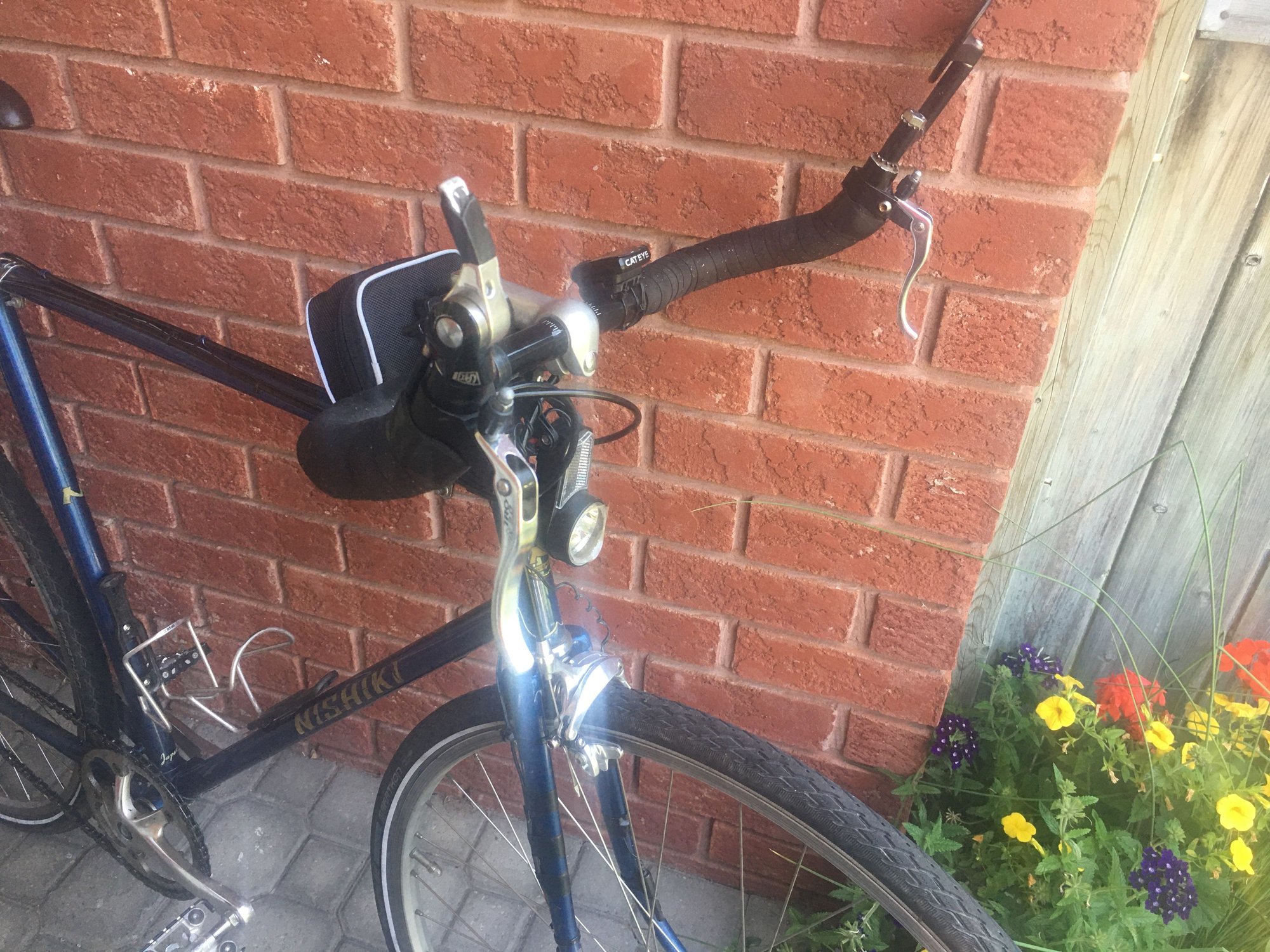
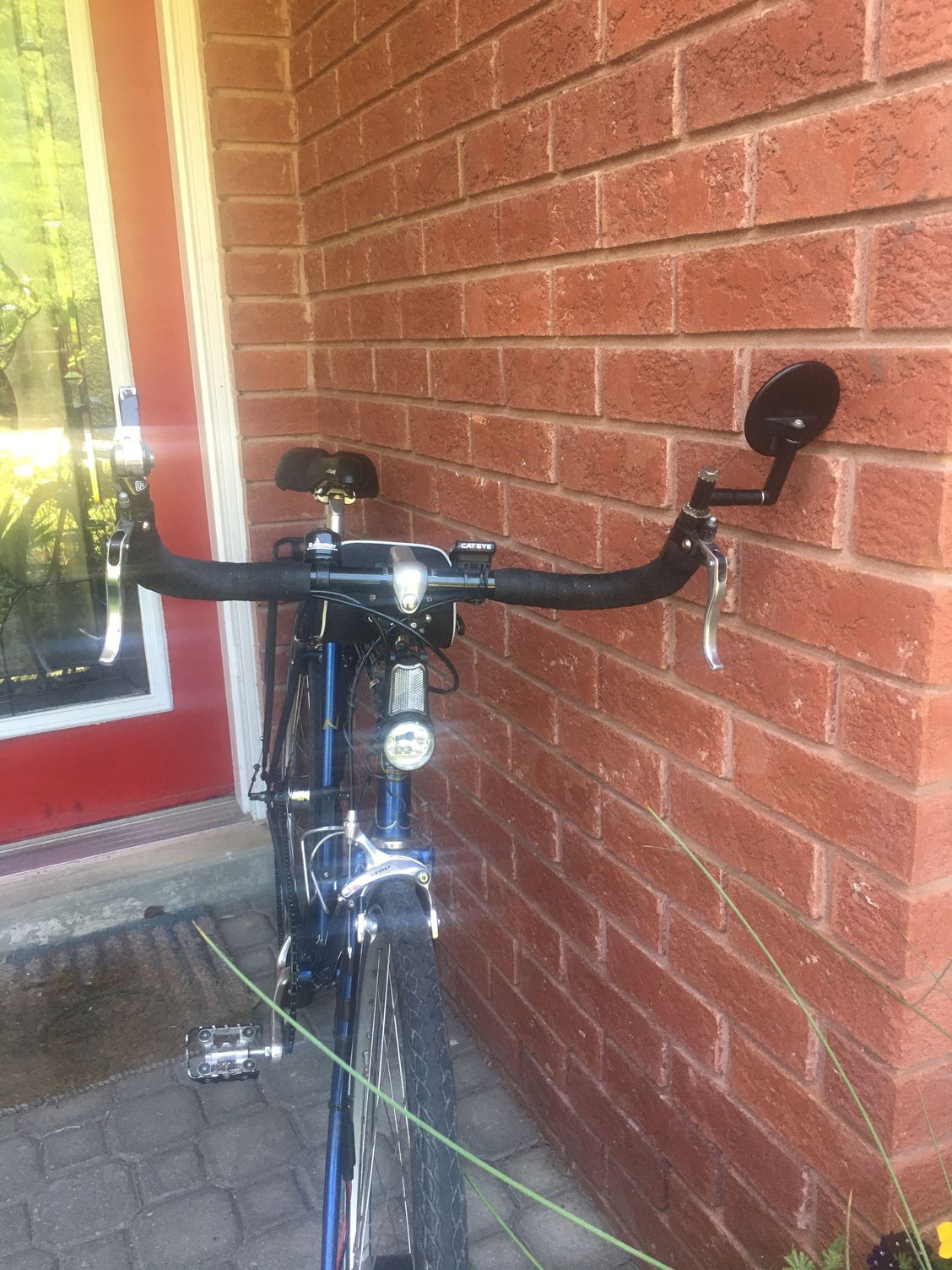
I don’t mind having the cable on the underside of the bar under the tape.
Last edited by Dan Burkhart; 07-13-25 at 01:04 PM.
07-13-25 | 10:21 AM
#7

Senior Member
Joined: Sep 2004
Posts: 3,277
Likes: 1,028
From: Chicago area
Bikes: Airborne "Carpe Diem", Motobecane "Mirage", Trek 6000, Strida 2, Dahon "Helios XL", Dahon "Mu XL", Tern "Verge S11i"
EDIT: Here's an example of chamfering a hole to minimize stress risers. The chamfering on the inside was done with an "inverted cone" bur in a Dremel tool.

These chamfered stress-breaker holes successfully stopped the progression of cracks for several thousands of miles.
Last edited by sweeks; 07-13-25 at 10:30 AM.

 07-13-25 | 12:31 PM
#9

Senior Member
Joined: Aug 2009
Posts: 4,257
Likes: 3,664
several options:
They make these bar end brake levers just for that purpose. Some are meant to run the cable inside the bar and some outside on the underside of the bar

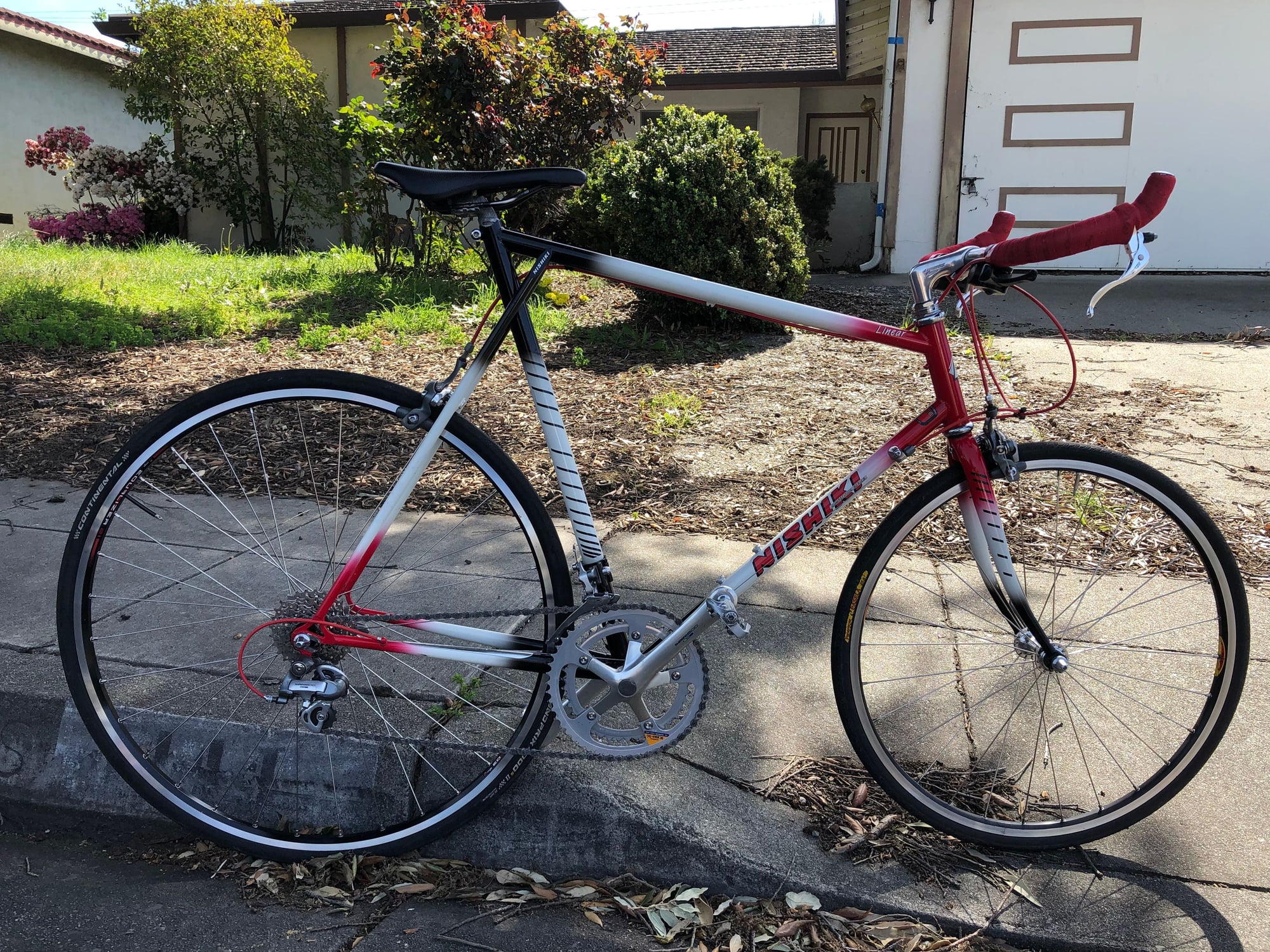
Or, it you need to run barcon shifters at the end, you can use interrupter levers:
Or, as you said earlier- just turn the lever around. This works better on bull bars that have a flat top and a distinct drop section (instead of sloped shoulders):

^ In this configuration the brakes worked extremely well. The aero brake cable routing goes really smoothly along the bends. Whereas if you turned the levers around and force the cables to double-back on itself, I am sure the braking would be way worse.
Yet another option , is to run non-aero brake levers. Shimano did make non-aero levers, which were compatible with SLR brakes:

Let's see the rest of that bike!!!!
They make these bar end brake levers just for that purpose. Some are meant to run the cable inside the bar and some outside on the underside of the bar
Or, it you need to run barcon shifters at the end, you can use interrupter levers:
Or, as you said earlier- just turn the lever around. This works better on bull bars that have a flat top and a distinct drop section (instead of sloped shoulders):
^ In this configuration the brakes worked extremely well. The aero brake cable routing goes really smoothly along the bends. Whereas if you turned the levers around and force the cables to double-back on itself, I am sure the braking would be way worse.
Yet another option , is to run non-aero brake levers. Shimano did make non-aero levers, which were compatible with SLR brakes:
Let's see the rest of that bike!!!!
Last edited by icemilkcoffee; 07-13-25 at 12:42 PM.
07-13-25 | 01:43 PM
#10
New here

Joined: Jul 2020
Posts: 15,466
Likes: 8,553
From: Tejas
Is the idea to eliminate any "stress risers" in the cut edge? This isn't likely to help. It would be better to chamfer and polish the edges of the holes... not so easy on the inner aspect.
EDIT: Here's an example of chamfering a hole to minimize stress risers. The chamfering on the inside was done with an "inverted cone" bur in a Dremel tool.
These chamfered stress-breaker holes successfully stopped the progression of cracks for several thousands of miles.
EDIT: Here's an example of chamfering a hole to minimize stress risers. The chamfering on the inside was done with an "inverted cone" bur in a Dremel tool.
These chamfered stress-breaker holes successfully stopped the progression of cracks for several thousands of miles.
07-13-25 | 04:11 PM
#12
Senior Member
Joined: Oct 2014
Posts: 14,150
Likes: 5,273
From: Portland, OR
Bikes: (2) ti TiCycles, 2007 w/ triple and 2011 fixed, 1979 Peter Mooney, ~1983 Trek 420 now fixed and ~1973 Raleigh Carlton Competition gravel grinder


